

Tesla 's bid to secure pan-European approval for its Full Self-Driving (Supervised) system has hit a major hurdle. The Swedish Transport Authority has formally called on the European Union to reject the system's EU-wide rollout unless the company removes the software's ability to exceed legal speed limits .
Sweden's position was set out in a letter to the EU's Technical Committee on Motor Vehicles (TCMV), a few weeks before the committee's meeting on June 30, where Tesla's request for European approval of the FSD is expected to be considered.
Sweden's main objection
The point that causes the most reactions concerns the Speed Offset, which allows the driver to set a margin for exceeding the speed limit. In practice, the system can intentionally move above the maximum allowed limit, following the user's choice.
See also: Lithuania: The second European country to approve Tesla FSD
For Swedish authorities, this possibility raises a serious regulatory and ethical issue. Automated driving is designed to enhance road safety and reduce human error. A system that builds in the possibility of violating the Highway Code, Sweden says, risks undermining the technology's very benefits.
The Swedish agency appears categorical, arguing that if the speed limit is not abolished, then the committee should vote negatively on Tesla's proposal.
Europe does not decide with a single vote
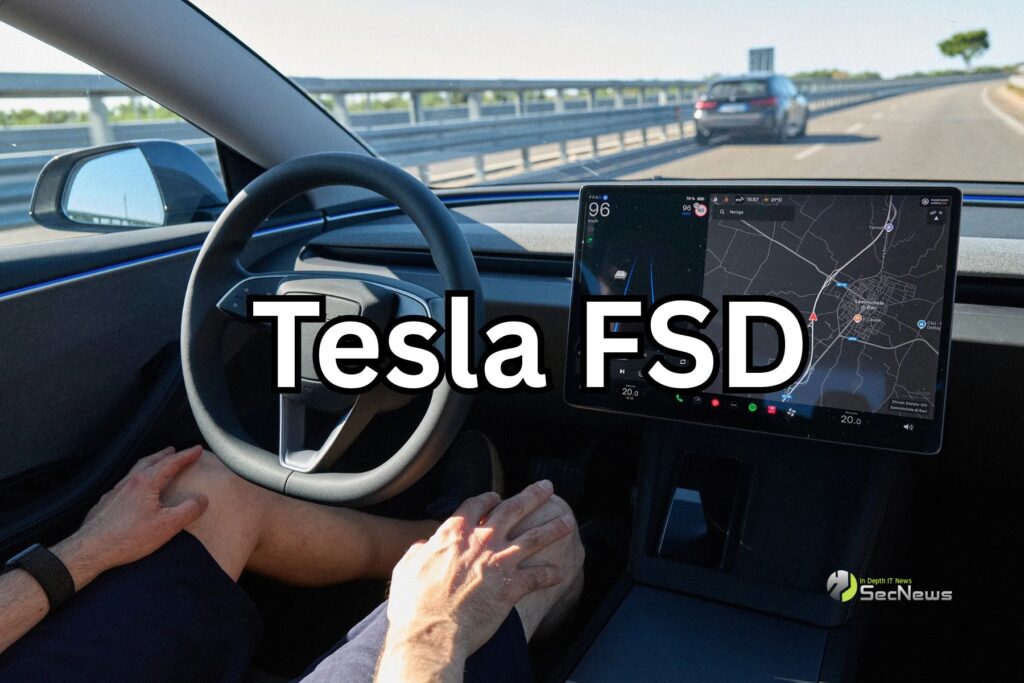
Tesla secured the first European approval for FSD in April through the Dutch regulator RDW, which approved the system's use in the Netherlands and then submitted a request for its recognition at the European Union level.

However, the process is anything but simple. For the FSD to gain pan-European force, a qualified majority is required, with at least 55% of member states representing 65% of the total EU population voting in favour.
This means that Tesla's success depends not only on a friendly national authority, but on its ability to convince a significant number of governments that its system is safe and compatible with the European regulatory framework.
See also: New change to Tesla FSD requires feedback from drivers
Scandinavian countries express reservations
Sweden is not the only country with reservations about FSD. Finland and Norway have also raised concerns about the system's behavior in severe weather conditions and in environments where ice and snow are common for much of the year.
The Nordic countries believe that semi-autonomous driving systems should be evaluated in real-world conditions , not just ideal test scenarios. The behavior of an autonomous driving system on slippery roads or in situations of limited visibility can be crucial for the safety of passengers.
Europe appears divided
On the other hand, several member states are moving in the opposite direction. Lithuania, Estonia, Belgium and Denmark have already approved the use of FSD at the national level, offering Tesla a significant support network ahead of the crucial vote.
See also: Europe is skeptical about Tesla FSD
This highlights an ongoing dilemma facing Europe. On the one hand, there is the need to boost innovation and the development of autonomous mobility technologies. On the other, regulators are called upon to ensure that the introduction of these systems does not create new risks to public safety.
Tesla needs FSD more than ever
The timing is particularly critical for the American auto industry. Tesla saw its European sales decline significantly in 2025, while Chinese electric vehicle companies, led by BYD, have strengthened their presence in the European market.
Although the company shows signs of recovery in 2026, this is mainly linked to high fuel prices and not to the availability of autonomous driving technology.
Tesla is also facing controversy over its presentation of FSD safety data to European authorities. Some independent researchers have publicly questioned the company's claims about the technology's potential benefits in preventing road accidents.
The vote on June 30 is expected to be a decisive test not only for the future of FSD in Europe, but also for how the EU will choose to balance technological innovation and the strict road safety requirements that govern the European market.
