

Tesla 's path to full rollout of its Full Self-Driving (Tesla FSD) system in Europe appears to be facing stronger obstacles than the company had let on. According to a revealing Reuters analysis based on internal correspondence between European regulators, the mood in Brussels and member states remains wary of both Tesla's and safety claims the company's push for faster licensing.
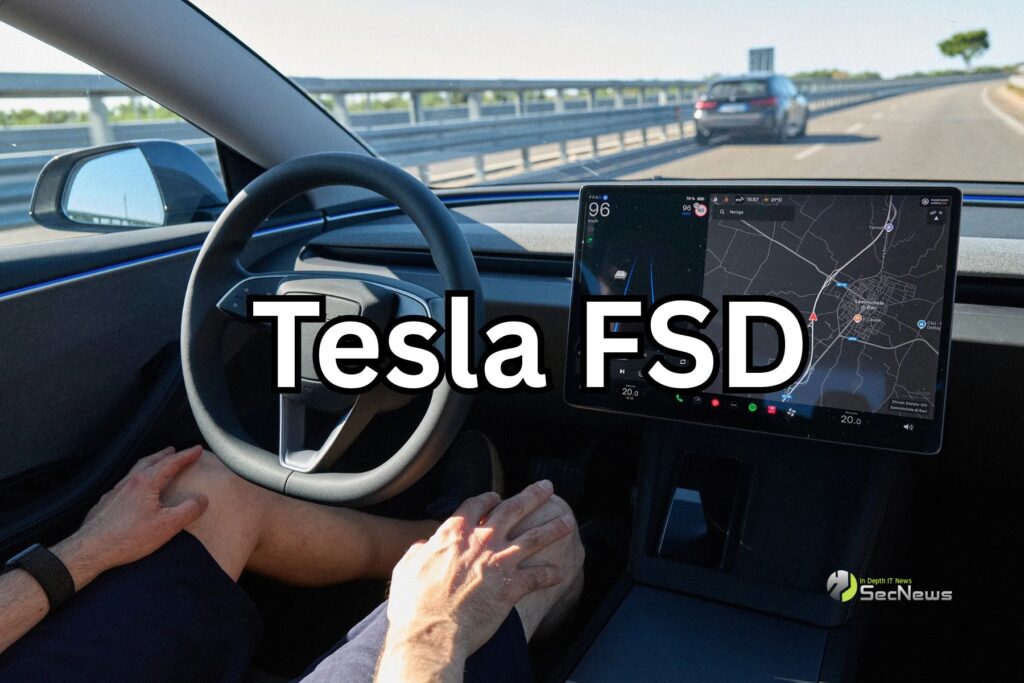
This picture raises serious doubts about whether Tesla's goal of pan-European approval within the second or third quarter of 2026 is realistic.
Internal documents that change data
The leaked documents present a different narrative than the one Tesla is presenting to investors. In a telling example, an official from the Swedish Transport Agency expressed surprise when informed that the FSD system could allow drivers to exceed preset speed limits, noting that such a function is difficult to comply with the European legal framework.
See also: Tesla sells cars made in China in Canada
This point is considered particularly critical, as European legislation on assisted driving systems gives absolute priority to compliance with traffic rules. Unlike the US, where there is more tolerance for experimental applications of technology, the EU requires strict predictability and full documentation of each function.
Tesla FSD: Dutch approval not enough
On April 10, 2026, the Dutch RDW authority granted Tesla the first official national approval for FSD (Supervised). This is undoubtedly a significant milestone, but this approval is only the first step.
To extend the system across the European Union, a positive vote is required from states representing at least 55% of the member states and 65% of the total population of the Union. This means that the stance of large markets such as Germany, France, Italy and Spain is decisive.
So far, these countries have not given corresponding national approval, reflecting the skepticism of the largest European economies.
The technical gaps that are troubling
Beyond the legal objections, regulators also appear to be focusing on substantive technical issues. Independent tests have shown that Tesla's system does not consistently detect motorcyclists in complex urban environments.
See also: Tesla reaches 10 billion FSD miles
This is a key problem for Europe, where the use of two-wheelers is significantly higher than in the United States. Urban mobility in cities such as Paris, Rome, Barcelona or Athens is characterized by dense traffic, unpredictable movements and complex road conditions that require much more sophisticated environmental awareness.
European authorities express fears that the current system has been trained mainly on American traffic patterns, which differ substantially from European ones.
The pressure strategy that backfired
Another element that is causing reactions concerns Tesla's strategy of encouraging vehicle owners to pressure national governments in favor of faster approval.
Rather than speeding up the process, this approach appears to have reinforced the reservations of several authorities. European officials believe that the technical evaluation of such a critical system cannot be influenced by commercial or political pressure.
This approach contrasts with the European regulatory philosophy, which is based on the lengthy technical certification process rather than public market pressure.

European digital autonomy and the message to Silicon Valley
The Tesla case is part of a broader context: the European Union's effort to chart an independent course in technological standards.
See also: Tesla's autonomous 'Robotaxi' finally shows signs of growth
The EU is seeking to shape its own rules on artificial intelligence, autonomous mobility and safety systems, rather than adopting standards being shaped in the US. For this very reason, Elon Musk’s confidence around the FSD timeline is being met with growing distrust.
What's next?
The next meetings of the technical committee, in July and October, will be a decisive test for the future of FSD in Europe.
Tesla still has a strong technology base and has proven that it can quickly adapt its software to the demands of each market. However, at this point, a six-month European rollout timeline seems overly optimistic.
The most likely scenario is a shift of full deployment by 12 to 18 months, unless the company immediately presents convincing technical improvements that will bridge the trust gap with European authorities.
