

He was a businessman rather than a designer, but as Apple CEO, Tim Cook also had to become much more of a politician than any of his predecessors. Here's how he got started at Apple, how he ran the company, and how he'll end his career. Tim Cook was Apple's seventh CEO, the longest-serving , and only the third not to be fired. Like every Apple CEO before him, he was white, male, and of a similar age, but in business terms, he was also the most transformative of them all.
See also: Apple: Tim Cook on Trump's list for China trip
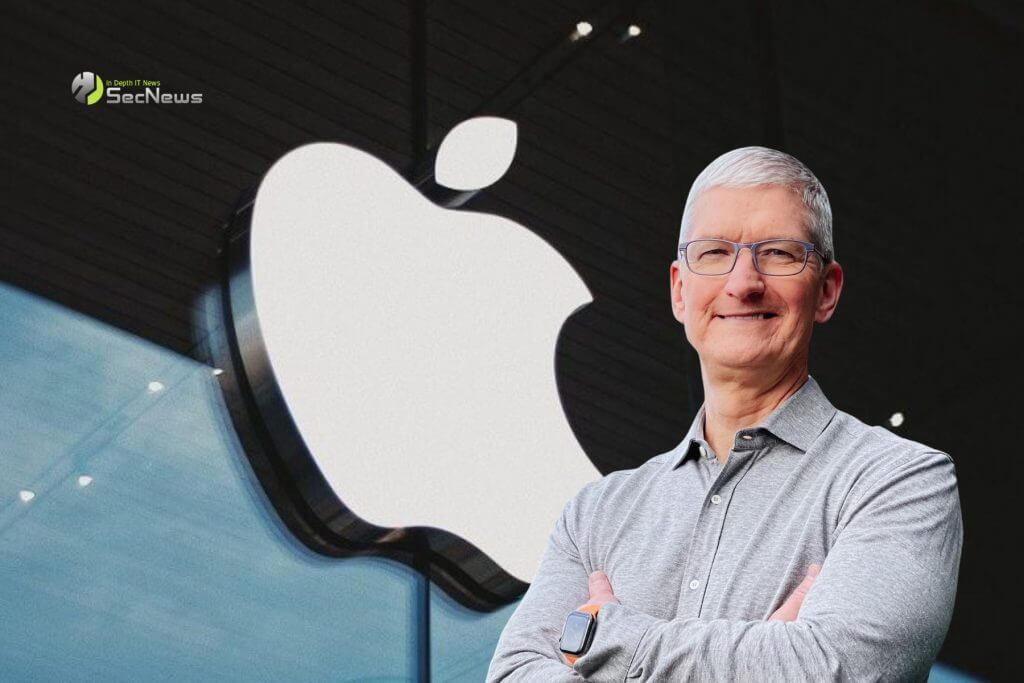
This includes being more business and financial transformational than Steve Jobs. It is thanks to Tim Cook that Apple became the most valuable company in the world. It is thanks to him that Apple's valuation exceeded 4 trillion dollars.
It is also thanks to both his political and accounting prowess that Apple withstood Trump's tariffs.
It can be argued that Mike Markkula essentially had the role and responsibilities of a CEO while hiring Michael Scott to be the first official CEO. After that, Markkula became Apple's second CEO while hiring John Sculley. But Tim Cook was officially the acting CEO twice before taking on the full-time role. That's because he replaced Steve Jobs for at least two extended periods when Jobs was on sick leave.
Once again, with the questionable exceptions of Markkula and Jobs, Tim Cook was the first Apple CEO to be promoted from within the company. He came in with aplomb, knowing the company and having been a key part of its success during the Steve Jobs years.
See also: What Apple's financial results say for the second quarter of 2026
Like John Sculley before him, Tim Cook needed no persuasion to meet with Steve Jobs. And like Sculley, Cook had no intention of joining Apple after that. Both men were simply interested in meeting the near-legendary Jobs. By 1998, Cook was well-established as vice president of corporate hardware for Compaq, after years at IBM.
Professionally and financially, Cook was heading toward what seemed like the top of his field. It now sounds as if the only person telling him to join Apple was Steve Jobs. Jobs probably wouldn't have thought about his successor as CEO yet, but he still managed to make the role of Chief Operating Officer irresistible.
Apparently, the key to this was how intensely Jobs directed Apple and communicated the kind of company he was making it. “[So] I would never have found my purpose working somewhere without a clear sense of purpose,” Cook said in a 2017 commencement speech. “I tried meditation, I sought guidance and religion.” “I read great philosophers and writers,” he continued. “In a moment of youthful indiscretion, I may have even experimented with a Windows computer, and, obviously, that didn’t work.”
See also: Apple: New CEO's biggest challenge will be leadership transition and regular renewal
It's easy to say in hindsight that he made the right choice because of what Apple became and what he became at Apple. But it didn't take years for the aftershocks to set in, as the suddenly struggling Compaq was acquired by Hewlett-Packard in 2002. Perhaps if Cook had stayed, Compaq could have better handled the price war it entered with Dell.
