

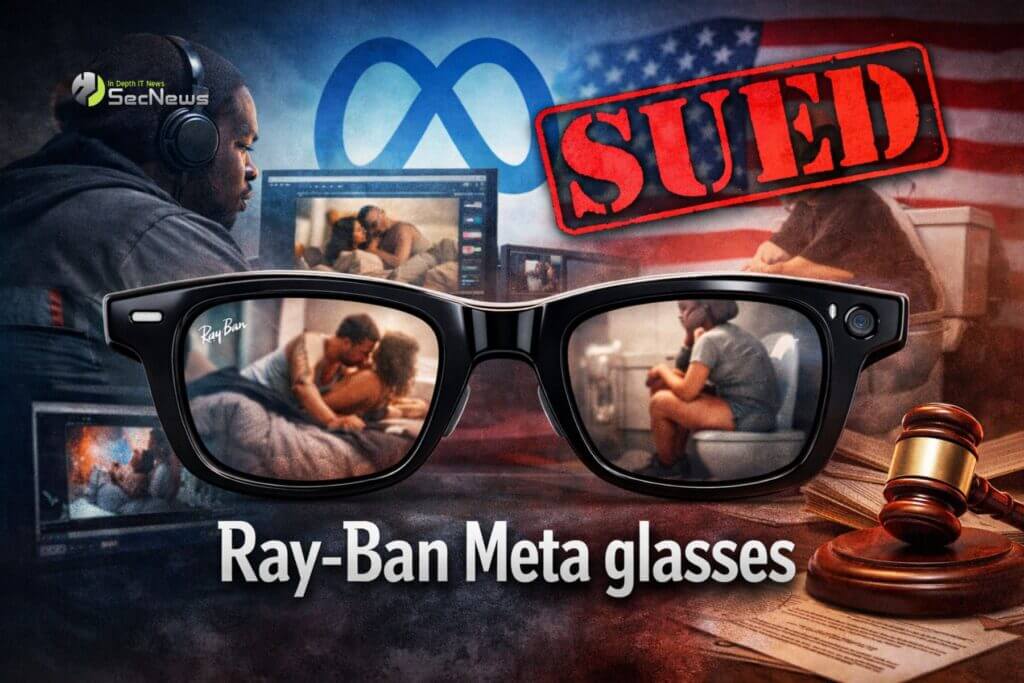
Meta of intense reactions around issues privacy, this time because of its AI smart glasses, Ray-Ban Meta, which it has on the market. The case comes to light after a journalistic investigation by Swedish newspapers, which revealed that employees of the company's subcontractor in Kenya allegedly reviewed material that had been recorded by users' glasses. According to the reports, the content that was reviewed even included particularly sensitive moments of users' everyday lives, such as nude photos, erotic moments and scenes in private spaces.
The revelation has raised concerns about whether users really know what is happening with the data their devices are recording, and has also reignited the debate about how transparent tech companies are about the collection and processing of personal data.
Disputing privacy claims
Meta had claimed that it applied face blurring techniques to images processed by its partnersto protect the privacy of the individuals featured in the footage. However, according to sources cited by the relevant publications, this process did not always work consistently, which increased concerns about potential data breaches.
See also: Meta smart glasses-Ban
The case quickly caught the attention of regulators. The UK Information Commissioner's Office announced that it had launched an investigation into the matter to determine whether data protection rules had been breached. At the same time, the reactions were not limited to Europe, as legal developments soon emerged in the United States.
The lawsuit in the United States
Meta is now facing a lawsuit filed in the US by two consumers, Gina Bartone of New Jersey and Mateo Canu of California. The plaintiffs are represented by the Clarkson Law firmknown for its handling of public interest cases.
The complaint alleges that the company violated privacy laws and rules regarding misleading advertising. The plaintiffs allege that the promotion of the smart glasses relied on advertising messages that emphasized privacy, such as the phrases “designed for privacy” and “controlled by you.”
According to them, these formulations created the impression that the content recorded remains exclusively under the control of the user. However, the revelations regarding the human evaluation of the material allegedly contradict the image presented to the public.
The role of human data evaluation
Meta acknowledged that in some cases it uses external partners to evaluate content shared by users with artificial intelligence platform its. According to the company, this process is aimed at improving the smart glasses user experience and making the AI systems work better.
See also: Smart glasses and the promise of Android XR

The relevant references, as noted, are included in the privacy policy and supplementary terms of use of its services. However, critics of the company argue that this information is not always clear or easily accessible to consumers, which reinforces questions about the transparency of its practices.
However, spokesperson Christopher Sgro made the following statement regarding the issue: “Ray-Ban Meta glasses help you use Artificial Intelligence, hands-free, to answer questions about the world around you. This media remains on the user’s device unless users choose to share media they have captured with Meta or others. When people share content with Meta AI, we sometimes use contractors to review this data for the purpose of improving people’s experiences , as many other companies do. We take steps to filter this data to protect people’s privacy and prevent the review of personally identifiable information.”
The rapid spread of "wearable" technologies
The case takes on even greater significance given the rapid proliferation of smart glasses. According to figures cited in the lawsuit, more than seven million people purchased Ray-Ban Meta glasses in 2025.This means that a huge amount of optical material and data can pass through processing and evaluation systems.
At the same time, the rise of so-called “ luxury surveillance ” technologies – devices that constantly record the user’s environment – has caused strong reactions. In addition to smart glasses, this category also includes other artificial intelligence devices that listen or monitor the environment to offer digital services.
🔒 Protect your privacy with Proton VPN
Swiss VPN from the creators of Proton Mail — strict no-logs policy, strong encryption, and built-in NetShield that blocks ads, trackers, & malware.
- ✔ No-logs, based in Switzerland (except 14-Eyes)
- ✔ NetShield: blocks ads, trackers & malicious domains
- ✔ Covers all devices — free version available
The link is an affiliate link — SecNews may receive a commission at no additional cost to you. It does not affect the independence of our article writing.
See also: Amelia: Amazon's smart glasses for delivery drivers
The broader issue of privacy in the age of AI
The debate surrounding Meta's smart glasses reflects a broader problem in the digital age: As devices become increasingly "smart" and connected, users are being asked to trust companies with ever-increasing amounts of personal data.
The question is whether privacy protections can keep up with the speed of technological advancement. This lawsuit could be another important test of how big tech companies handle the data of millions of users around the world.
