

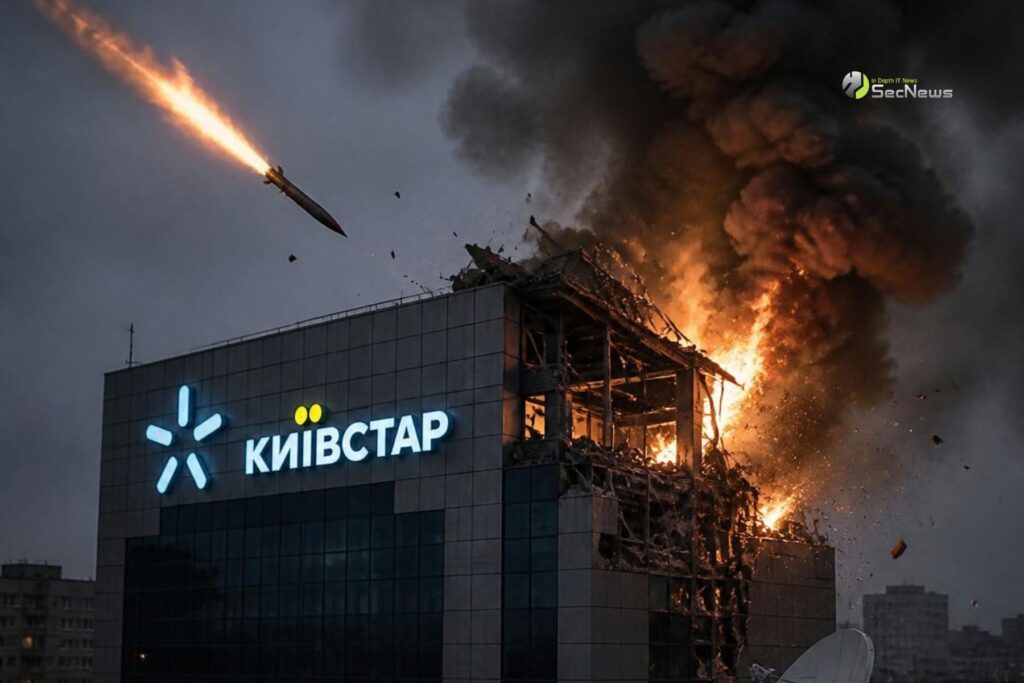
Russia on Sunday attacked Kyivstar in Kiev, escalating attacks on Ukraine's telecommunications and digital infrastructure. Kyivstar is the country's largest mobile phone provider and a critical part of the daily communications of millions of citizens.
The company itself confirmed to Ukrainian media that its headquarters in the Ukrainian capital had been hit. According to the information broadcast, no human casualties were reported from the incident.
The development is of particular importance as telecommunications infrastructure has become a critical factor for the functioning of the country in the midst of war, not only for the communication of citizens but also for information regarding air threats and other emergencies.
Vodafone Ukraine's infrastructure is also in the spotlight
On the same day, the Russian Defense Ministry announced that Russian forces also struck a data center linked to Vodafone Ukraine, the country's second-largest mobile phone provider.
See also: Drone data in Ukraine fuels a new market
Vodafone Ukraine did not immediately comment on the report. However, the simultaneous mention of facilities of two of Ukraine's largest telecommunications providers reinforces the picture of a broader pressure on the infrastructure that supports digital communications.
Data centers are particularly critical targets in such a conflict, as they host systems that manage data, applications, network services and mechanisms required for the continuous operation of telecommunications networks.
New attacks on data centers in Kiev
Ukrainian President Volodymyr Zelensky said a data center in Kiev was hit by two attacks on Sunday morning. According to the same report, two children and an adult were injured.
The incident is part of a series of attacks that have disrupted Ukrainian networks. Last week, Russian attacks affected the data centers of internet providers, resulting in service outages that, according to the Ukrainian Ministry of Digital Governance, affected about 100,000 households in Kiev and the wider region.
The impact of such attacks is not limited to the loss of internet access. In a country at war, the availability of telecommunications can affect citizens' access to danger warnings, emergency services, information and essential digital services.
Why data centers matter so much
Modern society's dependence on data centers means that serious damage to such facilities can have a ripple effect. These infrastructures are not just places where data is stored. They are the foundation for the operation of networks, cloud services, applications, databases and management systems.
See also: Cyberattack hits Ukrainian ARMA agency

For a telecommunications provider, the resilience of data centers is therefore directly linked to its ability to keep its services active. This is why modern infrastructures are designed with backup systems, multiple locations and disaster recovery mechanisms.
In the case of Ukraine, however, the challenge is even greater, as critical infrastructure is faced with repeated natural disasters from attacks, but also with cyber threats that can target the same systems remotely.
Information as a critical factor in war
Ukrainian Foreign Minister Andriy Sibikhasaid that Russian attacks on large data centers are aimed at disrupting the flow of information. In a post on X, he also stressed the importance of immediate warnings about missile and drone attacks, noting that such alerts can help save lives.
The statement highlights a less visible side of modern warfare: digital infrastructure is now part of the critical national infrastructure. The availability of communication networks can be as important as the physical protection of roads, hospitals and other essential facilities.
See also: IP Cameras: Russian espionage in NATO and Ukraine

For Ukraine, maintaining telecommunications operations is therefore a constant technical and operational challenge. The need for decentralized data centers, backup connections, protection against cyberattacks , and rapid service restoration is becoming increasingly urgent.
The latest attacks show that the battle for connectivity is not just being fought in cyberspace. The physical facilities that keep a country's digital ecosystem can also be targeted, with consequences that reach far beyond telecommunications and touch the daily security and functioning of an entire society.
source: www.reuters.com
