

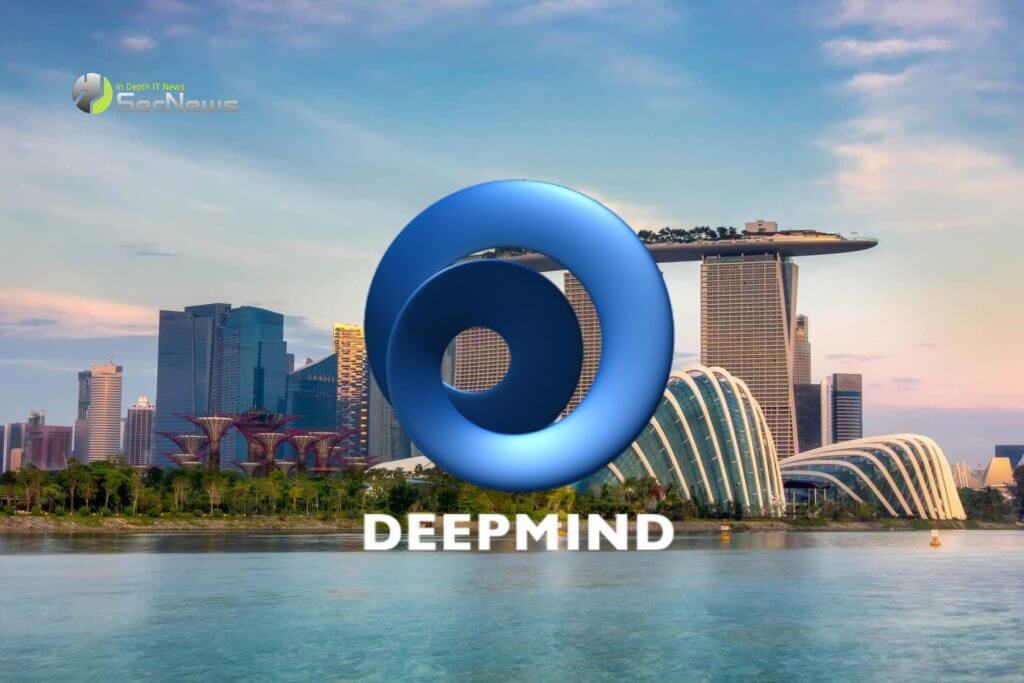
Google DeepMind, Google's leading player in artificial intelligence development, has officially opened its first research lab in Singapore. The move marks another step in the company's broader strategy to strengthen its presence in the Asia-Pacific — a region that is emerging as a global hub for AI research.
Strategic expansion in Asia-Pacific
The new lab is located at Google Apac in Pasir Panjang and is the first in Southeast Asia. The company already has two similar facilities in India and Japan. The Singapore lab is already operational, with the company planning to further strengthen its workforce in the region.
While Google did not disclose exact headcount or the total amount of the investment, it confirmed that its Asia-Pacific team has more than doubled in size in the past year. With the new center, DeepMind aims to attract additional researchers and engineers to develop products such as Gemini 3, the company's most advanced AI model.
See also: South Korea to participate in UAE's Stargate AI project
The history of Google Deepmind and the legacy of AlphaGo
DeepMind became world-famous in 2016 when its AlphaGo defeated world champion Lee Sedol at the board game Go — a landmark victory that showcased the power of neural networks and reinforcement learning. Since then, the team has grown into Google’s primary research arm for cutting-edge AI technologies.
Collaborations with governments, universities and businesses
According to the company's announcement, DeepMind's approach in Singapore will be highly collaborative. The new lab will act as a hub for collaborations with the local government, academic institutions, technology companies, and civil society organizations.

Lila Ibrahim, Chief Operating Officer of DeepMind, said the center's research agenda includes health and education — two areas where artificial intelligence can provide immediate, practical solutions for large populations.
Contribution to Gemini 3 and new emphasis on cultural understanding
The Singapore team was actively involved in the development of Gemini 3, Google's next-generation AI models. Ibrahim stressed that DeepMind's presence in Southeast Asia is critical, as it allows the company to better understand the cultural nuances and linguistic peculiarities of the region.
See also: Baidu unveils M100 and M300 AI chips
Yolyn Ang, Google’s vice president of business development in the region, explained that adapting LLMs to local data lowers barriers for users and makes AI more accessible. In other words, a model that “speaks” and understands local cultures, idioms, and social contexts gains a significant advantage.
Collaboration with AI Singapore for local model training
To further strengthen its connection to the region, DeepMind is partnering with AI Singapore (AISG)to use Southeast Asian data to train Google’s models to better reflect the region’s multicultural reality.

Mark Pereira, head of partnerships at AISG, said that by working with DeepMind they can bridge the so-called “last mile gap” — the difficulty of turning general AI models into tools that truly represent local communities.
See also: DeepMind: New AI models help robots do more tasks
Next steps: Recruitment and development
Looking ahead, Lila Ibrahim said that staffing and stabilizing the team in Singapore is a top priority. Once the center is established, DeepMind is looking at further expanding its operations in the region, which is rapidly becoming a global “incubator” for AI research.
