

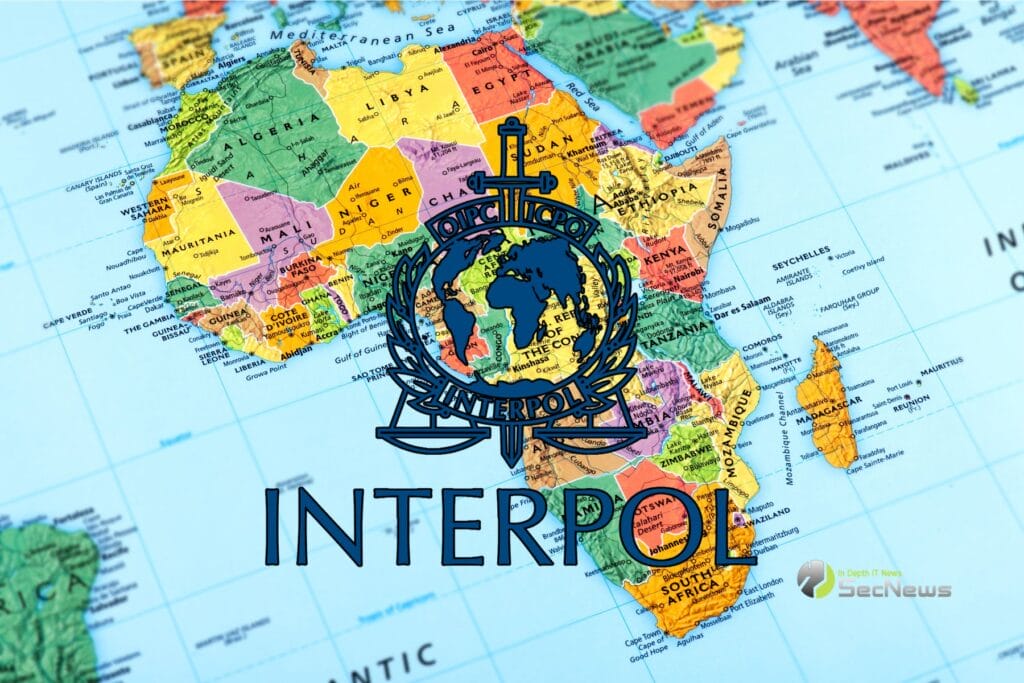
A large-scale transnational police operation involving 14 African countrieshas dismantled a major digital fraud ring, resulting in 260 arrests and the seizure of 1,235 electronic devices. Contender 3.0, as the operation was called, is the third wave of crackdowns against fraudsters and criminals who carry out romance scams and exploit online platforms for personal financial gain. Previous operations took place in 2021 and 2024.
This new action focused on both scams , where perpetrators convince victims to send money through online relationships, and sexual blackmail, aimed at extracting money in exchange for not publishing personal images or videos.
See also: Salt Typhoon attacks telecommunications infrastructure
Focus on Key Countries
The operation lasted from July 28 to August 11, 2025, with raids in Ghana, Senegal, Ivory Coast and Angola. Police authorities collaborated with cybersecurity companies such as Group-IB and Trend Micro to identify digital traces of the perpetrators, using IP, digital infrastructure and social media profiles.
In Ghana, fraudsters used fake IDs and stolen photos to scam victims, collecting money through fake courier and customs fees. In Senegal, a network was uncovered that impersonated celebrities and emotionally exploited victims through dating apps, extorting approximately $34,000 from 120 victims.
In Ivory Coast, perpetrators created fake online profiles to obtain personal photos, which they used for blackmail. In Angola, criminals used fake documents to conceal their identities and facilitate financial transactions.
See also: Co-op: $107 million in losses after Scattered Spider attack
Economic and Psychological Impacts
In total, 1,463 victims, with estimated total losses of approximately $2.8 million. USB drives, SIM cards, fake documents were seized, and 81 cybercrime infrastructures.

Cyril Gout, Interpol's deputy executive director, said the rise in cybercrime in Africa was causing serious financial losses and psychological harm, adding that criminals were exploiting online platforms to target and manipulate victims.
Dmitry Volkov, CEO of Group-IB, pointed out that perpetrators exploit deep human vulnerabilities, such as trust and emotional attachment, turning genuine emotions into tools of deception and blackmail.
International Cooperation and Funding
Operation Contender 3.0 was funded by the UK Foreign, Commonwealth and Development Office (FCDO) as part of the Joint African Cybercrime Operation . Participating countries include Angola, Benin, Burkina Faso, Côte d'Ivoire, Gambia, Ghana, Guinea, Kenya, Nigeria, Rwanda, Senegal, South Africa, Uganda and Zambia .
See also: Hackers use Copyright Takedown Requests to develop malware
The previous operation, Contender 2.0, had led to eight arrests in Ivory Coast and Nigeria for sex and phishing scams, causing losses of over $1.4 million to European citizens.
Lessons for the Future of Digital Security
Contender 3.0 highlights the need for continued international cooperation and effective technological tools to combat digital crime. Fraud networks leverage social engineering and modern technologies to manipulate victims, while their financial and psychological impacts are significant.
🔒 Protect your privacy with Proton VPN
Swiss VPN from the creators of Proton Mail — strict no-logs policy, strong encryption, and built-in NetShield that blocks ads, trackers, & malware.
- ✔ No-logs, based in Switzerland (except 14-Eyes)
- ✔ NetShield: blocks ads, trackers & malicious domains
- ✔ Covers all devices — free version available
The link is an affiliate link — SecNews may receive a commission at no additional cost to you. It does not affect the independence of our article writing.

The involvement of private cybersecurity companies such as Group-IB and Trend Micro shows that public-private cooperation is essential to effectively tackle digital crimes. Continuous user education, the development of technological fraud detection tools and international cooperation are critical elements for the protection of victims.
Operation Contender 3.0 demonstrates that Africa can be a model for combating cybercrime internationally. Through collaboration between Interpol, national police forces and private technology companies, authorities are able to protect victims from financial devastation and psychological harm, while ensuring the stability and security of digital infrastructure.
