

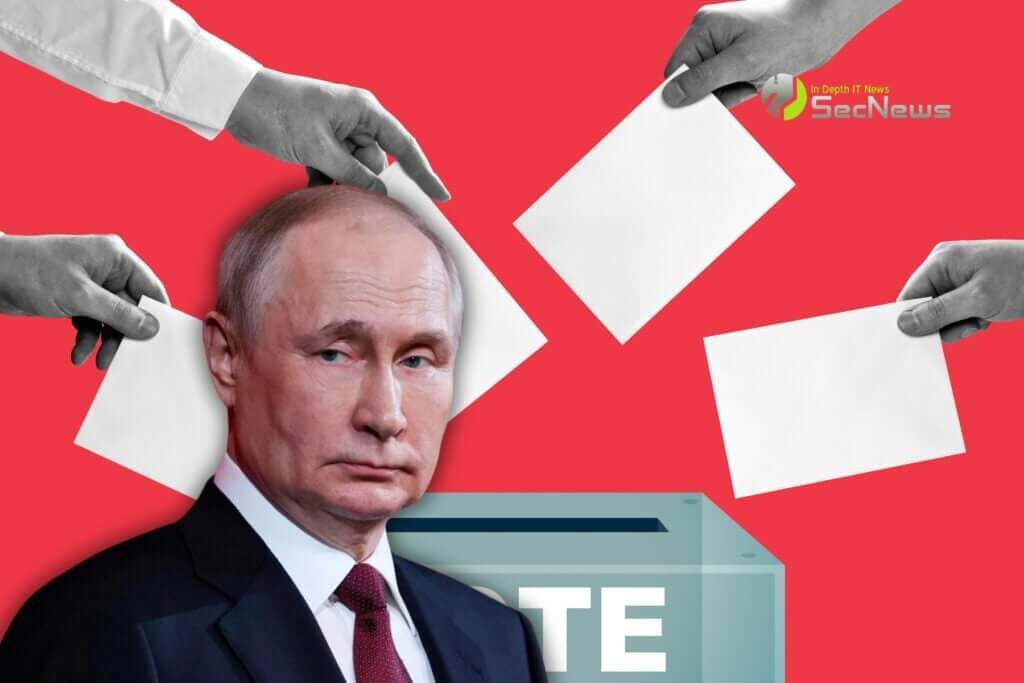
Russia is tightening online controls ahead of elections this weekend that are almost certain to give President Vladimir V. Putin another six years in power, further shrinking one of the last spaces for political action, independent information and free speech.
See also: Russia bans officials from using iPhones
Russian authorities are stepping up their crackdown on digital tools used to circumvent internet restrictions, restricting access to communication apps such as WhatsApp in specific regions and expanding a program to block websites and online services, according to civil society organizations, researchers and affected companies.
Russia is reportedly using techniques that go beyond established hacking and digital surveillance practices, taking a more systematic approach to changing the way its domestic internet operates. In doing so, the country is using methods pioneered by China and Iran, creating an authoritarian model for online control that differs from the more open approach of the United States.
According to Mikhail Klimarev, a Russian telecommunications expert and executive director of the Internet Protection Society, Russia “has reached a new level of exclusion in the last six months.”
Online censorship and internet control have been increasing in Russia for more than a decade, but the scale and effectiveness of the latest blocks have even surprised technical experts. These techniques are added to a repression infrastructure that has been built by Mr. Putin to keep protesters and his opponents under control and to provide the country with state propaganda.
The moves come at a critical time for Mr. Putin, who is facing a memorial service for Alexei A. Navalny, following his death last month in a Russian prison, as well as the fallout from a protracted war in Ukraine. On Sunday, Russians will vote and Mr. Putin is almost certain to win, with heightened internet controls suggesting the government is taking no chances.
The increased internet control in Russia follows the example of China, where the internet is severely restricted and social media platforms are closely monitored.
See also: MASEPIE: Russian hackers target Ukraine with new malware

In January, as protests in the industrial province of Bashkortostan were underway, officials successfully restricted local access to the messaging apps WhatsApp and Telegram. After Mr. Navalny’s death last month, further restrictions were imposed. During Mr. Navalny’s funeral in Moscow, mobile networks in surrounding areas were at a standstill, making it difficult to post videos and images on social media.
Russia is also changing the way it censors websites and internet services. After relying primarily on telecommunications carriers to block websites listed on a published blacklist, according to researchers, authorities now appear to be relying more on centralized technology to block and slow traffic in a more discreet way.
Russian officials appear to be balancing a desire for online control against technical restrictions and fears of angering the public by restricting popular online platforms such as YouTube and Telegram, which are used for news, entertainment and communication. The government has also faced engineering challenges, including earlier this year when several major websites went down for about 90 minutesin what experts described as a failed test of a new blocking system.
Σύμφωνα με ειδικούς, οι αρχές πιθανότατα ετοιμάζονται για γεγονότα που θα μπορούσαν να χαλάσουν τις εκλογές αυτό το Σαββατοκύριακο. Οι υποστηρικτές του κ. Ναβάλνι κάλεσαν τους ανθρώπους να πάνε στις κάλπες την Κυριακή στις δώδεκα το μεσημέρι για να ψηφίσουν κατά του κ. Πούτιν, ελπίζοντας ότι εικόνες με μακρές ουρές θα δείξουν στον κόσμο την έκταση της δυσαρέσκειας. Η κυβέρνηση θα μπορούσε να υπονομεύσει το σχέδιο αν μπορεί να εμποδίσει τη διάδοση των εικόνων.
In recent months, Russia’s VPN blocking has increased more than ever. Yegor Sak, founder of Windscribe, a Canadian VPN provider used in Russia to bypass internet restrictions, said: “The level of blocking we see in Russia far exceeds what we see in China.”
See also: Russian hackers APT28 infect organizations with HeadLace backdoor
🔒 Protect your privacy with Proton VPN
Swiss VPN from the creators of Proton Mail — strict no-logs policy, strong encryption, and built-in NetShield that blocks ads, trackers, & malware.
- ✔ No-logs, based in Switzerland (except 14-Eyes)
- ✔ NetShield: blocks ads, trackers & malicious domains
- ✔ Covers all devices — free version available
The link is an affiliate link — SecNews may receive a commission at no additional cost to you. It does not affect the independence of our article writing.

Internet censorship significantly affects freedom of expression, as it restricts the ability of individuals to express their views freely. This can lead to limited access to information and a one-sided presentation of events. Furthermore, internet censorship, as in the case of Russia, can hinder freedom of expression in cyberspace, preventing the exchange of ideas and opinions. This can have serious implications for democracy and freedom of speech, as people cannot actively participate in social and political debate. Finally, internet censorship can lead to increased insecurity and fear of persecution, as internet users may worry about the consequences of expressing their views. This can lead to self-censorship, further restricting freedom of expression.
Source: nytimes
