

To explore space, scientists need to get more and more creative. That's exactly what they're doing now with the Superpressure balloon-borne imaging telescope, or SuperBIT, a next-generation flying space telescope. The goal is to fly higher than the clouds and capture images of the universe in an environmentally friendly way. The first operational flight is scheduled for April 2022.The innovative telescope will take off from Wanaka, New Zealand. It will circle the Earth several times, taking pictures of the night sky. During the day, it will recharge its batteries using solar panels.
On June 21, at the Royal Astronomical Society’s annual National Astronomy Meeting, the team (comprising scientists from NASA, the Canadian Space Agency, and universities in Canada, the United States, and the United Kingdom) shared results from the tests. The scientists are very confident in their creation, even declaring that this new space telescope could be the next best thing in astronomy. Mohamed Shaaban, a doctoral student at the University of Toronto, said: “The new balloon technology allows us to visit space in a low-cost and environmentally friendly way.” Shaaban presented SuperBIT at the RAS (NAM 2021), which was held online.
Read also: NASA's Hubble Telescope detects rare pair of double quasars
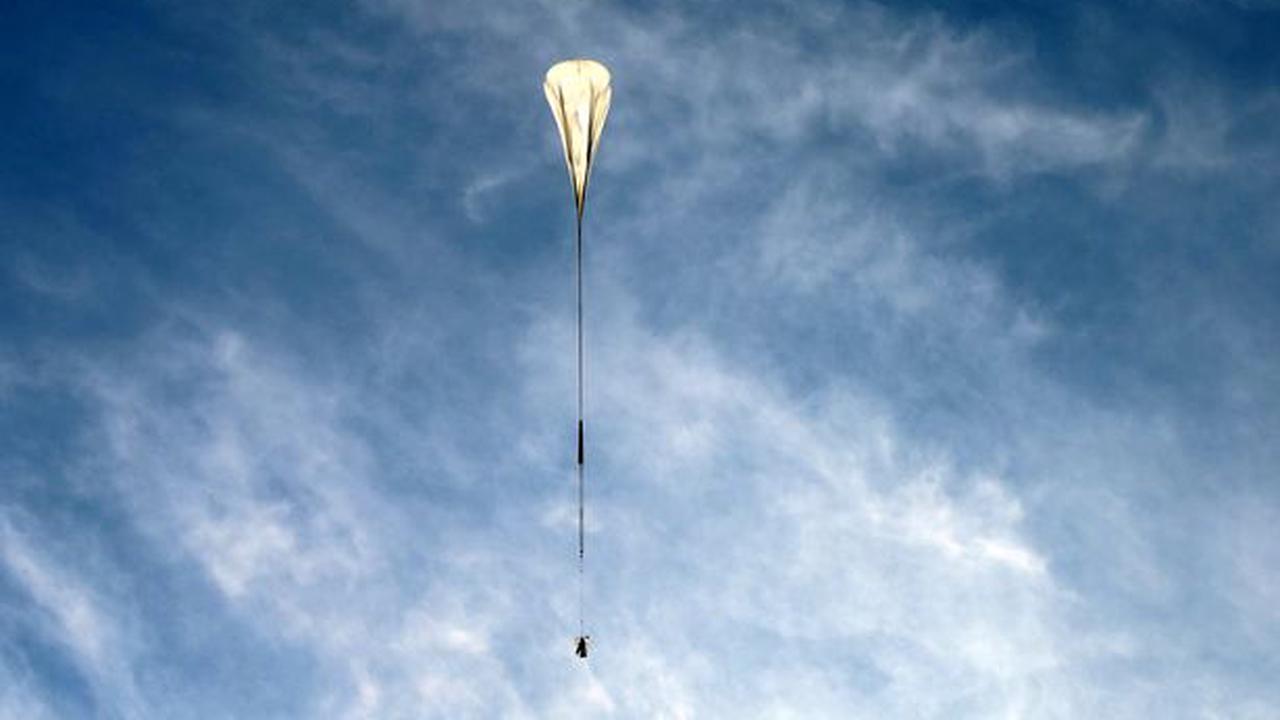
The SuperBIT helium balloon is one of the new technologies incorporated into the project. The balloon is the size of a football field. It is powerful enough to carry a telescopic mirror to an altitude of about 25 miles (40 kilometers) – about the same altitude as the top of Earth’s stratosphere. Optical material that high would allow astronomers to observe the universe with little or no interference from the atmosphere. Unlike current balloons, SuperBIT also has a “hyperbaric” balloon that can keep the telescope high in the sky for months instead of days.
SuperBIT’s final test flight in 2019 showed that it can stay on its observation target with “a variation of less than one thirty-sixth of a degree for more than an hour.” This will allow SuperBIT to obtain high-resolution images equal to or better than those of the iconic Hubble Space Telescope.
See also: Will NASA's Nancy Grace Roman Telescope find 100,000 planets?
In addition, unlike traditional space telescopes, SuperBIT periodically returns to Earth, allowing scientists to continuously upgrade it . Balloons do not require rocket fuel, making them more environmentally friendly .
Another important feature is that cost is lower than that of similar satellites. Specifically, RAS officials spoke of a construction and operating budget for the first telescope of $5 million. SuperBIT cost almost 1,000 times less than a similar satellite.
Suggestion: NASA: The moon is "wobbling" and Earth will have more floods
The team behind this project is not stopping at SuperBIT. After the successful launch of the SuperBIT mission, the researchers plan to focus on the project's ultimate goal: GigaBIT. A test flight of GigaBIT is expected to begin in September 2022.
