

For decades, scientific communities, such as NASA, have been trying to decipher the origin of certain radio signals from space, which appear and disappear mysteriously.
See also: The first hotel in space will open in 2027 – it will accommodate 400 people
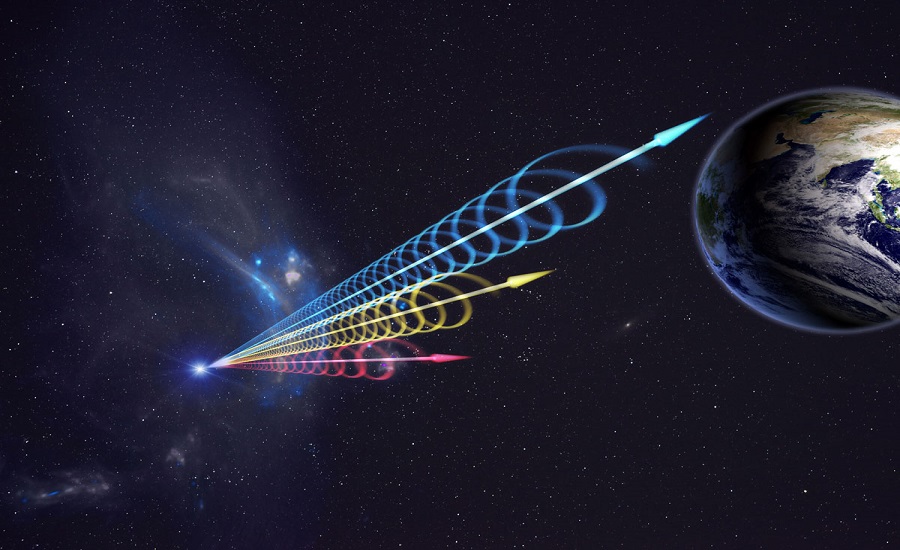
In November 2020, the journal Nature announced the discovery of the first FRB (fast radio bursts) originating from galaxy . This detection involved a magnetar, an unusual type of dead star, which appears to have been responsible for the radio signals. However, the connection has not yet been proven, so astronomers are continuing their search.
In a new study, to be published in the Astrophysical Journal, observations with Hubble have helped researchers pinpoint the location of five FRBs in the spiral arms of distant galaxies. The team examined eight FRBs, most of which were first detected in 2019 and 2020, but the locations of three of them remain unknown.
“This is the first high-resolution image of a population of FRBs,” said Alexandra Mannings, an astrophysicist at the University of California and lead author of the study.
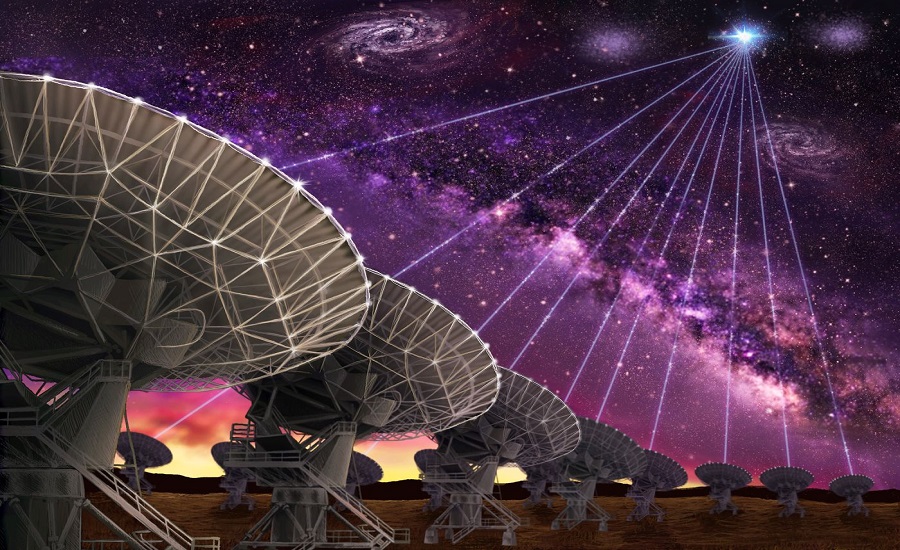
NASA's Hubble is a crucial tool in the search. FRBs are detected by Earth- based detectors , such as the Australian Square Kilometre Array Pathfinder, which allows them to be observed in a region of the sky. Further imaging of that region may reveal a galaxy there. With Hubble's help, the resolution is increased enough to study the characteristics of the galaxies.
See also: NASA: New images show a mystery in Jupiter's Giant Red Spot!
"In this case, Hubble either confirmed the presence of spiral arms in these galaxies or an undiscovered spiral structure that we had not been able to see before," said Wen-fai Fong, an astrophysicist at Northwestern University and co-author of the study.
The study helps improve our understanding of these unusual, energetic bursts and rule out some possible sources. The galaxies in which many of the FRBs have been detected are “massive, relatively young and still forming stars,” according to Mannings, providing valuable context for FRB researchers. But a galaxy’s spiral arms don’t typically house huge numbers of the youngest, brightest stars.
Finding FRBs there helps rule out two causes. They likely don't come from star deaths, which occur in the brightest regions of galaxies. Nor are they caused by neutron star mergers, which can take billions of years to happen and aren't typically found in spiral arms.
The detections do not rule out one of the leading theories, which is Magnetars. These stars release extremely strong magnetic fields and it is thought that this may be causing these radio signals.
See also: Voyager 1: NASA detects a hum beyond the solar system
There's still the possibility that some of the FRBs detected from Earth are caused by something other than magnetars, but the evidence seems to be piling up in favor of the new study.
Not many FRBs have been detected in their galaxies. Some bursts are known to repeat, which has helped reveal their locations, while others simply die out, leaving only the ghost of a signal behind. “There are many possibilities to explore when we have larger numbers,” Mannings said.
As the number of FRBs discovered continues to grow, astronomers are starting to understand them a little more. They're even helping us see the universe in exciting new ways. In May 2020, astronomers in Australia used them to solve the problem of the universe's missing matter.
