

Astronomers have observed one of the largest stellar flares ever recorded in our galaxy. Jets of plasma were shot out from Proxima Centauri, the closest star to Earth. The flare, which was about 100 times more powerful than any other in our solar system, could change the way scientists think about solar radiation and extraterrestrial life.
Proxima Centauri is a “red dwarf” – the smallest, faintest and most common type of main sequence star in the galaxy – located about 4.25 light-years from Earth. It is only one-eighth the mass of the sun and is orbited by two exoplanets. One of these planets, Proxima Centauri b, is thought to be Earth-like and lies within the star’s habitable zone – the distance from a star that could support the development of life, according to researchers.
Read also: Scientists saw a meteorite hitting the planet Jupiter
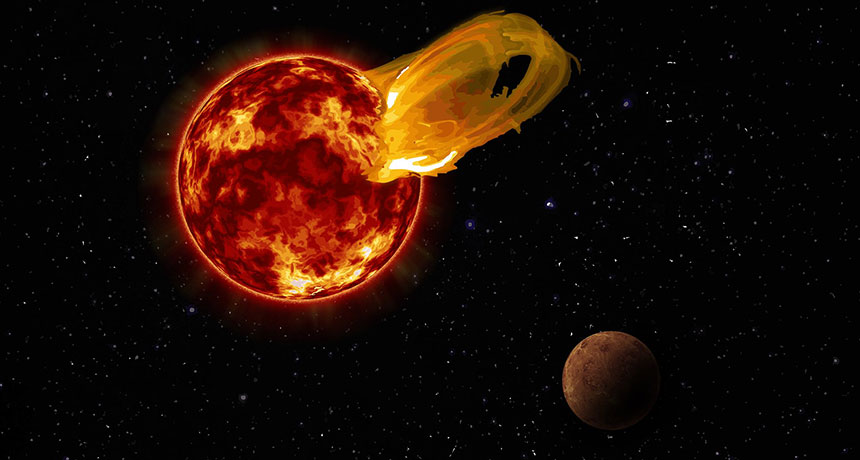
In one study, researchers used nine ground-based and orbital telescopes — including the Hubble Space Telescope, the Atacama Large Millimeter/submillimeter Array (ALMA), and NASA’s — to closely observe Proxima Centauri for a total of 40 hours over several months in 2019. On May 1, 2019, the team observed the starburst, which lasted just 7 seconds and produced very little visible light. The scientists recorded a huge increase in ultraviolet and millimeter-wave radiation.
"The star went from normal to 14,000 times brighter when observed at ultraviolet wavelengths within seconds," Assistant Professor of Astrophysics Meredith MacGregor from the University of Colorado-Boulder said in a statement.
The power of this flare and the type of radiation it emits could change what we know about red dwarfs and the chances of life developing on the planets that surround them.
See also: Space: Ghost particle on Earth and cloud on Mars
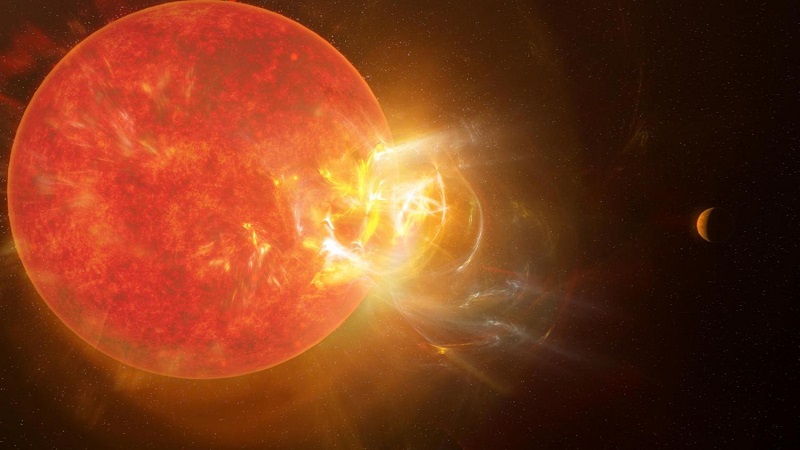
Stellar flares are the result of a star's powerful magnetic fields. These fields can "twist" and suddenly snap back into place to release a huge amount of energy in the form of radiation.
The flare at Proxima Centauri was extremely powerful compared to those emitted by the sun. Unlike flares from the sun, this one also emitted different kinds of radiation. Specifically, it produced a huge wave of ultraviolet light and radio waves – known as “millimeter radiation.”.
"In the past, we didn't know that stars could burn in the millimeter range, so this is the first time we've looked for millimeter flames," MacGregor said.
Proposal: Astronomers detect X-rays coming from Uranus
"The planets of Proxima Centauri are affected by something like this not once a century, but at least once a day, if not several times a day," MacGregor added.
This finding is significant because scientists observed the star using a wide variety of telescopes, each of which focused on a different part of the electromagnetic spectrum.
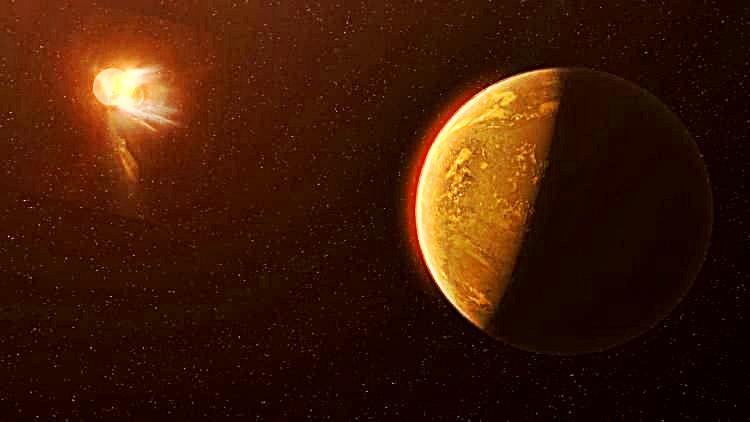
The new findings suggest that the stellar explosions emitted by red dwarfs are much more violent than previously expected and could reduce the likelihood of alien life developing around them.
The type and amount of radiation emitted by Proxima Centauri could make it very difficult for life to exist on exoplanets, which likely don't have a real atmosphere due to the powerful explosions, according to researchers. But it's not impossible for alien life to exist there.
Other red dwarfs likely emit equally powerful flares, reducing the chances of life on planets around them. The researchers now hope to use the wide variety of telescopes to focus on other stellar explosions in our galaxy. "There are likely to be even more strange types of flares that show different types of physics that we haven't thought about before," MacGregor said.
