

We often hear the term Virtual Reality (VR) in innovations related to the gaming. However, this technology is not limited to games, but also extends to sectors such as science and education. However, few may know the history of VR and how much it has changed and will continue to change our lives. Together we will explore the world of virtual reality, analyzing its main characteristics and its importance.
The term "Virtual Reality" refers to the simulation of a real or imaginary environment by a computer. It is a term that has received various interpretations and definitions such as "Synthetic Environment", "Cyberspace", "Artificial Reality" and "Simulation Technology".
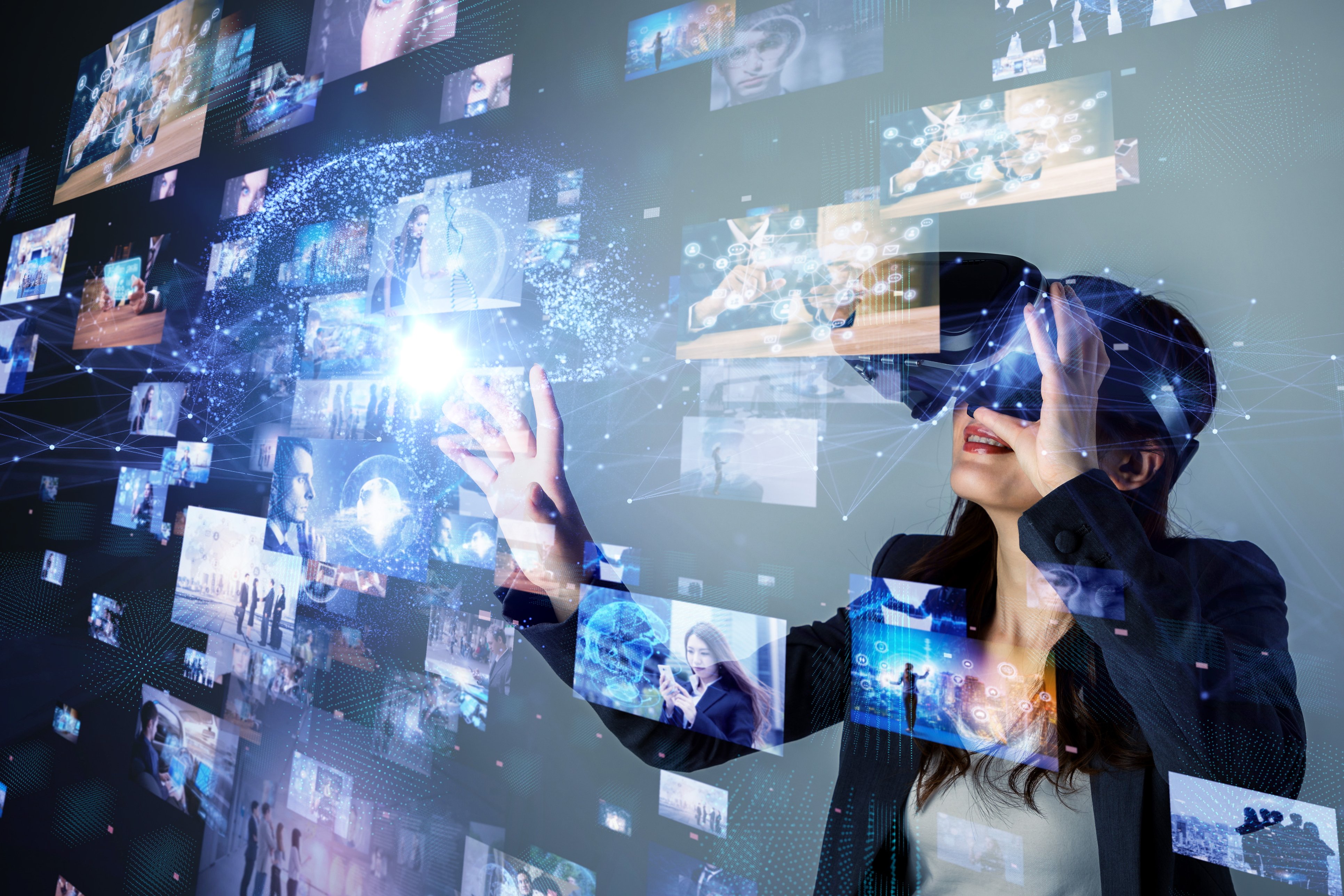
The term was first mentioned by the Frenchman Antonin Artaud in 1932, in his essay “Le Théâtre Alchimique.” The term was revived in its technological sense in 1989 by American author and virtual reality pioneer Jaron Lanier, founder of the company VPL Research, which developed some of the first systems in the 1980s. Lanier defined Virtual Reality as “an interactive, three-dimensional environment, created by a computer, in which one can immerse oneself.”
In 2003, author William R. Sherman and researcher Alan B. Craig defined Virtual Reality as a medium consisting of “interactive computer simulations that ‘sense’ the user’s position and actions, and replace or augment feedback to one or more senses, giving the feeling of mental immersion or presence in the simulation.”.
Current VR technology often uses virtual reality headsets or multi-view environments, sometimes in combination with physical environments or scenery, to create images, sounds, and other sensations that simulate a user's physical presence in a virtual or imagined environment. A person using virtual reality equipment is able to "look around" the artificial world, move around it, and interact with virtual features or objects.

VR systems that transmit vibrations and other sensations to the user via gaming controllers or other devices are known as haptic systems. This tactile information is generally known as force feedback in applications medicine, video games, and military training.
To make a user's immersion in a Virtual Reality environment as successful as possible, it is important to isolate the user and their senses from the real world, overlaying real-world stimuli with corresponding virtual ones, created by the Virtual Reality system. Of the five senses, the most important in descending order are vision, hearing and touch. Thus, it is of primary importance for a Virtual Reality system to provide stereoscopic imaging, that is, two images from different angles, one for each eye of the user, so as to create a sense of depth in space.
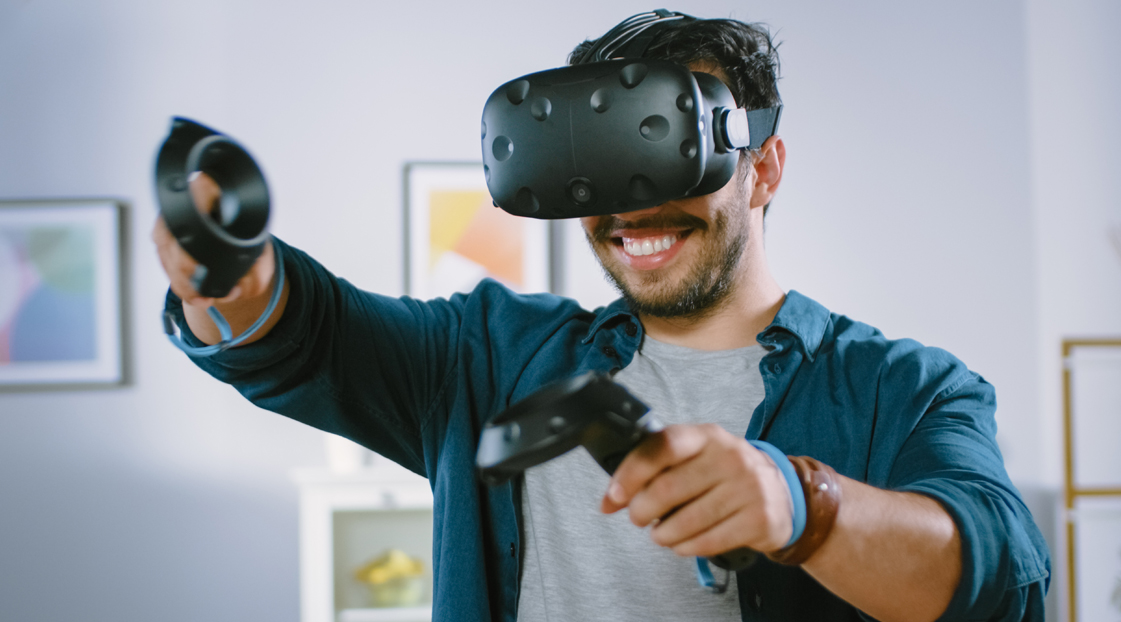
At the same time, the existence of stereoscopic sound helps the user to understand what is happening around him in the virtual space that surrounds him, in a very natural way, while at the same time excluding the user from the sounds of the real world, which could ruin his virtual experience. In addition, touch can be used with appropriate devices either to allow the user to feel the world, or to be easily guided in the execution of some specific actions. If all of the above is combined with the detection of the user's movements with appropriate detection devices, so that the virtual environment behaves like the real one, then the entire experience that the user will gain can be highly realistic.
Virtual Reality has found application in flight simulation, ship driving, car driving and spaceship driving, enabling the training of drivers and pilots without exposing them to real danger. VR technology is also applied, among others, in education, medicine, entertainment (video games, theme parks) and the internet (with cyberspace and social media). Similar applications are being developed and used in the training of doctors, military personnel, engineers, as well as in games, architectural designs, and even in the presentation of stock market data.
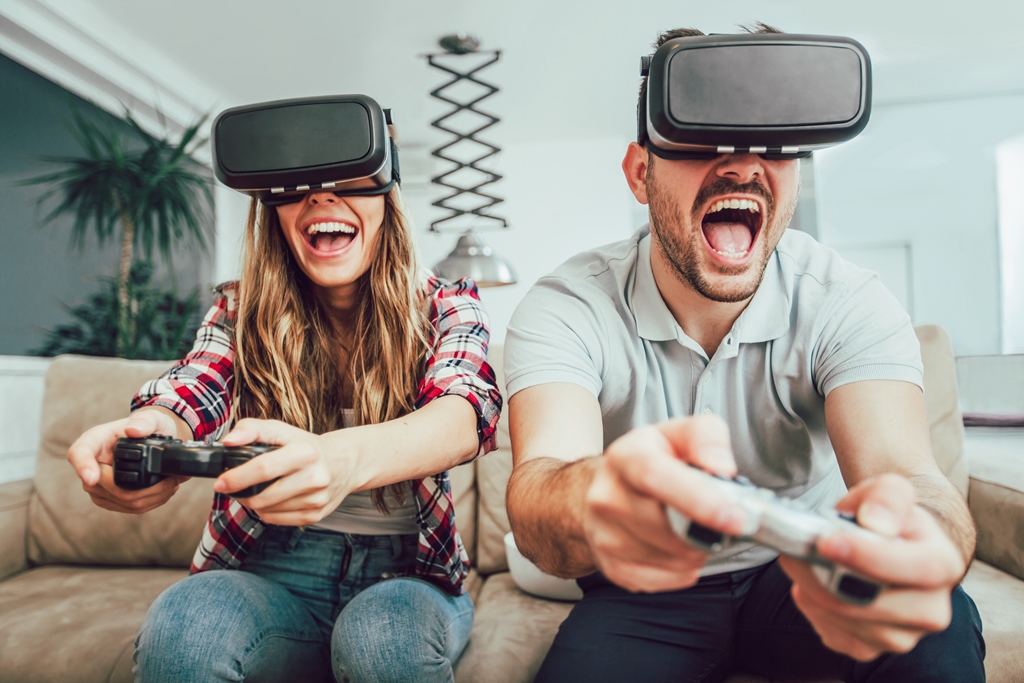
In the gaming world , VR devices will bring major changes to the videogame industry. With Virtual Reality, even the already impressive experience offered by a well-made game can gain another dimension and surprise like never before. Practically, a mask that integrates lenses and screens at the eye point touches your face, filling your field of vision with images. The feeling you get wearing a VR headset is unparalleled, as the applications in which it can be used are countless.
If you prefer a VR headset for your computer, you can even access cities from all over the world to explore as if you were right there on the map. You can attend plays or concerts and experience breathtaking adventures, all without the risk.
On the other hand, wearing a VR mask, your attention automatically focuses only on what your eyes see. In this way, your head is transported to a completely different world than in reality, with different conditions. At the same time, however, your body is on Earth, sitting on a sofa or a chair. So there is a psychosomatic contradiction. This contradiction can cause severe headaches, nausea, even fainting or visual side effects. Other negatives are the high cost and slow application development time.

As we mentioned earlier, Virtual Reality is also being used in education. In the age of digital devices, we have the opportunity to enable better learning with technology. Virtual Reality (VR) seems to be the natural next step for the evolution of education. It provides exceptional visualizations that are not possible in the traditional classroom, attracts the interest of learners, increases their participation, while also eliminating the language barrier.
However, there is also a downside to VR in education as it degrades human communication, lacks flexibility, and there are issues of functionality and dependency on a virtual world. Furthermore, it is an expensive technology.
In terms of medical science, VR is used to treat diseases or medical education. In particular, it is applied for physiotherapy, pain management, treatment of phobias or post-traumatic stress. Particularly important is the fact that this technology can also be used in the training of new surgeons, who will be able to perform countless operations on virtual "organs", in an environment that simulates the human body, without the fear of the consequences of a possible medical error. Of course, this is an expensive technology, which makes its widespread dissemination difficult.

In short, VR, when implemented correctly, can be an incredibly immersive experience. Using computer-generated imagery, there are no limits except money and imagination when creating other worlds, product displays, or spaces in new and interesting ways.
However, VR is a fragmented market. Content creation tends to be customized and, often, expensive. Best practices for efficient and engaging content creation are still being worked out. Additionally, VR is slow for demos. It takes time to configure the headset, put on/set up the headset, and get familiar with the controls.
Importantly, VR is often a solitary, individual experience that transports you somewhere else, to a place that is different from your existing environment. This goes against one of the main goals, which is for people to come together and interact in a group setting.
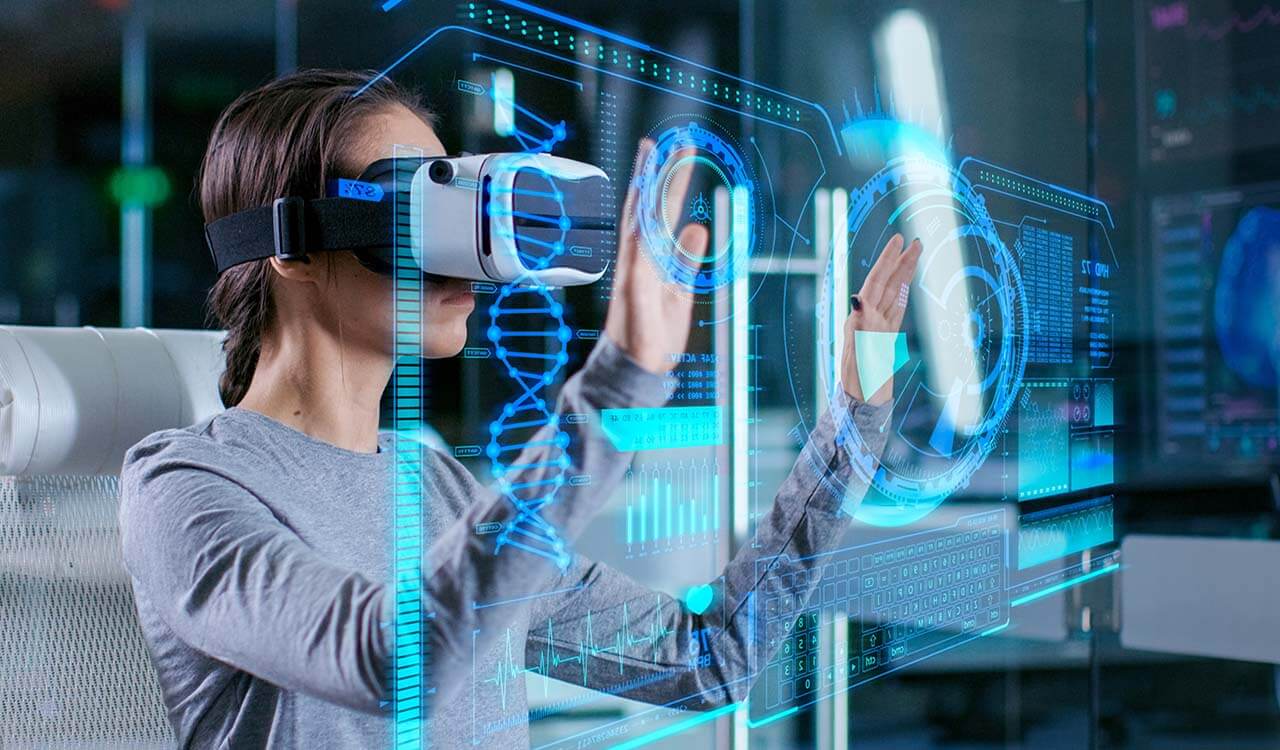
People are ready to embrace this new revolutionary technology. The first idea that comes to everyone's mind when they think of VR is that it offers an entertainment experience. Therefore, it is a technology that combines knowledge, fun and escape into a world that is built based on the needs and desires of each person.
It is also very likely to provide solutions to serious and important everyday problems, thus constituting a useful tool in the hands of individuals. It remains to be seen whether Virtual Reality will be used in such a way that it helps us escape from reality in a creative way or whether it will go beyond the limits and become a misused weapon.
In a world plagued by poverty, environmental destruction, and political instability, VR will certainly be a welcome escape. However, the real world will continue to exist, so people should be able to separate the two worlds and experience balanced situations. The most important thing, however, is not to get to the point of depending on a fictional world to escape reality, as this will in turn bring other problems.
