

Hackers from China have found a way to trick a Tesla Model S into going into the wrong lane by strategically placing some simple stickers on the road.
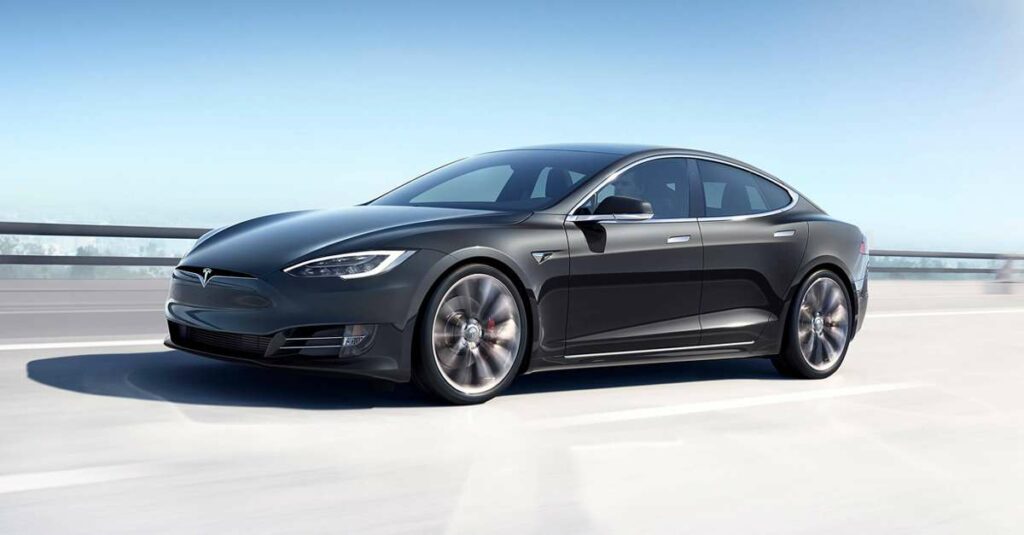
Keen Lab, widely considered one of the most technically astute cybersecurity research groups in the world, developed two types of attacks to bypass Tesla's autopilot lane recognition technology.
First, the researchers sought to make changes to the lane markings, initially adding a large number of “patches” to the line to make it appear blurry. It worked, but because the patches were so obvious, Keen hackers decided it would be too difficult to implement in the real world.
So the researchers tried to create a “fake lane.” They found that Tesla’s autopilot would detect a line where there were only three opaque tiny squares strategically placed on the road. When they placed small stickers at an intersection, the hackers thought Tesla might think the patches marked the continuation of the right lane. On a test track, their theory was proven correct, as autopilot moved the car into the actual left lane.
“Experiments have shown that this architecture has safety risks, and reverse lane recognition is one of the necessary functions for autonomous driving on unsealed roads,” Keen Lab writes in a paper. “In the ‘scene’ we build, if the vehicle knows that the false lane is pointing to the opposite lane, it should ignore this false lane, and then it could avoid a traffic accident.”
In other attacks, Keen Lab claimed to have the ability to remotely control the steering wheel and start the windshield wipers. Hacking the windshield wipers would be difficult to do in a real-world scenario, since they developed a specially designed image that made the Tesla think it was raining. But the fake lane would be easy to recreate using inexpensive materials, Keen Lab said.
This isn't the first time Keen Lab has exposed potential security issues with Tesla's digital systems. In 2016, hackers discovered a way to remotely gain control of a Tesla's brakes.
In March, at the CanSecWest security conference in Canada, prizes totaling more than $900,000 were offered to anyone who could hack a Tesla. Only one team demonstrated a successful exploit: a hack of the built-in browser that allowed researchers Richard Zhu and Amat Cama to display their own messages on the infotainment system. They won $35,000 and the car.
