
Brave, a relatively unknown browser, has released a new version that lets you surf the web anonymously via Tor.
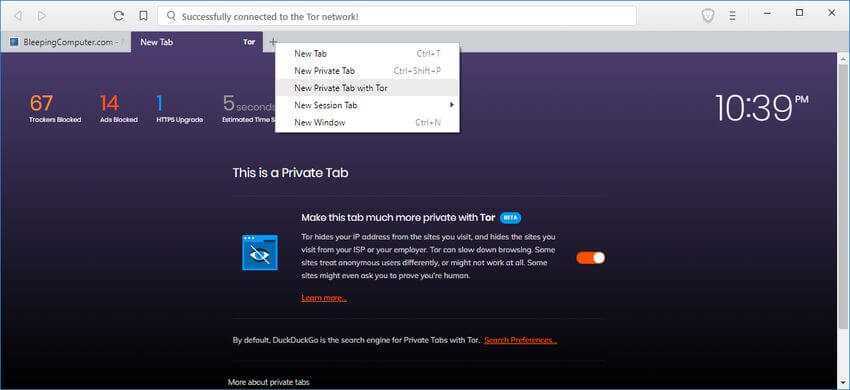
The Brave browser is famous among users seeking anonymity for its original privacy features. It now comes with a new feature called “Private Tabs with Tor,” to cement its reputation for security.
The Brave team says the new “Private Tabs with Tor” feature will be useful for users looking for additional protection beyond what they can get from their local computer. Private browsing sessions were designed to wipe data from the browser after a browsing session is complete. But this mode of browsing is not transparent to ISPs and the websites a user visits, who can record the user’s movements.
Brave's built-in Tor technology allows you to browse the web anonymously by changing your IP address, as it reroutes your browser traffic through the Tor network.
Brave, while not yet in a stable release as it is still in development and the version released so far is in beta, is very popular among privacy-conscious circles. This is because Brave's default configuration blocks ads, tracking scripts, and cryptomining scripts.
Brave's private browsing tabs do not store users' browsing history or cookies, and they also use DuckDuckGo (a search engine that does not log the user) as the browser's default search provider.
The version of Brave released today, which also includes Tor support, is v0.23 beta. You can download it from the Brave website. It runs on Windows 32 and 64 Bit, macOS10.9+, and on 64 bit Linux for Debian-Ubuntu-Mint-Fedora-OpenSUSE. On smartphones it runs on Android and iOS.
Brave browser now features private browsing via Tor

📧
Subscribe to the SecNews Newsletter
