

What happened at the last G20 summit? Last week, Australia forced through a metadata retention law, despite objections that said personal data should be accessible to a very small number of people and only under very secure conditions.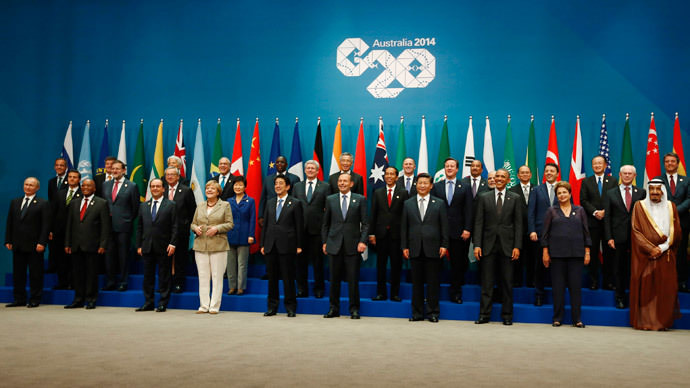
Two business days later, the Guardian revealed that the Australian government cannot hold sensitive data, such as a list containing the passport numbers of 31 world leaders.
The publication revealed that during the G20 in Australia last November, a list of leaders' personal details was accidentally leaked. Microsoft Outlook was the culprit: the sender wanted to send the list to someone else, but the address was changed by an unwanted autofill.
The person who received the file promised that it would be deleted and emptied his folders, including the Deleted Items, but apparently did so after the daily backup. From then on, no one knows how the sensitive data was leaked.
The leaked files contain passport numbers from 31 world leaders. Among them are those of Barack Obama, Angela Merkel and David Cameron. But who would use these numbers? Who could apply for a green card from the US using Barack Obama's passport?
The leak may not mean much in terms of risk, but it was quite embarrassing for Australia, which had such an unjustified incident occur during the G20 summit.
It should be noted that this event should be a wake-up call for agencies, companies and governments, as data security in 2015 does not seem to be an easy task. In addition to malicious third parties, there is always the case of human error.
