

Some people use the words “Internet” and “Web” interchangeably, as if they were one concept. This use of these terms is technically incorrect.
The Internet and the World Wide Web describe a relationship of “the whole” and a “part” of the whole. The Internet is the big pot, and the Web is a part within that pot. It is common in everyday conversation to use abbreviations like “Net” and “Web” to refer to the same thing. But to be technically accurate, the Net is the restaurant, and the World Wide Web or Web is the most popular dish on the menu.
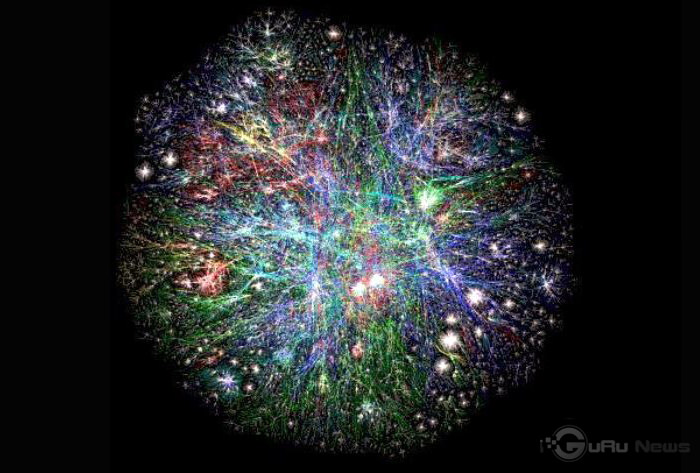
1: The Internet is a large collection of computers and cables.
The Internet is the name that describes the interconnection of computer networks. It is a vast combination of hardware and software of millions of personal, business, and government computers, connected together like highways. The Internet began in the 1960s under the original name “ARPAnet.” ARPAnet was originally a U.S. military experiment created to keep communications alive in the event of a nuclear attack. Over time, ARPAnet became a political experiment, connecting mainframe for academic purposes. As personal computers became more mainstream in the 1980s and 1990s, the Internet grew with more users connecting their computers to the vast network. Today, the Internet has evolved into a public network that includes millions of personal, government, and corporate computers connected together by wires and wireless signals.
Theoretically at least, no one owns the internet. Theoretically speaking, there is no government that has absolute power over it. The internet was born as a free and open means of communication and data transmission.
2: The World Wide Web is a large collection of HTML pages found on the Internet.
The World Wide Web, or “Web” for short, is a vast collection of digital pages. A large subset of the Internet software is dedicated to broadcasting content, in the form of HTML. The web is viewed using free software called a web browser. Born in 1989, the World Wide Web, or “Web” is built using the hypertext transfer protocol as its foundation , a language that allows us all to jump via hyperlinks to any public page on the web. Today, there are approximately 70 billion public web pages on the Web.
