

It is one of the most symbolic speeches of all time and is now immortalized in the most unusual way. A portion of Martin Luther King's in 1963 has been stored within the "alphabet" of DNA.
In a grain of sand!
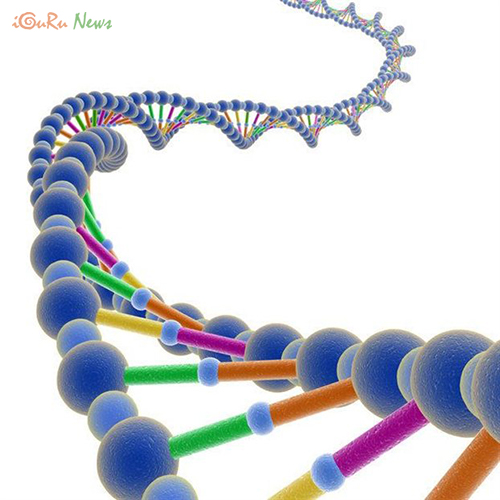
Nick Goldman from the European Bioinformatics Institute in Hinxton, UK, and his colleagues synthesized DNA in a way that encoded information in the four bases that make up its double helix (adenine, thymine, cytosine, guanine).
The researchers used these "letters" of genetic material, as they report in their publication in the journal "Nature", to store 26 seconds of audio material from Martin Luther King, all 154 of Shakespeare's sonnets, a digital photograph of their laboratory, the famous 1953 paper in which James Watson and Francis Crick first described the DNA double helix, as well as a folder containing the entire information coding system they used. All this information fit into an amount of DNA no larger than a grain of sand and could then be read with 100% accuracy.
The process
But how is the information encoded? The system of experts from Britain uses the same four "letters" of genetic material but in a completely different "language" than the one "perceived" by... life.
In order to copy a file, such as a text file, the binary digits (0 and 1) that would represent that information on a hard drive must first be translated into the code the team has created. Then a DNA synthesis machine produces the corresponding sequence.
However, it is not a single long molecule but multiple copies of DNA segments – each segment carries information to “know” exactly where it should be in the sequence. This fact offers redundancy to the system: if some segments are lost, the data will not be lost with them.
At the same time, conventional equipment from molecular biology laboratories is used to "read" the DNA of organisms, in order to read the information stored in the DNA and display it on a computer screen.
The perfect digital storage medium
DNA is considered the perfect medium for digital storage as it can last thousands of years, does not require electricity to operate, and does not need to be preserved in special conditions (it does, however, 'love' to be in dark, cold and dry places). As Dr. Ewan Birney , who participated in the research team , "if we keep DNA in a cold, dry and dark place it lasts for a very long time. We know this because we often decode mammoth DNA that is many thousands of years old and has been preserved by chance in these conditions."
Theoretically, DNA can encode enormous amounts of data. One gram of genetic material holds about two petabytes (1 petabyte = 1,125,899,906,842,624 bytes) – the equivalent of three million CDs. This means that it could be a very good… warehouse for storing huge amounts of information such as those produced on a daily basis at CERN or other large scientific institutions.
Prohibitively expensive process
The researchers admit that the cost of synthesizing DNA in the laboratory currently makes the entire process prohibitively expensive, but they argue that in the future, technological advances will make the approach cheaper, demonstrating its enormous value for archiving data for a long time.
This is not the first time that DNA has been used as a storage medium for information. For example, last year a team of researchers in the US published the results of a similar experiment in the journal Science in which experts from Boston stored an entire book in DNA.
