

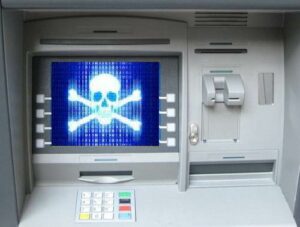
When Tennessee restaurateur Khaled Abdel Fattah ran out of cash, he went to the ATM. In fact, according to federal agents, he went to many ATMs. Over a period of more than 18 months, he visited a multitude of ATMs in the Nashville area and withdrew a total of more than $400,000 in $20 bills. The only problem, according to federal agents, was that he wasn't taking any of his own money, but rather specializing in ATM hacking.
Now Fattah and his partner Chris Folad face 30 counts of wire fraud and conspiracy after a Secret Service investigation uncovered evidence that the men had essentially stolen the automated teller machines, using nothing more than the installed keypad. Using a special sequence of buttons and knowing certain information, they would trick the ATM software into thinking it was dispensing one-dollar bills, instead of the twenty they were actually dispensing. So instead of asking the machine for $20, they would actually get $400.
The two partners were using machines in small businesses such as mini-markets or kiosks located in Tennessee. The problem became apparent when these machines began to run out of money quite frequently, so the owners of the stores that had them began to suspect ATM hacking-type scams.
ATM Hacking in Several Ways
The issue of ATM security, which is found in small businesses and is of older technology, was presented at the “Black Hat” conference in 2010 by security researcher Barnaby Jack. Jack had mentioned the problems in the security of the machines and the risk of ATM Hacking, of the larger companies, Tranax Technologies and Trident. In the machines of the former, someone could reprogram them remotely, even with a dial-up connection, while in the corresponding Trident ones, you could open them and program them as you wanted with a USB. The two companies immediately corrected these problems.
Unlike ATMs found in banks, machines found in small businesses have a different menu and can easily be put into “operator mode,” with a series of buttons and a 6-digit code. Fattah, as a former employee of the company that owned the machines, knew all the codes and their functions. From there, he could change many variables, such as the denomination of the notes the machine would dispense and where it would get them from.
In many cases, ATM machines had codes like “123456” at the beginning and those who managed them had to change them, which never happens, especially in small shops. Not long ago, two 14-year-old friends in Canada were able to easily crack the administrator code on an ATM. But they immediately reported it to the bank. The thing is that not all little hackers have a conscience and there are enough ways to hack ATMs.
