

Noam Shazeer is leaving Google to join OpenAI. The man widely recognized as the lead architect of Google’s Gemini models and co-author of the 2017 paper on transformers, which form the basis of almost every major modern language model, announced his move to X himself: “I’m excited to share that I’ll be joining OpenAI and look forward to working with the great team there.”
See also: Google's Gemini 3.5 Flash ranks in Android coding lists
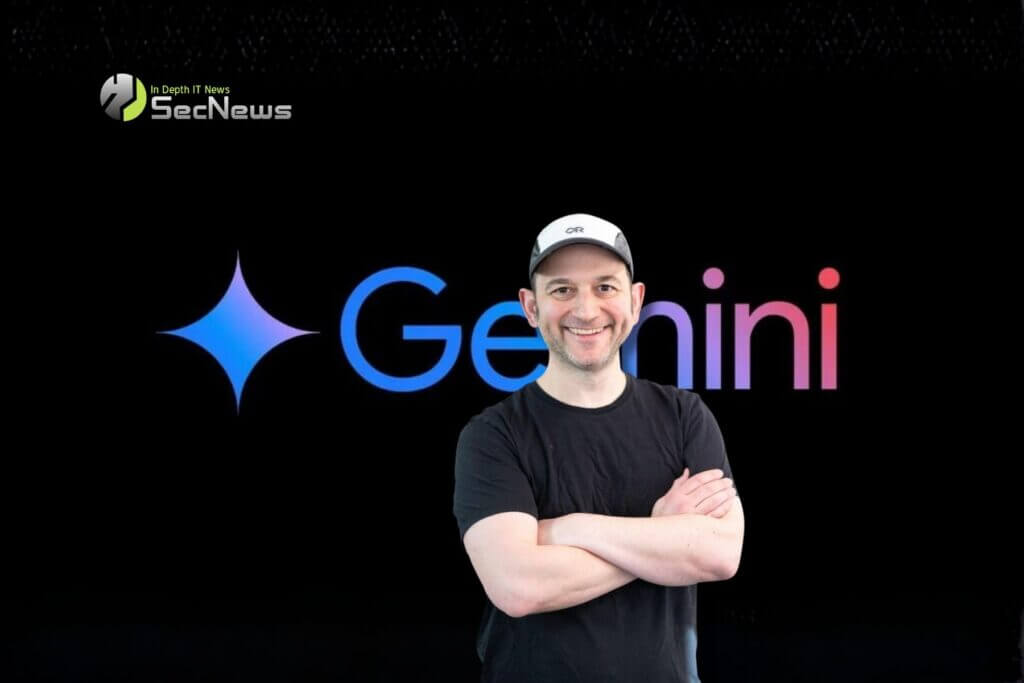
The departure is striking in its speed. Noam Shazeer returned to Google less than two years ago in a deal that was itself remarkable: the company reportedly paid about $2.7 billion to bring him back, along with a team of his researchers, from Character.AI, the startup he co-founded after his first departure from Google.
Losing him again, so quickly, to the company with which Google directly competes, is the kind of talent loss that money was supposed to prevent.
Noam Shazeer is a vice president of engineering at Google and co-lead of the Gemini effort. As one of the authors of “Attention Is All You Need,” the paper that introduced the Transformer architecture, he is among a small group of researchers whose work underlies ChatGPT, Claude, Gemini, and much of what the industry now calls AI. His decision to switch sides carries more than just a hiring freeze.
OpenAI is acquiring him at a special time. The company is widely reported to be headed toward an initial public offering, and adding a researcher of Shazeer's caliber to work on new model architectures is both a research move and a signal to the market about who wants to be there.
For a company whose proposition relies heavily on staying at the cutting edge of model design, hiring one of the co-inventors of the Transformer is as direct a statement as it can make.
See also: Google sues suspected Chinese cybercrime ring for Gemini fraud

For Google, the loss comes amid an escalating battle with OpenAI and Anthropic across the enterprise AI stack. At Cloud Next this year, the company rebuilt its AI platform around agents, consolidating products and bringing in partners in an explicit effort to outpace its competitors. Gemini models are central to that bet, which makes the departure of one of its co-leads more than just a personnel matter.
The competitive turmoil surrounding Gemini has been visible elsewhere, too. Google has been pushing its models in high-profile deployments, including a Pentagon deployment that grew from tens of thousands of users to more than a million in six months.
Retaining the technical talent that builds these models is part of maintaining that momentum, and Shazeer's move is a reminder of how mobile the most senior researchers remain even after the enormous expense of retaining them.
Google's reported move to reacquire Noam Shazeer and his Character.AI team for $2.7 billion was held up as evidence that giants will pay almost anything to keep people building cutting-edge models. His departure so soon suggests that money buys presence but not permanence, and that the appeal of a company seen as the frontrunner in the field can go beyond a nine-digit ratio to stay.
It also fuels a hiring momentum that OpenAI has been pushing hard. The company has spent the past year aggressively hiring from competitors while expanding its commercial footprint, including distribution deals that put its models in front of many more enterprise customers. A researcher of Noam Shazeer’s caliber is both an earned skill and a morale booster, the kind of hire that tells the rest of the field where the gravity lies.
See also: Apple Intelligence: It may offer a better Gemini experience than Google

Neither company has detailed the terms of Shazeer’s move, his start date, or exactly what he’ll be working on at OpenAI beyond new architectures. What is on record is the announcement itself, made by Shazeer, and what it represents: less than two years after a multibillion-dollar effort to bring him back, the Google Gemini is walking across the street.
