

Google appears to be making another major upgrade to the Android user experience , introducing “contextual suggestions,” a new feature powered by artificial intelligence . According to Android Authority, the feature is designed to predict a user’s next actions , leveraging data such as location , time of day , and daily habits , with the goal of offering more personalized and immediate actions without manual search.
From beta to stable release: A quiet but important upgrade
Although the feature was initially tested in beta versions of Google Play Services, it now appears to be making its way to the stable distribution channel, without an official announcement from the company. Reports from journalists at Android Authority and 9to5Google indicate that the feature is already active on Pixel 10 series devices running Android 16, while in several cases it appears to be enabled by default, which reinforces the debate about the degree of control users have.
The feature is deeply embedded in the Android ecosystem, attempting to transform the phone from a reaction tool to a predictive action system. For example, if a user regularly visits the gym at certain times, the device can automatically suggest their favorite playlist or fitness app the moment they arrive at the gym.
See also: Android Intrusion Logging: New Spyware Detection Feature
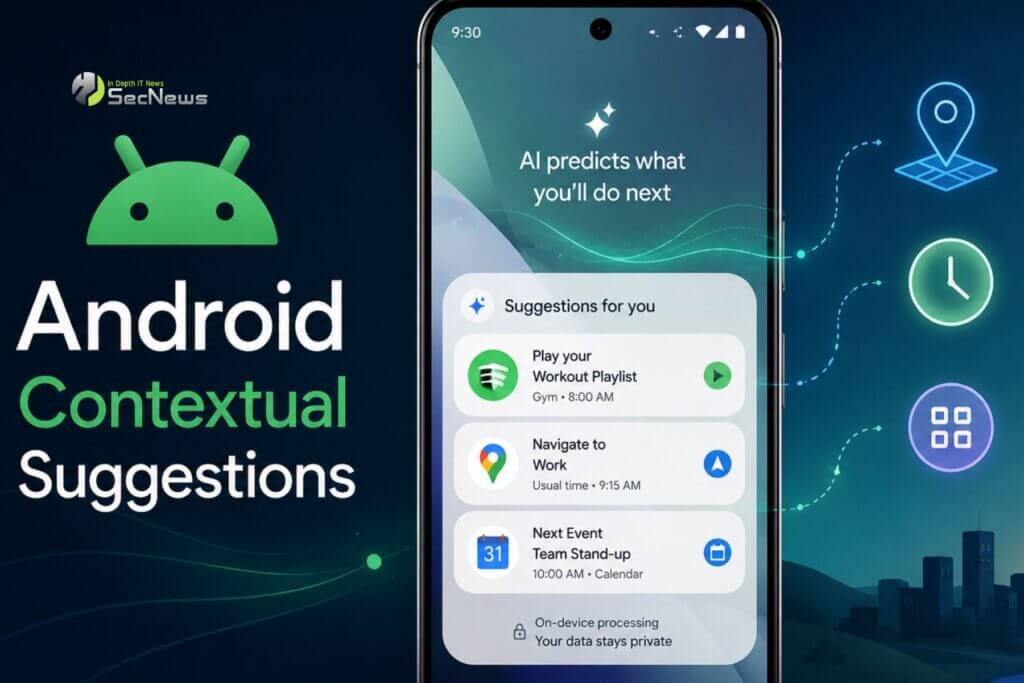
Contextual Suggestions: How artificial intelligence works behind the scenes
According to Google, these suggestions work within an encrypted data processing on the device, without the data being sent to the company or to third parties. The artificial intelligence analyzes usage patterns locally and creates predictions about what the user might need next, reinforcing the idea of on-device AI processing.
In theory, this means that Google is attempting to combine two concepts that often clash: personalization and privacy. As it is typically stated, if someone often broadcasts sporting events on their TV on Saturdays, the system can automatically suggest broadcasts at the right time, without the user having to open any application.
Relationship to the Pixel ecosystem and Google's AI strategy
The new feature appears to be part of a broader strategy for Google's Pixel devices, where AI acts not just as an assistant, but as an active layer of prediction. It bears significant similarities to the Magic Cue, which was introduced in the Pixel 10 series and offered information, such as addresses or contact information, before the user even asked for it.
See also: Google makes it easier to share files between Android and iPhone
The gradual integration of such features shows that Google is seeking to create a “silent interface,” where the phone adapts to the user rather than requiring constant commands. This is an important step towards so-called ambient computing environments, where devices operate discreetly in the background.

Privacy issues and data control
While Google assures that the data remains local to the device, enabling the feature by default has already sparked discussions about transparency and user control. In the settings menu, users can disable access to specific data, such as location, which suggests there is a degree of customization, but not complete deactivation from the start.
The company also says that the feature requires Android 14 or later, especially for features related to streaming or multimedia content. However, it is not yet clear whether the feature will be extended to all Android devices or will remain a Pixel privilege.

The next step in the Android ecosystem
The introduction of context-aware suggestions marks a shift for Android from a traditional operating system to a more proactive AI platform. If adoption expands more widely, users may see a new form of interaction with their devices, where the phone doesn't wait for commands but anticipates them.
See also: iOS 26.5: E2EE encryption in RCS iPhone-Android messages
Whether this will be accepted by the public will largely depend on the balance between convenience and a sense of control. In any case, Google seems determined to transform Android into a system that "thinks ahead of the user," opening a new cycle of evolution in mobile computing.
