

Greg Brockman, the president of OpenAI, has been at the center of the legal battle between Elon Musk and the artificial intelligence company, with his personal notes revealing internal discussions about transforming the organization from a nonprofit to a for-profit. His court testimony was marked by evasive answers and technical disagreements that gave observers the impression of a witness trying to avoid substantive questions. Greg Brockman in court is a critical element in the case that could redefine the future of OpenAI and its relationship with its original investors.
See also: OpenAI: The new cybersecurity model for defenders only
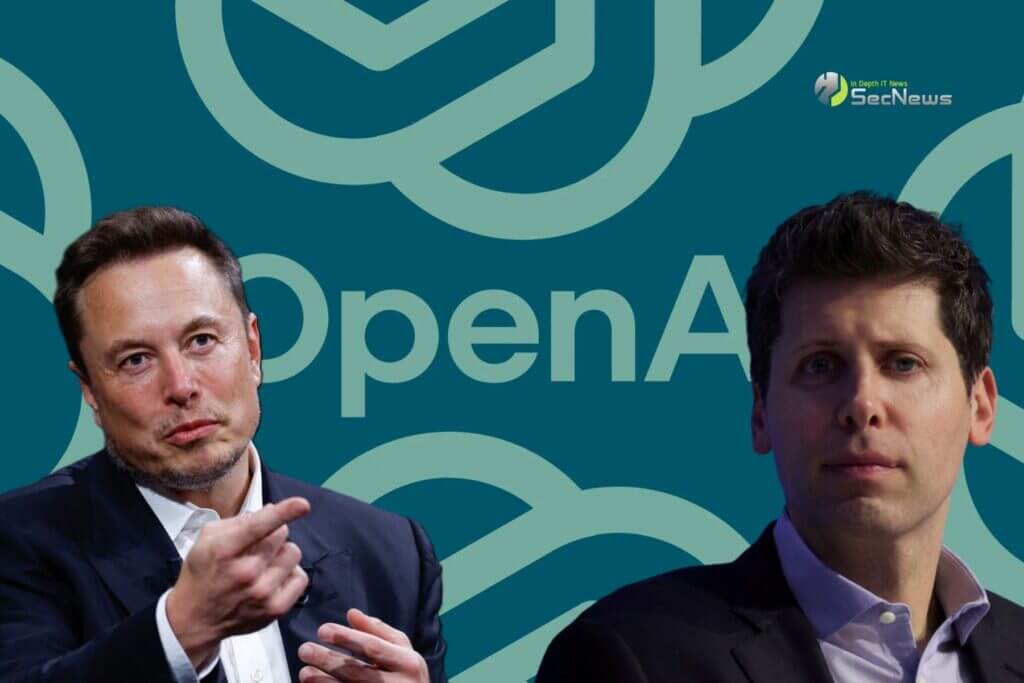
The OpenAI co-founder was called to testify in an unusual manner—first cross-examined and then directly examined. During his testimony, Brockman displayed the demeanor of a high school student in a rhetorical contest, constantly correcting and objecting to the wording of questions. When Musk ’s lawyer , Steven Molo , read evidence from the evidence, Brockman even corrected him when he omitted articles such as “a” or “the.” This tactic, while legally permissible, created a negative impression among observers and possibly the jury, as it seemed intended to avoid substantive answers rather than clarify the facts.
The most cataclysmic moment of the trial came when Brockman ’s personal notes were presented — a series of text files from his computer dating back to 2017. These notes clearly revealed internal discussions about converting OpenAI from a nonprofit to a for-profit. In one of the notes, Brockman wrote: “ Also, another realization from this is that it would be wrong to steal the nonprofit from him. To turn it into a b-corp without him. That would be pretty morally bankrupt and he’s really not stupid .” This particular reference seems to confirm Musk ’s claims that OpenAI “stole” the charity it originally funded.
See also: OpenAI: Is it preparing smartphones with AI agents instead of apps?

Greg Brockman's revealing notes on OpenAI
Other notes were even more revealing about the intentions of OpenAI ’s leadership and how they were approaching the transition from a nonprofit structure. In one note, Brockman wrote, “ Maybe we should just go for-profit. Making money for us sounds great .” In another, he emphasized, “ We can’t say we’re committed to being a nonprofit. We don’t want to say we’re committed. If three months later we’re a b-corp, that’s a lie .” These notes show a clear strategy of avoiding public commitments that could limit the company’s future options, suggesting a deliberate intention to change the corporate structure.
The revelations come at a critical time for OpenAI, which has grown from a nonprofit founded in 2015 with $1 billion in funding to one of the world’s most valuable AI companies. The company has received a $10 billion from Microsoft and is expected to reach $13 billion annual revenue by 2025.The transition from a charity to a multi-billion dollar for-profit is unprecedented in the tech industry and raises important questions about transparency and accountability in the development of AI.
Brockman , born November 29, 1987 , has been a key player in the development of OpenAI from its early days and is considered the company’s “master builder.” Before co-founding OpenAI with Sam Altman , Elon Musk , and others, he served as CTO of Stripe from 2013 to 2015 , where he developed the organizational and technical skills he later applied to OpenAI . His interest in artificial intelligence began with a study of Alan Turing ’s 1950 paper “ Computing Machinery and Intelligence ” during a gap year in high school. His experience at Stripe prepared him to manage OpenAI ’s rapid growth and implement ambitious infrastructure projects that reached 30 gigawatts of computing power.
See also: OpenAI announces new, more efficient GPT-5.5 model

The legal battle between Musk and OpenAI centers on the billionaire’s claims that the company strayed from its original mission as a nonprofit that would develop artificial intelligence for the good of humanity. Brockman appear to support those claims, showing that the company’s leadership was actively discussing converting to a for-profit structure as early as 2017.The case has broader implications for the industry, setting a precedent for how tech charities can transform into for-profit businesses and what obligations they have to their original funders and their public mission.
