

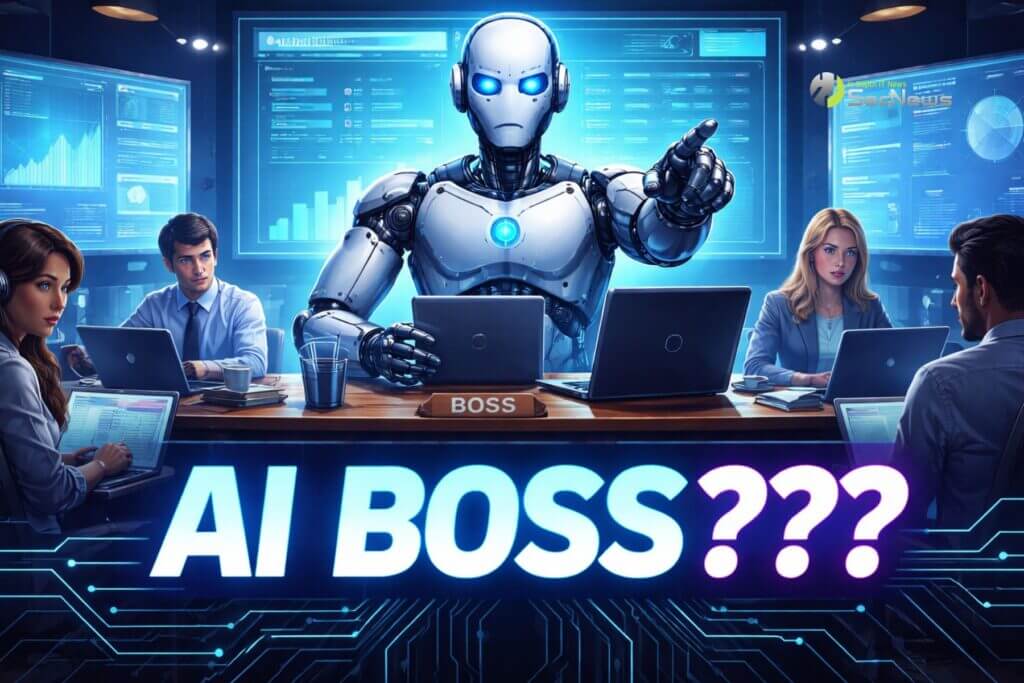
The idea of a non-human boss made up of artificial intelligence (AI) software is moving from the realm of science fiction to a reality in the workplace. A significant percentage of Americans are open to the idea , according to a recent poll Quinnipiac University , highlighting a gradual shift in perceptions about the role of technology in human resources management.
The survey, conducted among 1,397 adults in the United Statesbetween March 19 and 23, 2026, found that 15% of respondents would accept a job where their immediate supervisor was an AI system, responsible for assigning tasks and setting schedules. While the percentage remains in the minority, it is a clear indication that artificial intelligence is starting to be accepted not only as a tool, but also as a decision-maker.
See also: Cabolo: The advanced AI solution that works locally and does not store data in the cloud
The gradual rise of "digital administration"
Although the majority of workers still prefer a human boss, the use of artificial intelligence in management roles is growing rapidly. In many cases, AI systems do not completely replace managers, but take over specific functions that previously required human intervention.
Big tech and business software companies have already moved forward with such applications. Platforms like Workday are leveraging “intelligent” digital agents to manage processes like expense reports, reducing bureaucracy and speeding up decision-making. At the same time, Amazon is investing in automated workflows that replace traditional middle-management responsibilities, a strategy that has been accompanied by significant job cuts at managerial levels.
Even more impressive is the case of Uber, where engineers created a digital model of CEO Dara Khosrowshahi, which is used to prepare presentations before critical meetings. Such practices show that artificial intelligence is no longer limited to a supporting role, but is dynamically entering the core of corporate operations.
The "Great Flattening" of organizational structures
The growing adoption of artificial intelligence is leading to a deeper restructuring of corporate hierarchies. Some analysts describe this transition as the “Great Flattening,” as intermediate levels of management tend to shrink or even disappear.
See also: Gemini Import Memory: Easier transition from other AI chatbots
In this new model, decisions are increasingly made by data-driven algorithms, reducing the need for human intervention. The result is flatter organizational structures, where information flows directly and processes are executed more quickly. In extreme scenarios, we could see billion-dollar companies with minimal human staff and fully automated operations in the future.

Concerns about the future of work
Despite technological advances, society is approaching this transition with caution. The same Quinnipiac survey reveals that 70% of Americans believe that AI will reduce the number of jobs available to humans. This concern is particularly strong among those already employed, with 30% saying they fear – to a small or large extent – that their job could become redundant.
These fears are not unfounded, as automation now extends beyond manual tasks to cognitive and administrative tasks. The potential for replacing roles that require judgment and experience creates new data for the labor market and intensifies the discussion around reskilling workers.
A hybrid future of humans and algorithms
Despite concerns, many experts believe that the most likely scenario is not the complete replacement of humans, but coexistence with artificial intelligence. AI “bosses” may act as support tools, offering data analysis and process optimization, while humans will continue to play a critical role in areas such as strategy, creativity and human relationship management.
See also: Robotaxi in Europe with collaboration between Uber, Pony AI and Verne

The question, then, is not whether artificial intelligence will enter management, but how quickly and in what way it will redefine the role of humans in the workplace. Developments show that the change has already begun and that workers are being asked to adapt to an environment where the next “manager” may be an algorithm.
