

In the era of cross-platform technology, cyber threats are evolving rapidly. Cross-Platform Malware, or malware that can infect Windows, Linux, and macOS simultaneously, is now one of the most worrying trends of 2025. While attacks in the past were limited to specific operating systems, new generations of Trojans are exploiting common software features, scripting languages, and APIs to penetrate multiple platforms with a single payload.
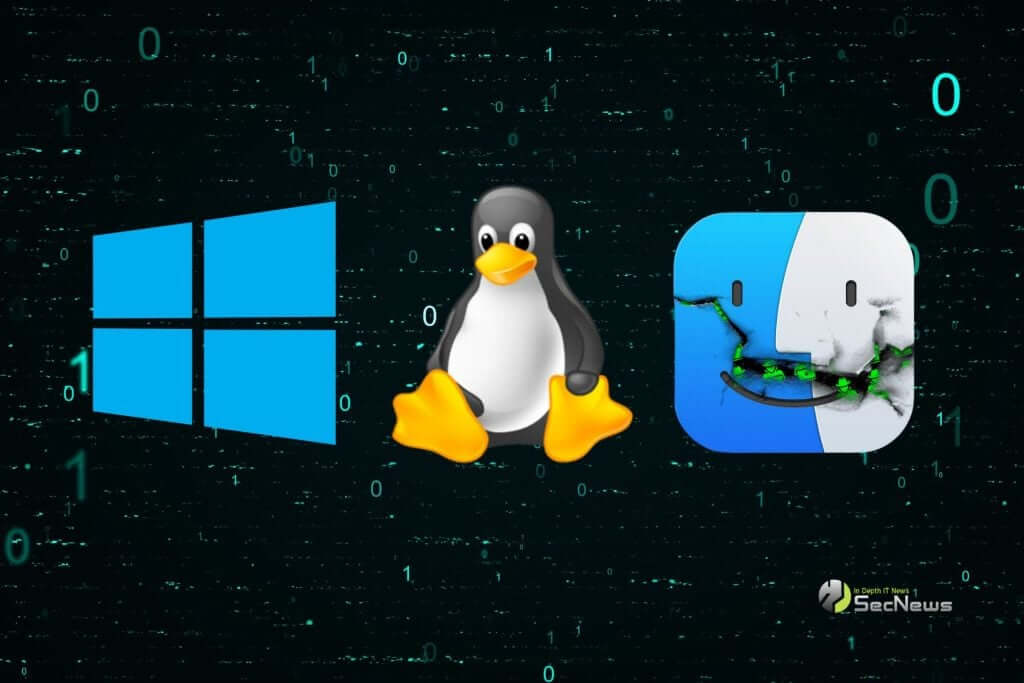
What is Cross-Platform Malware and Why is it Dangerous?
Cross-Platform Malware is not simply an adaptation of an existing Trojan to another operating system. It uses a single core code written in languages such as Go, Python or Rust, which can be compiled and executed in different environments. This approach offers attackers three key advantages:
- Expanded attack surface: A single malware can infect desktops, servers, and IoT devices running different OSes.
- Reduced development costs: The developer needs to write and maintain less code.
- Adaptation to different environments: Malware can detect the operating system and execute different modules depending on the environment.
The real threat is that Cross-Platform Malware can combine credential theft, ransomware, and remote access, making recovery difficult.
See also: CyberVolk's new VolkLocker ransomware targets Linux and Windows
How it works on Windows, Linux and Mac
Attacks are usually multi-stage:
- Windows: The malware uses PowerShell or CMD scripts to escalate privileges and create persistence via Task Scheduler or Registry.
- Linux: It exploits shell scripts, systemd services or cron jobs for autostart and can monitor logs and SSH environment.
- macOS: Uses AppleScript or launch agents to gain persistence and bypass Gatekeeper or XProtect.
On every platform, malware can collect credentials, steal cookies, encrypt files, or install backdoors, creating a fully controlled target for attackers.

Advanced techniques and concealment
Modern cross-platform Trojans have features that make detection difficult:
- Memory-Only Execution: They leave no traces on the disk, avoiding antivirus.
- Environment Detection: Checks for virtual machines, sandbox or debugging tools.
- Dynamic Payloads: They download new modules depending on the operating system and environment.
- Encryption & Obfuscation: They use AES or RSA to encrypt payloads, making analysis difficult.
This means that traditional endpoint protection solutions often fail to identify the threat in a timely manner.
See also: BlackForce: New phishing kit steals credentials through MitB attacks

Protection and detection
To combat cross-platform malware, organizations must follow a multi-layered strategy:
- Multi-OS EDR/XDR: Using tools that monitor endpoints regardless of OS.
- Behavioral Analysis: Real-time detection of suspicious activities, such as changes to critical paths, script execution, or file encryption.
- Segmentation & Least Privilege: Restriction of user rights and separation of critical servers from desktop infrastructure.
- Regular Patch Management: Updating all OS, software and libraries to close known exploits.
- User Training: Educating users on phishing and social engineering, which are often the first step in infection.
The future of cross-platform malware
With the increase in cross-platform deployment and IoT devices, we expect to see even more sophisticated Trojan attacks. The integration of AI for dynamic adaptation to different environments and the use of cloud-based command-and-control servers will make cross-platform malware even more dangerous.
See also: Fake movie torrent distributes Agent Tesla malware
The challenge for cybersecurity teams is to combine proactive measures, real-time monitoring, and threat intelligenceto reduce the detection time and impact of these advanced threats.
🔒 Protect your privacy with Proton VPN
Swiss VPN from the creators of Proton Mail — strict no-logs policy, strong encryption, and built-in NetShield that blocks ads, trackers, & malware.
- ✔ No-logs, based in Switzerland (except 14-Eyes)
- ✔ NetShield: blocks ads, trackers & malicious domains
- ✔ Covers all devices — free version available
The link is an affiliate link — SecNews may receive a commission at no additional cost to you. It does not affect the independence of our article writing.
