

Visual effects (VFX) studios are struggling to keep up with the demands of companies like Marvel with their budgets and artists.
There's a joke in the visual effects industry that goes like this: Someone hears you work in movies, so they ask you, "What movie made you cry?" The artist will reply, "In the theaters or in the office?"
The VFX industry is deeply broken. It exploits artists using short-term contracts, chases tax incentives around the world, and creates an environment where production studios, especially an industry giant like Marvel, are treated with a respect that comes at the expense of the artistry and the mental health of the artists. VFX is a machine designed to destroy artists. And it works perfectly.
In a series of phone interviews with visual effects industry sources who have worked on multiple Marvel titles, from the very beginning to TV shows that have yet to air, io9 heard a number of complaints about the working conditions that visual effects studios impose on their staff in order to meet the demands of their clients. All VFX workers in this article are referred to by pseudonyms due to the relatively small size of the industry and fear of being blacklisted.
In 2013, visual effects studio Rhythm and Hues won the Academy Award for Best Special Effects for its work on Life of Pi. But just eleven days before it won the Oscar, the company was forced to declare bankruptcy.

“Basically, during the making of the film, director Ang Lee made a big change to the tiger in Life of Pi, so Rhythm and Hues had to go back and redo almost all of their work. And it cost them so much money to do it when they were already working on such a small profit margin, it bankrupted,” said David, a VFX artist. “So the studio literally went bankrupt just before they won the Oscar for Best VFX.”
Marvel Studios, like almost every other production company, hires studios to produce VFX. And to work for Marvel, or any of the five or so production companies out there that offer the big-budget VFX work that keeps VFX studios afloat, studios are constantly undercutting each other in order to appeal to an ever-shrinking client base.
First, the production company sends a folder of shots that need VFX work. Studios might receive a shot description that simply says “an alien spaceship appears.” A producer pitching to a studio will review these shot descriptions to create an estimate for the bid, but this is more of an art form than a science.
“It’s a race to the bottom,” David said. “Because when the big production companies say they need work, the VFX studios undercut each other so much that by the time they finally get the contract, they’ve bid so low that they’re lucky if they even make a profit. And so these VFX studios are forced to operate on very low margins.”

Marvel is so prolific and has so many projects in the pipeline that it has to hire dozens of studios at a time, all over the world. So the bid is not just based on domestic competition , but also on the assumption that other countries will take advantage of the labor gaps and tax incentives.
“For example, the UK doesn’t have paid overtime in any industry,” said H, a production coordinator, “and because they don’t have to legally pay overtime, when they bid on a scene that might cost them $15 million to get done, a UK studio could say, ‘Well, we’ll do it for ten million.’ So if they rack up 200 hours of overtime a week in London, it doesn’t affect the bottom line… It doesn’t cost the studio money to force you to work for that urgent delivery.”
See also: Disney Avatar 2: The title and first trailer of the film have been announced
Location-based tax incentives also reduce bids across the industry. If Marvel spends $10 million in a location with a 30% tax credit, the government will pay Marvel $3 million after the invoice is paid, so it only costs Marvel $7 million to buy $10 million worth of work from a VFX studio. So instead of offering $10 million for the footage, which is the true cost of producing the project and the profit, a company without access to these credits will offer $7 million to undercut a studio located in a location with favorable incentives.
When Kevin Feige revealed the massive film and television slate that would make up Phase Five, you could almost hear the collective anguish of the VFX artists.
One VFX artist, Jason, said that Phase Five was going to dominate many of his friends’ careers for the next decade. “The workload is getting agonizing at times… We’re all tired of superheroes.” But studios, he said, rely on superhero work —and Marvel—to survive. “These studios keep feeding off the same old trough because the work is plentiful and Marvel needs so many people and the artists need jobs. Where do you think these studios are going to go?”
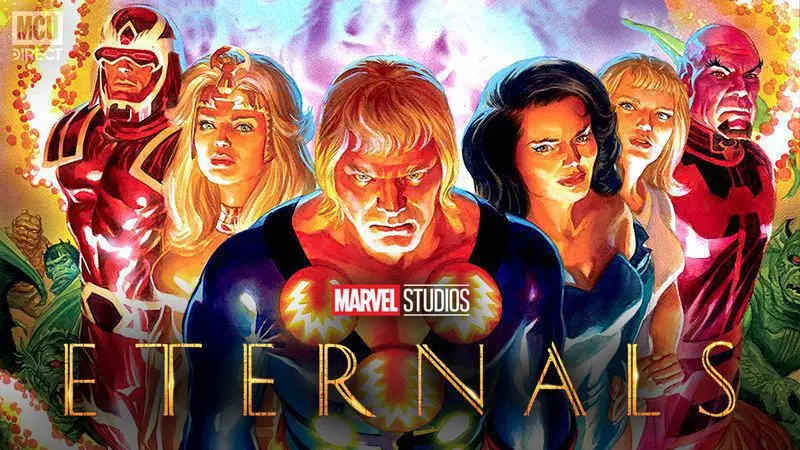
We hear about Marvel's treatment of VFX studios more than any other production company, because there's so much work involved, regardless of the specific vendor relationships. "Marvel has a different production team every time," explained Conrad, a production coordinator who has worked on several Marvel projects. "So sometimes you can have a really, really good working relationship with them, and other times you might not."
In the beginning, working for Marvel was a passion project for many artists. David said that when he started working on Marvel projects, it was exciting. “I still get excited a lot of the time while watching these movies being made and being a part of that process. But yeah, there are definitely a lot of tough days,” admitting that this is something that has become, at this point in any VFX artist’s career, very normal.
David describes Guardians of the Galaxy as one of his favorite projects he's ever worked on. But even he agrees that Marvel's process is inconsistent. "The worst was when Avengers: Infinity War and Endgame. They actually pushed the release date back a month, but they didn't tell us. I remember working with my team and one of my artists comes up to me and says, 'Hey, do you see this?' and he shows me the article saying Marvel pushed the release date back a month."
Marvel failed to tell the VFX team working on the film that the release date had changed. David went to his manager, who also hadn't heard anything about it. Marvel eventually spoke to the studio and said they had "forgot" to tell them. "So we found out from a press release that we had a month less to work on all this footage."
"Marvel is the worst example of a lot of the problems in the industry," Sam said. "It would be better if sometimes things were really bad and sometimes they weren't... But with Marvel, it seems like it's the same thing every time. So, first of all, they tend to be as bad as they can be and they're consistently that bad."
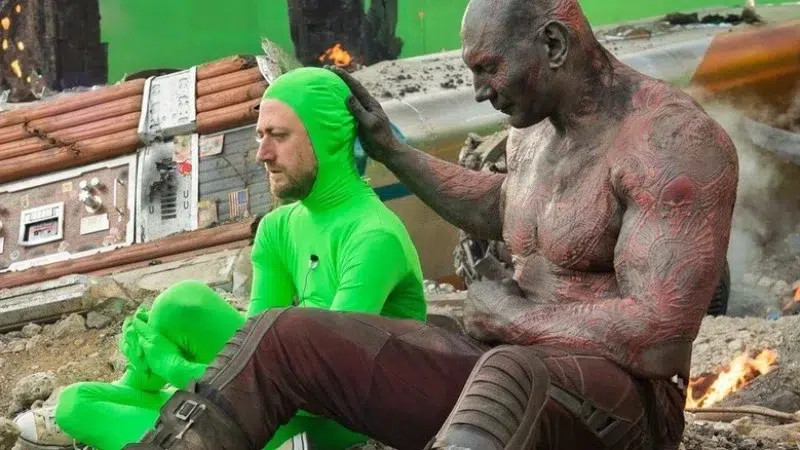
Hector recalled that during the last Marvel project he worked on, "from my first day on the project until we delivered the footage, we were working overtime and weekends. There were months when I was literally stuck at my desk."
“Even up until the last week or so, they weren’t sure what they wanted this giant set to look like. We were still doing concept art,” Hector said. Concept art is supposed to be the first thing you draw before you start working on the pieces that will eventually come together to make the shot. “And there were stages of that that had already gone through the entire process. You have lighting renders, effects simulations, matte paintings, and animation.” All of that, done, and Marvel hasn’t even approved the concept art yet.
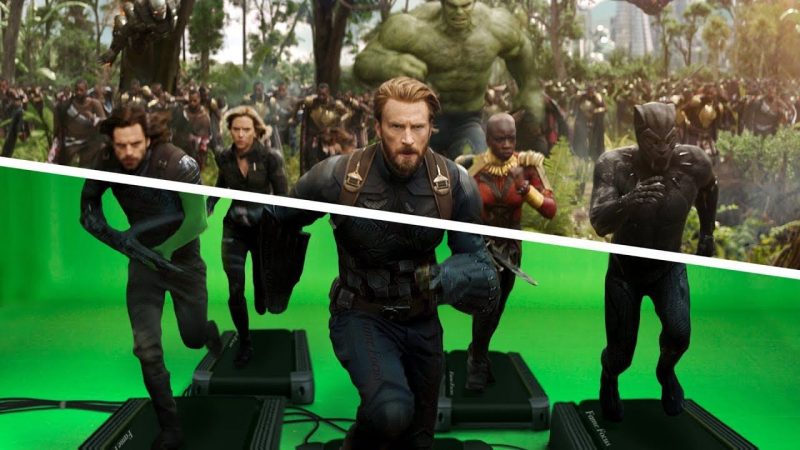
This is no accident, it’s part of the process. Multiple sources have said that Marvel intentionally shoots its films in a way that allows for changes to details, big and small, right up until the last minute. In practice, there are very few takes. “When you put a plate of someone’s face on a screen with bad lighting, there’s nothing you can do to make it look realistic,” H explains. A plate is the intact frame, exactly what was captured on camera, with mocap suits and such. “That’s something that’s never talked about. Everyone just says, ‘Oh, the visual effects look bad.’ And I want to tell them, no, you should have seen the plate. You should have seen what they gave us, because that’s what was bad.”
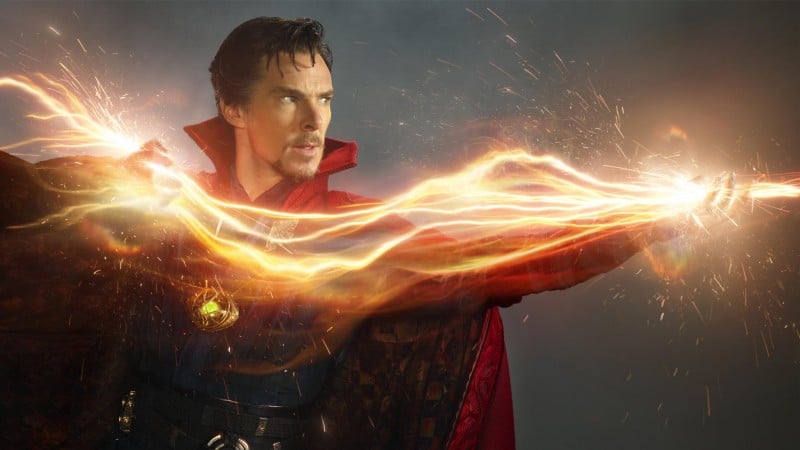
Sometimes there will be changes even in the final days before a film’s scheduled release. Conrad recalls that “when the first Doctor Strange, it didn’t actually have the final VFX. They were still working on the film after it was released in the UK.” The VFX work wasn’t completed until October 28, when it hit US theaters. With many production companies demanding more and more changes closer to the deadline, individual artists at VFX studios are under immense pressure, forcing them to work a lot of overtime.
“I didn’t have a day off for five weeks. And they weren’t eight-hour days. They were ten-hour,” Sam recalls, speaking about his experience working on Marvel shows. “And that was because they were doing a reshoot a month before the show started. So we literally shot in late December for a project that was supposed to be done by late January.”

These stories are common when you talk to VFX artists, and you usually come to the same conclusion: Marvel suffers from a chronic lack of vision that stems from the decision of an entire film by a committee of people, from producers, executives, and directors, to Kevin Feige.
The feedback on the day-to-day work and the sequences comes from everywhere, including executives and producers who don't have explicit creative roles, H said. Sam has had similar experiences. "You have producers who ask to be involved in the production process.
With all these people who shouldn't be there, the vision of the film becomes muddied. The changes cause an avalanche that affects the entire project, causing hundreds of hours of work to be redone at any number of studios. And all because someone didn't like the shade of blue or had to change a costume design to help toy sales.
Some VFX studios will resist these changes more than others, and multiple sources noted that studio culture was a determining factor in whether artists have to deal with this kind of nitpicking from producers. “But generally, that dynamic is so helpful to Marvel that they can ask for whatever they want,” Sam explained. “And then the VFX studio just has to figure out how to make it happen.”
The lack of direction is the biggest, most consistent point of stress for many of these artists. Sam recalls a logo on a costume that he had to redo “almost every week.” Conrad recalls working on a shot for Marvel where they didn’t know what they wanted, so they asked the studio to do two versions. “And then we found out which version they chose when we saw the film.”
Hector has seen huge sequences scrapped within a week of delivering shots that took two or three weeks to build. “The whole vision changes completely,” he said. “And I get it. They want their directors to have control over the final product. But from an artist’s perspective, they need direction to get the project started. And Marvel has this really harsh way of communicating with vendors where they’re very cynical and very, very rude. It’s like you should be lucky to get constant revisions and notes from them.”
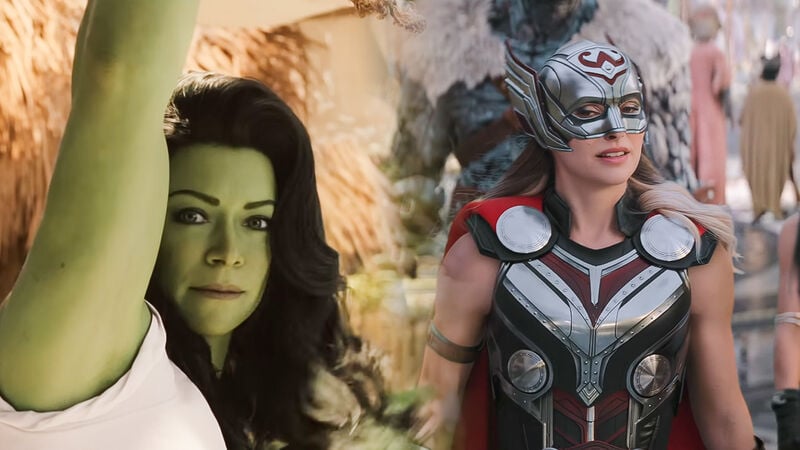
Sources also said that this constant shifting of vision seems to be driven by an egomaniacal ability to demand changes and see them happen, rather than considering the kind of changes that will actually impact the story. “Nobody holds Marvel accountable,” H said. They say, “Let it go. We can make as many changes as we want and you just have to deliver them.” These changes can be significant: Sam described an incident where an actor was filmed in a suit and the studio decided it was the wrong suit. To fix it, the actor’s entire body had to be replaced and his head left in every scene.
All of these changes are made without changing the final price of the project, which means that studios can’t afford to hire VFX artists. If they do, they risk going over budget. The changes are so numerous that artists literally edit a single pixel in a shot and send it back for re-approval.
The inconsistent direction of Marvel movies leads to inconsistent results. That's why you can see incredibly sharp and realistic VFX work in one project, and in some scenes it looks ugly and rushed. Marvel doesn't give studios the opportunity to do really good work because it's constantly changing things.
See also: Mozilla partners with Disney to bring promotional wallpapers to Firefox 98 on Android
It's hard to pinpoint exactly when things got really bad for the VFX industry. Some recalled specific projects that became flashpoints for the industry. The third Pirates of the Caribbean, in 2007. Game of Thrones, which began in 2011. And then Life of Pi in 2013.
For Pirates of the Caribbean: At World's End, Sam recalled that Disney had increasingly high demands on VFX studios, who managed to complete the project despite huge time constraints. He also mentioned that many in the industry thought they would never get paid more for their work and expected that they wouldn't have the money to produce the work required.
Conrad recalls working on the final season of Game of Thrones, which had six episodes, released weekly on Sundays. "We were working overtime on Friday nights to finish every episode because they just hadn't decided what they wanted.".
VFX studios don't suffer from a lack of work, but because too much is asked of them without any additional compensation. When you're a VFX studio and Disney asks for more changes, you shut up and deliver, without any additional charge.
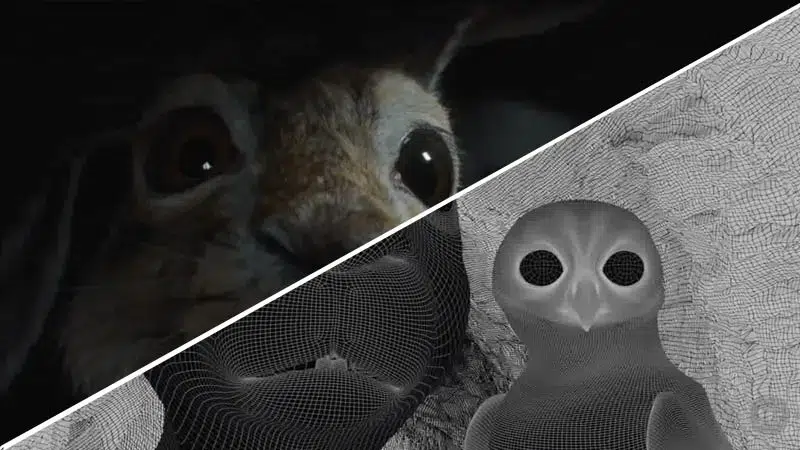
Sam also mentioned that some VFX studios don't have the best approach to handling requests. Many studios consider the client's problems to be the responsibility of the VFX artists. This results in even greater changes to the scenes. While the VFX artist has a share of responsibility, this does not mean that the client can ask for whatever crazy things they want.
According to David, support jobs at VFX studios are filled by full-time employees. But these employees don't work 16-hour days. They can easily tell others to stay at the desk to finish a job, but they never sit down. So the artists on the front lines get burned out.
Burnout doesn't just come from the fact that artists are asked to work on the same thing over and over again, but it also comes from the fact that VFX studios are chasing incentives all over the world and forcing artists to move around to keep working.
Remember those tax subsidies that lead to underpricing? They also fuel the exploitation of workers. Most VFX artists don’t have tenured positions at VFX studios, they’re on temporary contracts, which are in place on a per-project basis with six- to nine-month. Which means that when British Columbia starts offering that 30%, VFX studios start setting up shop in Vancouver. And if you’re a VFX artist who wants to work, you have to move to Vancouver.
Ren explains that because of these tax subsidies, “suddenly, Los Angeles is very expensive… So VFX studios are laying off all their employees. They’re making artists move to Vancouver. Artists are remotely controlling the same computer they had in Los Angeles, but they’re upending their entire lives and now they’re Canadian residents.” As VFX studios chase these subsidies, artists are forced to follow the money. If there’s no contract, they lose their visa and have to upend their entire lives, all over again. Many are forced to continue to sign contracts with studios that are chasing subsidies, regardless of circumstances, work, or family.
Hector admits to crossing the border four times in the decade he’s been working as an artist. One source told a story of a friend who has family in Los Angeles and rents apartments in different cities for the duration of his contract. You become a digital nomad , chasing studios across North America because studios can exploit tax loopholes to convince big production companies like Marvel that they can do it better, cheaper, faster… at the expense of the very artists they rely on to create their product.
Jason admits that the problems at VFX studios are a cycle. The same problems circulate in the same pool of companies. This is a result of the fact that despite the problems, VFX films continue to be released at the cost of the health of VFX artists.
“Almost every studio has some kind of cry room where people will go and cry for 10 minutes and then come back and do their job.” H explained that many times HR had to step in because employees were struggling or not feeling well. On many shows they had to work 70-hour days for 5 weeks straight and there were people who didn’t even see their family anymore.
The fault here lies somewhere between the production houses and the VFX studios. The VFX studios expect a lot from the artists while the production houses themselves have incredible demands on the studios. The problem is not in just one part of the industry but in the entire process of filmmaking.
Films have been around for over a century. “But we’ve only been doing film and computers for about thirty years,” Ren said. “So VFX came late to the party and we’re artists and we’re scared. We think if we do one thing wrong, no one will work with us again.”.
“The union is completely against us,” Sam said. VFX studios are going through so many artists so quickly that by the time they have enough people signing cards and voting, there may not be support or even the kind of internal volunteer structure needed to form a union.
While many sources have expressed a desire to have the industry organized into a union-based structure, artists are divided on how to do it. Many people want to unionize individual shops, which would put too much power in the hands of the artists themselves. Others believe that a larger, integrated trade union would be a better way to deal with overbearing clients, which would pave the way for better working conditions in individual studios.
But the risk is high. If a shop is unionized (meaning artists can demand more money, better working conditions, and limit the changes that clients demand) it means that major production companies like Marvel will be less likely to accept an offer from that VFX studio. The risk of being blacklisted, for whatever reason, exists throughout the industry.
VFX is a team effort. It's a specialized trade that requires working with extremely expensive technology and software in order to produce results. You can't sell yourself as a one-person studio. You can only sell yourself to a studio. So the thought of doing something wrong and being banned from one of those studios is incredibly intimidating.
“It just becomes a blame game,” H said. Artists blame the coordinators who blame the producers, who blame the executives, who blame the artists. There’s just not enough money to put into a job without having workers who don’t see their families. Entire teams are sleeping in the office because they won’t waste time if they go home, and the environment becomes incredibly toxic for the workers.
“It’s kind of the nature of the industry that burnout is inevitable,” Conrad said. Sam said the studios know and don’t care. “There’s always a new crop of kids coming out of school who want to work in film.” But in addition to burnout, workers also suffer from mental illness, physical problems, and even suicide.
It's not just the overtime. There's constant pressure and anxiety to do better work for less money. Studios don't care about the needs of VFX artists. They only care about making the clients happy.
“A lot of people don’t really realize the sheer amount of work and hundreds of artists it takes to make anything happen,” says David. For each film, artists at dozens of VFX studios create custom graphics and animations on demand. It’s hands-on work that requires professional training, intimate knowledge of specific software, and, without a doubt, artistry.
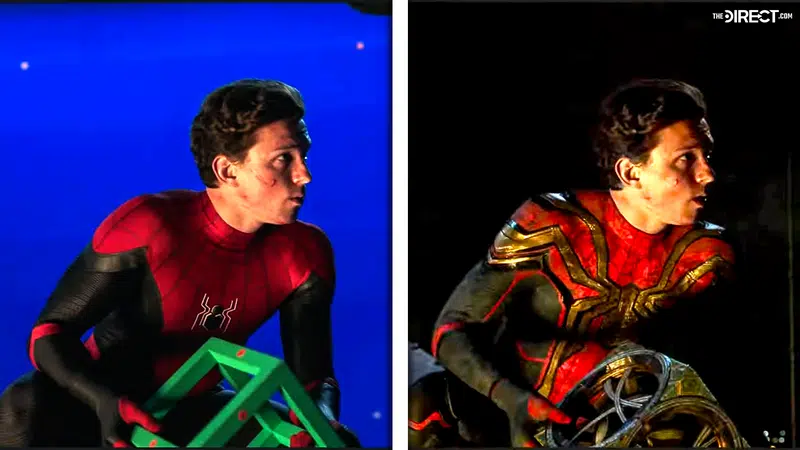
Production studios are taking advantage of everyone believing there's a magic button that artists press and suddenly Tom Holland is in a Spider-Suit. It's not some conspiracy, these companies are just capitalizing on the constant undervaluation of their product and passing the buck to the artists who make that product possible.
So is Marvel doing something wrong? The answer is, unfortunately, yes and no. They're just operating the way they've always operated. By reducing value to the results where possible and facilitating a working relationship with vendors that allows them to take advantage of the institutional insecurity of the artists employed by the VFX studio.
Marvel may be running the magic machine of the film industry as it’s meant to work, but that shouldn’t absolve them from the punishing working conditions that their pressure on many studios imposes. The industry should prioritize the well-being and growth of the artists who actually do the custom, technical, foundational work that makes people laugh, scream, and cry in theaters, instead of adopting a “customer first” mentality that allows for the rampant exploitation of workers. industry blockbuster is arguably built on the backs of VFX artists, and if it continues as it is now, it will break. And it will take movies as we know them with it.
Source: gizmodo.com
