

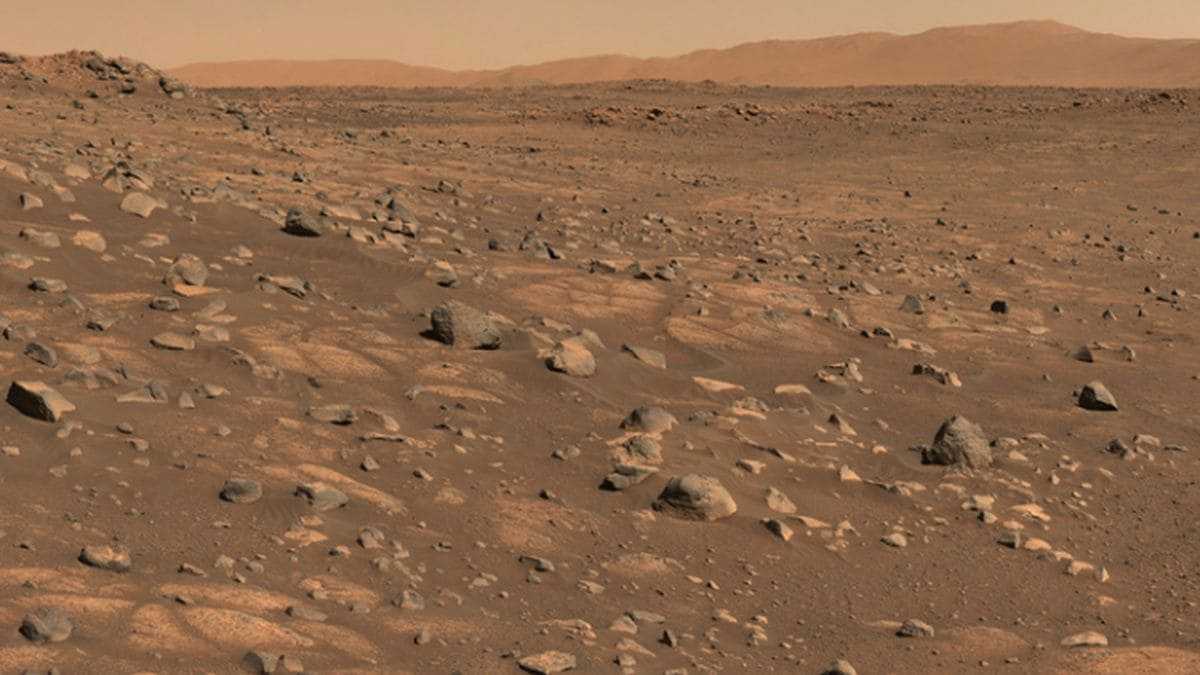
NASA 's Perseverance rover , which landed on Mars on February 18 , is located in the 45-km-diameter Jezero crater , which was once home to a lake fed by one or more rivers, creating a delta. This means that there is a good chance that life could have developed there . Now, the rover is preparing to collect the first rock samples on Mars, while mission scientists have evidence of ancient flooding in the dried-up lake bed where it landed. The main goal of NASA's mission is to find any trace of life , even microbial, in the distant past of the Red Planet.
The milestone is expected to occur within two weeks in a scientifically interesting area of Jezero called the “Cratered Floor Fractured Rough”.
Read also: Perseverance landing site: Named after Octavia E. Butler
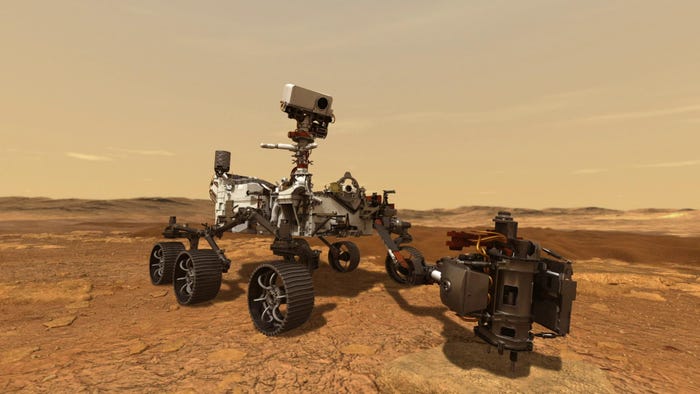
Some time had to pass for testing the rover's instruments and systems, while in the meantime the Perseverance mission took a back seat, since the flights of the drone it carried with it had to be carried out. As NASA announced, the rover is finally beginning the main phase of its mission and is ready to collect and analyze, subsequently, the first sample from a rock in the area in which it is located.
The rover will begin collecting rocks that it will analyze with its instruments. If any of the rocks prove interesting, the rover will drill into them to take samples from their interior. These samples, Perseverance will store and deliver to a subsequent mission scheduled to go to Mars, to pick up these samples and bring them back to Earth for study.
See also: NASA: Explains what the...rainbow captured on Mars is!
In addition to filling in gaps in our understanding of the region's geology, the rover will also search for possible signs of ancient microbes.
First, he will deploy the two-meter-long robotic arm to precisely determine where to take his sample. Then, he will use an abrasion tool to scrape away the top layer of rock.
Proposal: Mars: Earth-like clouds pass over its surface
These will be analyzed by the scientific instruments mounted on Perseverance's turret to determine the chemical and mineral composition, and organic matter will be searched for.
