

Scientists have sent many missions into space to «snatch» some pieces from asteroids and bring them back to Earth. An impressive meteor lit up the British sky on February 28, and scientists seem to have found some of the valuable fragments that were scattered on the ground.
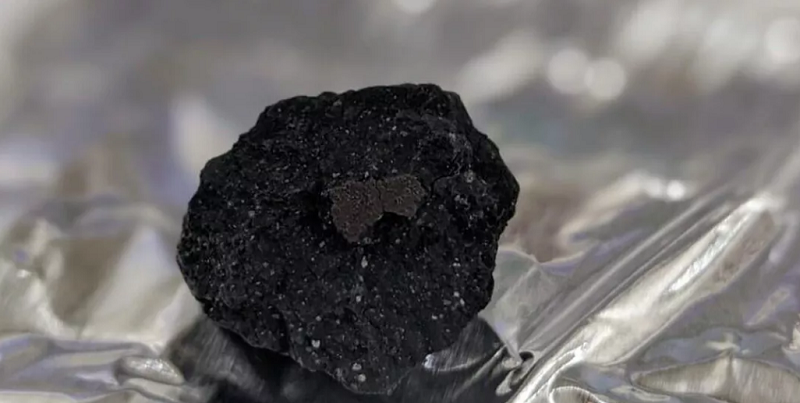
“The fragments from the meteorite were recovered from the small town of Winchcombe in Gloucestershire,” the Natural History Museum in London said in a statement on Tuesday. The museum described the carbonaceous chondrite meteorite as “stunningly rare” and said it will give scientists a glimpse into the early solar system dating back at least 4.6 billion years.
Since the rock landed in the town of Winchcombe, it has become known as the “Winchcombe meteorite.” According to the museum, carbonaceous chondrite meteorites “are made up of a mixture of minerals and organic compounds, including the building blocks of life itself: amino acids.”
The rare meteorite has left Natural History Museum researcher Sara Russell “speechless.” Nearly 10.6 ounces (300 grams) of the space rock have been recovered from the ground so far, giving scientists a huge amount of material to study. Russell said the fragments resemble material collected by the Hayabusa2 and Osiris-Rex space missions .

The UK Meteor Observation Network, a citizen science group that tracks meteors, captured the moment of the fireball's flash on camera and helped narrow down the possible debris field and the meteor's possible origin.
The rapid recovery and excellent preservation of the meteorite means that scientists have a pristine sample to study, said Russell, “All of this is a dream that became reality.” Other fragments of the meteorite – which could be found as black stones, piles of microscopic rocks or even dust – could be discovered, according to the museum.
Information source: cnet.com
