

The U.S. House of Representatives’ antitrust subcommittee has proposed a series of additional antitrust reforms to curb monopolistic practices by U.S. big tech companies, including Facebook , Apple , Amazon and Google ’s subsidiary Alphabet. The proposals come as a result of a 16-month antitrust investigation that found that big tech companies are abusing their dominance in the technology market and engaging in monopolistic practices.
The proposals, contained in a 449-page report, represent the most dramatic proposal to overhaul competition law and could even lead to the breakup of technology companies if approved by Congress.
The Democratic leadership panel said that companies that were once volatile, outsider start-ups that challenged the status quo have become the kinds of monopolies last seen in the era of oil tycoons and railroad tycoons. The US panel added that these big tech companies have too much power, and that power must be limited and subject to proper oversight and enforcement, as the country's economy and democracy are at stake.
According to the report's authors – Bloomberg's Ben Brody and David McLaughlin – the most draconian recommendation is for Congress to consider legislation that would either prevent big tech companies from owning different lines of business, which could lead to the companies being broken up, or impose certain organizational structures on the companies.
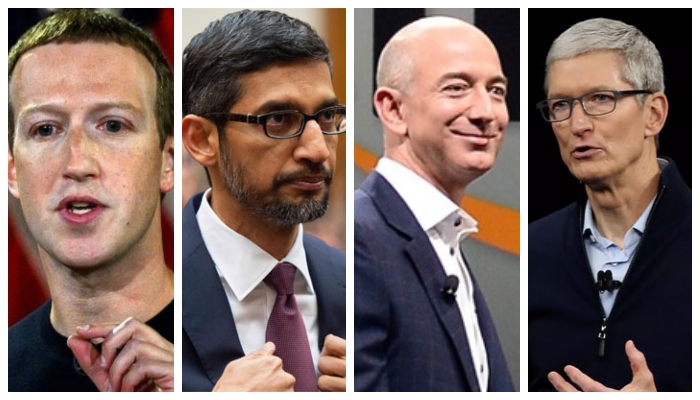
The four tech giants (Amazon, Apple, Facebook and Google) covered in the report all saw slight declines in the overall market. Specifically, Google fell 2.2% to $1,451.02, Apple fell 2.9% to $113.16, Amazon fell 3.1% to $3,099.96 and Facebook fell 2.3% to $258.66 as of 4:12 p.m. in New York.
The goal is to reduce conflicts of interest that arise from competition with other companies that depend on the platforms for user access , according to the report
As the report states, these companies’ ability to use their dominance in one market as bargaining leverage in another threatens large parts of the digital economy. The effects of this significant and enduring market power come at a cost. The subcommittee’s series of hearings provided significant evidence that these companies exercise their dominance in ways that erode entrepreneurship, degrade Americans’ online privacy, and undermine the vitality of freedom and diversity in the marketplace. The result is less innovation, fewer choices for consumers, and weakened democracy.
Furthermore, the report notes that during the 16-month investigation, the Subcommittee on Antitrust, Trade and Administrative Law, chaired by Representative David Cicilline, Democrat of Rhode Island, uncovered evidence that showed that antitrust agencies failed, in some cases, to stop big tech companies from “undercutting” their competitors and also failed to protect the American people from abuse of monopoly power.
