

The computational theory of the mind, a philosophy that argues that our brains are simply computing machines, suggests that, technically, we are all more or less robots. Both living brains and computers use algorithms, the only difference being the hardware (neurons instead of electronic circuits). So what are the little details that really set us apart from machines?
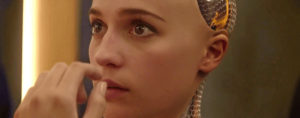
According to Hooman Aghaebrahimi Samani, Assistant Professor at the University of Robotics in Taiwan, emotions are simply a matter of chemistry. “The inner experience of love can be traced to our endocrine system,” Samani says. “The way we feel about others is largely determined by hormones.”
But if love is just a prescription of pre-programmed hormones, does that mean we experience it the same way a robot might?
The question of whether machines can truly have emotional intelligence has been a subject of study and research for years.
In the 1950s, Alan Turing introduced the Turing test, or Turing Test. The Turing test is essentially a thought experiment that aims to determine whether machines actually have, in some sense, emotional intelligence that can approach that of humans.
In 2014, a 13-year-old boy named Eugene Goostman, who was nothing more than a chatbot, managed to pass the Turing test, fooling a third of the judges into thinking he was real – and this wasn't the first time it had happened.
But it's not just machines that can now go through a series of tests that supposedly prove their "humanity," but real people are also sometimes mistaken for machines.
These results suggest that Samani's theory that the essence of love is simply a hormonal mix of estrogen, testosterone, and endorphins has some basis. Perhaps love really can be "transmuted" into binary code. Perhaps it is not the heart that interprets this emotion, but the anterior pituitary glands of the brain.
Of course, reality is subjective. Perhaps this theory sounds far-fetched to many. Putting it all together: Human brains are robots. Love is a concoction of hormones that can be digitally fed to robots. Robots pass the Turing test, indicating their “humanity” while humans fail, indicating their occasional lack thereof.
…And the concept of “reality” becomes increasingly blurred.
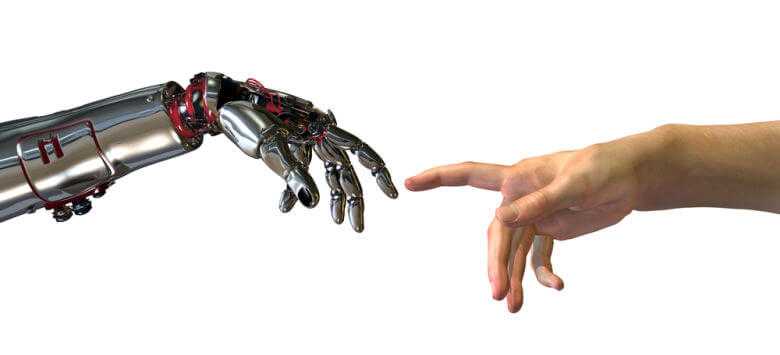
But does all this equate humans with robots?
No.
Not exactly.
Yes, our minds are computing machines. Yes, the same hormones that make us love can be digitally programmed into robots. Even morality is being programmed into robots, or at least the ability to make more ethical choices using algorithms.
But what about programming concepts that cannot be captured in an algorithm, such as a belief system, or belief in God?
Robots, at least for now, cannot believe in God. Humans can choose to believe in God, or they can choose not to believe. They have the power of choice. (Or at least that's what they want to believe.).
And if these choices and any others we make from time to time may have an element of absurdity in them, perhaps that is precisely what gives us our “humanity.” As former Google and Microsoft software engineer David Auerbach once said, “absurdity is the hallmark of being human.”.
Yes, humans are irrational, especially in love. They like to torture themselves. In the science fiction film Ex Machina, the human falls in love with the robot, while the robot? Not so much. So maybe the real test of humanity isn't the Turing Test. Maybe it's unrequited love.
It is our need to be understood and our need to love that makes us human. We are “programmed” to love, because we are “programmed” to believe, to internalize, and, in the worst case, to be unkind to ourselves.
Perhaps, then, it is our flaws – our errors in judgment, our irrationality, and our willingness to invest in love, even when we receive nothing in return – that make us human.
It's all the flaws in our code that make us human.
