

What is BSD and how is it different from Linux? Do you know the difference between Unix and Linux? What is UbuntuBSD?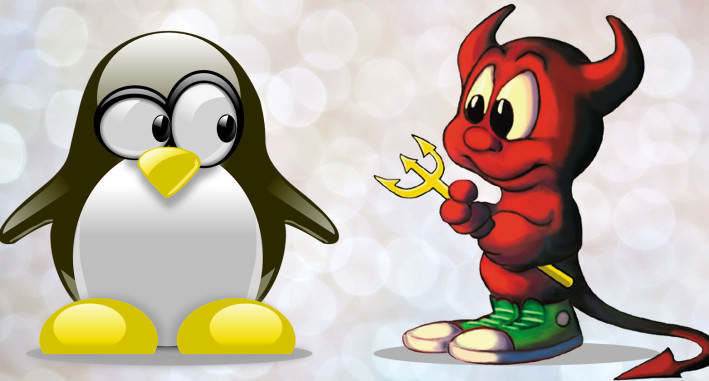
Before Linux, Unix operating systems were designed by AT&T's Ken Thompson, Denis Ricthie, and a team. Unix development began in the 1970s. You might be surprised to hear that Unix was closed source. AT&T licensed Unix to various third parties, both academic and commercial.
One of the academic licenses went to the University of California, Berkeley. The Unix operating system developed by the university is also known as BSD (Berkeley Software Distribution). One of the most popular open source derivatives of BSD is FreeBSD.
Another more popular closed-source variant of BSD is Apple's Mac OS X.
In 1991, Finnish computer science student Linus Torvalds developed his own Unix clone from scratch. This is what we know today as the Linux Kernel. Linux distributions added a GUI system, GNU utilities (such as cp, mv, ls, date, bash, etc.), installation and management tools, GNU c/c++ Compilers, and various other applications to the Linux kernel.
Let's now see what Ubuntu BSD is.
Now that you understand the difference between Unix, Linux, and FreeBSD, let's talk about UbuntuBSD, a Linux system with a FreeBSD kernel.
The Debian GNU/kFreeBSD operating system has been available for many years. It is a port of Debian to run on FreeBSD rather than the standard Linux kernel.
PacBSD (formerly known as ArchBSD) is an Arch-based operating system running on the FreeBSD kernel.
So UbuntuBSD is a similar implementation of Ubuntu on the FreeBSD kernel. The code name of UbuntuBSD is Escape From SystemD.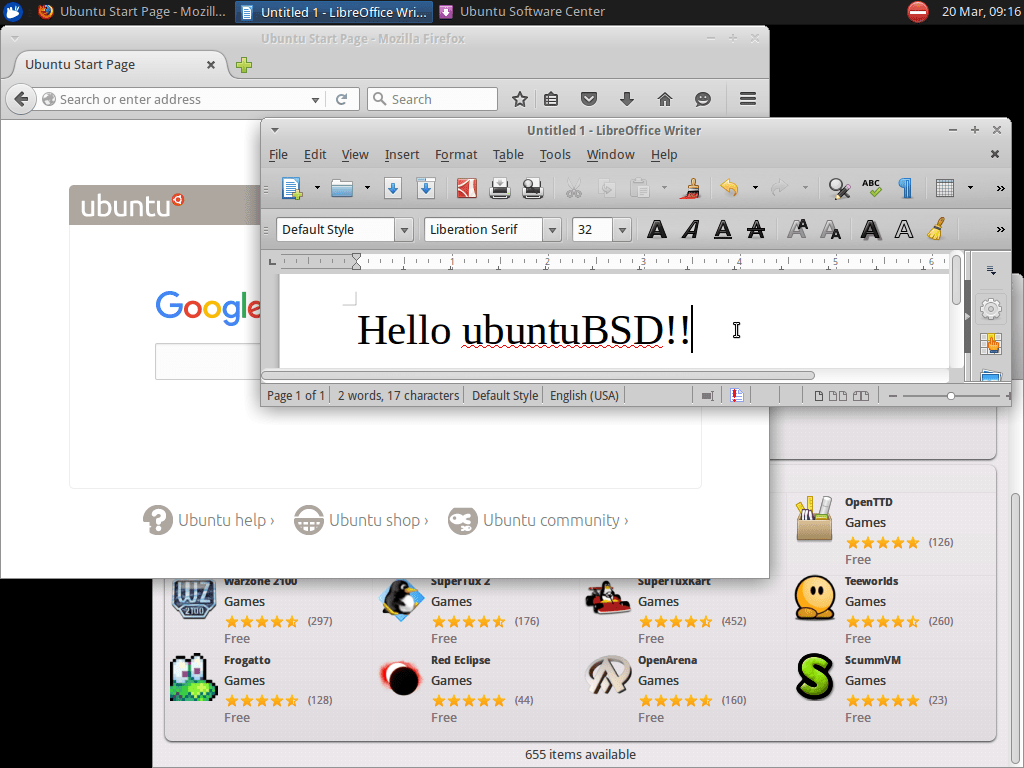
So we present to you the 3rd beta of ubuntuΒSD 15.10 which was released on April 1. As it appears, it updates the LightDM login manager to version 1.16.4-0ubuntu1+bsd2, adding virtual text consoles to the F1-F4 keys.
The final or stable version of the operating system will be released before the end of 2016.
You can download the ISO from the link below.
https://sourceforge.net/projects/ubuntubsd/files/latest/download
