

Veritas Technologies LLC, a backup and recovery solutions company, announced the results of the Databerg Report 2015, which examines how European public and private sector organizations manage their data.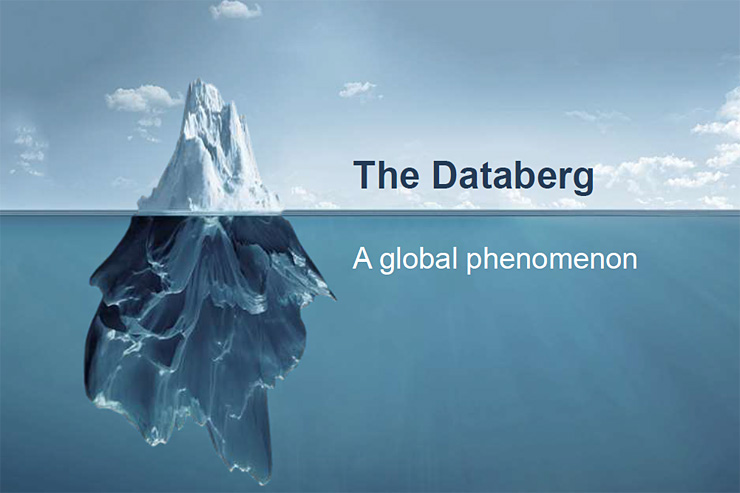
Among the key issues highlighted by the research are how employees are handling corporate IT infrastructure and corporate management's overreliance on cloud storage infrastructure. Such issues raise questions about the extent to which they should be subject to regulatory change, while also creating higher risks of data loss.
According to Veritas' Databerg Report 2015, 59% of the data stored and processed by UK organisations is invisible and could contain everything from cat videos to adult material, creating an increased risk of non-compliance with applicable regulations.
The report also estimates that the average UK organisation holds around 1,000 Terabytes of information, spending around €602k (£435k) annually on ROT data (ROT = Redundant, Obsolete or Trivial), or in a nutshell, useless data. This means that just 12% of data storage costs are spent on critical (and useful) data in the UK.
The number is one of the lowest clean data performances in the entire survey.
“While computer data should serve the purpose of any organisation, it is clear that in the UK the opposite is true. The key findings of the Databerg Report 2015 reflect the fact that businesses are investing a significant portion of their resources in maintaining data that is completely irrelevant to their business,” said Matthew Ellard, Senior Vice President EMEA at Veritas.
“The research reveals that one in three businesses in the UK store redundant, obsolete and irrelevant (ROT) data on their corporate networks. A typical medium-sized company with 500 Terabytes of data wastes almost €1.4 million (£1 million) every year storing useless files such as photos, employee personal documents, music and videos.”.
The survey provides insights into how 1,475 respondents in 14 countries across the EMEA region (including 200 in the UK) relate to the challenges of transforming data into truly valuable business insights. The report introduces a new phenomenon called the Databerg, consisting of three main types of data stored by organizations today:
– Business Critical Data: This is data that is recognized as vital to the operation and success of an evolving organization. Business Critical Data must be proactively protected and managed in real time by professionals with clearly defined responsibilities from the organization's management.
– ROT Data: Data that is identified as unnecessary, obsolete or unimportant. ROT Data should be proactively minimized and securely deleted on a regular basis.
– Dark Data: Data whose value has not been assessed. It may include critical business data, useless data, or - most importantly - illegal and non-compliant data, thus burdening the heart of corporate IT systems with undefined responsibilities.
The research found that a typical UK organisation reports Dark Data rates of 59% (EMEA average: 54%), ROT Data rates of 29% (EMEA average: 32%), and just 12% identified as business-critical data (EMEA average: 14%). This equates to up to €798 billion (£576 billion)1 of corporate resources being wasted on storing useless data if companies do not change their information management strategy and tactics.
As organizations move more and more data to the cloud to cope with rapidly escalating data volumes, the need for cloud storage and processing will increase by at least a third (from 33% to 45%) across the EMEA region over the next year, the survey reveals. In the UK, only 43% of respondents said they would use cloud infrastructure by 2016, lower than the European average. In any case, there is a risk that organizations adopting such cloud services do not have the right policies in place to account for additional costs such as switching to another provider or decommissioning from the cloud service in the event of an emergency.
What does Databerg create?
The research identified three main causes for the growth of a Databerg. These are related to how data volumes disproportionately impact IT strategy, how providers promote “free” storage practices for a limited time, and how employees put corporate data at risk through inappropriate actions. These causes can be summarized in the following three points:
1. IT strategies based on managing data volumes rather than business value.
2. Increasing reliance on “free” storage practices, such as cloud platforms.
3. Increasing employee disregard for corporate data management policies.
According to the research, these factors are the main causes of Dark and ROT Data, because they usually do not allow corporate management to have direct oversight of IT resources. This also entails legal risks, which are not apparent from the beginning.
Recommendations from the Databerg Report
The research suggests some steps that organizations can take to gain valuable insights into their information and reduce associated risks:
• Identifying risky Dark Data and highlighting critical information.
• Immediately eliminating ROT Data to reduce waste.
• Defining actionable information governance strategies for unstructured data and encouraging adoption of usage behaviors compatible with corporate policy.
• Increased flexibility by using data storage in cloud environments.
The Databerg Report 2015
The Veritas Databerg Report 2015 was conducted by Vanson Bourne between July and September 2015. The results are based on 1,475 respondents in 14 countries. Respondents included senior IT executives who were involved in strategic planning and operating practices of businesses and organizations.
For additional information about the Veritas Databerg Report 2015, visit https://info.veritas.com/databerg_report
