

Today, Wednesday, November 25, the Conference “UNMANNED AERIAL SYSTEMS: Geopolitical, Technological and Legal Dimensions of their Use” (or better known to the world as drones) was successfully held at the Amphitheater of the War Museum. The conference was organized by the Academy of Strategic Analyses within the framework of its activities with a particular interest in Strategy and Security issues.

The conference aimed to present the current and developing EISs and their characteristics, to describe the legal framework for their use and the related issues that arise, and to also present the military and civilian applications of EISs and the prospects for their use in the future, both in the operational environment and in civilian sectors of activity. The aim of the conference was to bring together experts from the military and civilian fields, organizations, services, industry, universities and research centers with EISs.
The conference was organized into three sections with the following general topics:
- Military and civilian uses of MES
- Technological developments - Research projects for the development of MEES
- Fields of application and operational utilization of MEES
The conference was a great success and attracted great interest, with a large audience, mainly from the armed forces and the scientific community of our country. The speakers who took part in the conference were from different disciplines and all recognized in their field.

One of the main speakers was Dr. Marinos Papadopoulos with the presentation “Legal Issues of Regulatory Framework and Safe Use of EMTs”.
Dr. Marinos Papadopoulos is a lawyer registered with the Athens Bar Association. He holds a PhD from the Law School of the University of Athens in the field of intellectual property on the Internet with a topic on Openness; he is a graduate of the Law School of the University of Athens and a Master of Science (MSc) (Corporate Communication—Business Public Relations) from Boston University. He also has postgraduate studies at Harvard University in Legal Informatics, and George Washington University in Management. He participates in international forums on Legal Informatics, Information Society and Digital Strategy. He is the creator of the Creative Commons v. 2.5 & v. 3.0 in Greece; he is a founding member of the Open Knowledge Foundation Greece and the creator of the Greek Open Data Common (ODC) Open Database License (ODbL) of the Open Knowledge Foundation. He is an associate member of the Academy of Strategic Analysis. He has extensive experience as a specialist scientific and legal advisor in innovation projects funded by the European Commission.
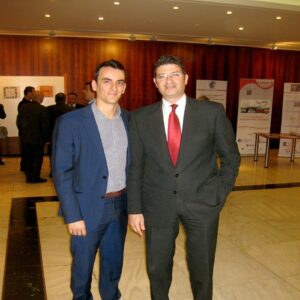
On the occasion of his presentation at the Conference, Mr. Papadopoulos gave the following interesting interview to SecNews:
-Drones are a new technology that can have a variety of uses by either public or private entities and individuals. Is the existing legal framework adequate to regulate these potential uses?
2013 is considered the year of the beginning of the mass offering on the international market of unmanned aerial vehicles or remotely controlled multicopters or systems known to all of us as drones or—more scientifically—as RPAS from Remotely Piloted Aircraft Systems or UAS from Unmanned Aircraft Systems or UAVs from Unmanned Aerial Vehicles. Drones were first defined in an official document by ICAO, the International Civil Aviation Organization, which refers to Unmanned Aircraft Systems in its document number CIR328/AN 190, 2011.
Drones are a multi-purpose technology capable of recording and managing personal data, which is also flight-capable, provides remote management capabilities, is an unmanned device and, of course, can be used for a variety of purposes that may not be related to recording and managing personal data at all. Drones are a technological achievement that is particularly useful for our society, whether for commercial, military or police uses, including uses for the prevention or suppression of criminal or terrorist activity—as long as the competent authorities for the protection of personal data are convinced of this.
This technology, as I have already told you, is new—at least in terms of its availability on the market—but also because the existing institutional framework for it seems to be either unformed or inadequate. The European Commission has tasked EASA, the European Aviation Safety Agency, with drawing up a set of European rules for unmanned aircraft. The definition of unmanned aircraft is quite broad, as it includes all remotely piloted and autonomous aircraft, from small devices used for entertainment to large aircraft used for security or other critical activities. Consequently, the unmanned aircraft sector, such as drones, is characterised by diversity and innovation and is international in nature. And for this reason, the legislative framework that may govern this technology and its possible uses with direct or indirect legal consequences on the individual rights of citizens can and must be international in nature and be as homogenized and integrated as possible at the level of national legal systems and legal norms.
The European Parliament's Committee on Transport and Tourism has been dealing with the issue of the safe use of remotely piloted aircraft systems. It recently issued, on 19/6/2015, report number 2014/2243(INI), also known as the Jacqueline Foster opinion, which recommends a proposal for a European Parliament resolution with the aim of shaping a legislative environment for the operation of drones in Europe.
-What does the Jacqueline Foster opinion provide?
A: The ten key points of Jacqueline Foster's opinion are as follows:
1. The drone industry urgently requires competent authorities to create global rules in order to ensure the cross-border development of drones.
2. The issue of data protection and privacy is also of central importance in order to facilitate the development and safe integration of drones into civil aviation, in accordance with Article 8 of the Charter of Fundamental Rights of the EU and Article 16 of the Treaty on the Functioning of the European Union (TFEU).
3. The five fundamental principles for the future development of drones set out in the Riga Declaration—the political meeting held in Riga, Lithuania, on 5-6 March 2015 on drones—are reaffirmed. These fundamental principles are:
a. Drones should be treated as new types of aircraft that will be governed by proportionate rules based on the level of risk of their respective flight operation.
b. European rules for the safe provision of services in the drone sector must be established which will encourage investment from the sector.
c. Technologies and standards must be developed for the full integration of drones into European airspace.
d. Public acceptance is crucial for the development of drone services.
e. The drone operator is responsible for its use.
4. Rules at EU and national level should clearly state the provisions applicable to drones in relation to both the internal market of each Member State and trade in the single Community market (production, sale, purchase, trade and use of drones).
5. Privacy, data protection and any other applicable legislation, such as criminal law, intellectual property law, air transport law and environmental law should be clarified in a note to drone buyers.
6. Future drone rules should address issues related to:
a. aviation
b. the certification specifications
c. commercial use and use for recreational purposes
d. traceability of the owner and operator
e. the approval of pilot training organizations
f. the training and licensing of operators
g. the individual functions of drones
7. Drones should be equipped with “see-and-avoid” technology to detect aircraft using the same airspace, ensuring that drones do not endanger the safety of manned aircraft, and in addition, take into account no-fly zones, such as airports and other critical infrastructure.
8. The European Commission's view on lifting the 150 Kg limit for drones, which determines the competent certifications between EASA (European Aviation Safety Agency) and national authorities, is correct.
9. JARUS, the Joint Authorities for Rulemaking on Unmanned Systems, which is a body of experts from national aviation services and flight safety organizations, is the most suitable to quickly and effectively draft global safety rules for drone operations.
10. The Data Protection Authorities of the EU Member States should work together to exchange data and ensure compatibility with existing data protection directives.
-Besides Jacqueline Foster's opinion, is there an EU body with responsibility for personal data protection that has recommended anything about drones in the European market?
At the European level and with regard to the protection of personal data, the Article 29 Working Party—a European body established by Directive 95/46/EC with an advisory role on the protection of personal data and operating autonomously in relation to the Independent Authorities of the Member States for the protection of such data—has recently issued, namely on 16/6/2015, Opinion No. 1/2015 on the protection of privacy and personal data in relation to the use of drones (01673/15/EN/WP 231). This opinion is perhaps the most important in terms of its legal content on the protection of personal data in relation to the use and operation of drones in the European market.
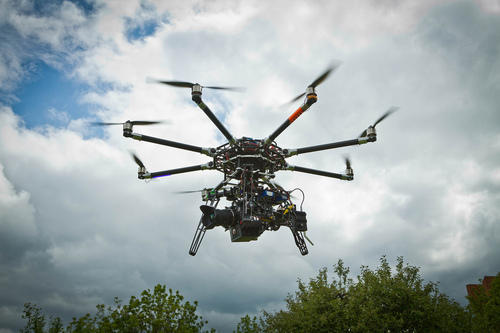
-The uses of drones can be either for military purposes or for the purposes of prosecuting crimes or terrorism, as well as for purely recreational or other purposes. Can you tell us about some non-military uses that would be of interest to citizens?
Civilian uses are of greatest interest to the everyday lives of citizens. Among these are the many uses of drones by security, police and prosecution bodies that are truly changing the way these services operate. Drones can also be used for journalistic coverage of events (https://www.youtube.com/watch?v=Qetx5Jy4sD0), for avalanche prevention (Snow Cyclopes), for package delivery (Paketkopter), for bicycle protection from traffic accidents (Cyclodrone), for search and rescue of fire victims (Firestorn) and in many other cases.
-In Greece, has there been any interest or has the relevant competent authority been involved in the protection of personal data from the use of drones?
The use of drones in Greece has been the subject of concern of the Hellenic Data Protection Authority (HDPA) at the level of a response document of the HDPA to a relevant question it received. The Greek Authority was asked by the Hellenic Port Authority about the legality of the use of drones for the purpose of aerial photography of ports, facilities and cruise ships by unmanned aerial vehicles or remote-controlled multicopters. The ADA responded in September 2015 (no. prot.: G/EX/4541-1/16.9.2015) that the operation of drones for the purpose referred to in the submitted question must be carried out within the framework of the basic principles of personal data protection, namely the principle of purpose and the principle of proportionality, from which the more specific principle of minimization of personal data processed for the achievement of the intended purpose also derives. The ADA provides some answers to the question posed to it regarding the use of drones for aerial photography by a Port Authority, taking into account the existing legal framework for the protection of personal data. The text of the APDPH concludes with a reference to Opinion 01/2015 of the Article 29 Working Group for more complete information to the Greek Port Authority submitting the question in relation to the use of drones for aerial photography.

SecNews would like to thank Mr. Marinos Papadopoulos for his time and the interesting interview he gave on our site.
For anyone who did not have the opportunity to attend the Conference, the minutes will be published on the ACAS website https://www.acastran.org/
