

From "Livestrong" to the Ice Bucket
Digital philanthropy is a multifaceted issue. Sometimes it provides results, sometimes it is pure self-promotion. However, it is certain that in the Internet society, communication about a charitable goal is much more successful than in the days of searching for people with the help of the Red Cross.
Written by Niki Papazoglou
The only reason anyone hasn't seen one of those videos recently that document the online cold snap of the Ice Bucket Challenge is the lack of internet access. The idea behind this new philanthropic trend is as follows: you pour a bucket of ice water over your head and invite friends and acquaintances to do the same in order to raise awareness of Amyotrophic Lateral Sclerosis and help patients suffering from it. The method is simple, every time a video is published, both the protagonist and the viewer are informed, or rather invited, to donate $100 to the ALS Foundation. After all, the Ice Bucket Challenge was started to make the disease more widely known and to raise money to continue further research into its treatment. Donating is very easy, by going to the foundation's page and pressing the red button.
Although the experiment in this particular case has practically succeeded, since the foundation has already raised over 30 million dollars, one could say that the amount is low in proportion to the impact of the original action that accompanied it, that is, in relation to the number of people who have taken cold baths with buckets full of ice cubes.
After yet another online charity that is spreading at a frenetic pace and which, in its most extreme version, even cost the life of an 18-year-old Briton, the question of online charity and "hashtag activism" is raised. To what extent does posting a charity event on Facebook equate to a charitable act and in which cases do actions for good causes end up being just another dictate of social media fashion?.
A look back at online philanthropy confirms that the Ice Bucket Challenge is not the only effort observed in recent years, although it is certainly among the most extreme. From time to time, it is observed that the planet rallies on social networks behind the chariot of a charitable cause. More often, of course, the focus of attention seems to have an expiration date, since after a few days or, in special cases, weeks, some other issue arouses the interest of public opinion and it ceases to deal with the charitable cause until the next public invitation.
But what were the most famous charitable campaigns of this kind and how much did they contribute to solving the problem?
"Send Karen Klein on vacation"
One of the most recent could be considered the awareness campaign for an American school bus attendant who raised the sum of $600,000 to go on vacation after insulting comments she received from school bus students about her weight and appearance. The news story titled “Students insult elderly woman” and the charity fundraiser titled “Send Karen on vacation” occupied a large part of American news broadcasts for about ten days, with journalists, panelists and psychologists analyzing the video of the incident that had been published on Youtube, frame by frame, Karen stating how insulted she felt and the children reading the letter they sent her to make amends. The fundraiser, which was started by a viewer named Max Sidorov, who became aware of the video that the students posted on YouTube, far exceeded the initial goal of raising $5,000. Donors reached 23,000, while those who commented or reported similar experiences of harassment reached 210,000…
The “Livestrong” bracelet
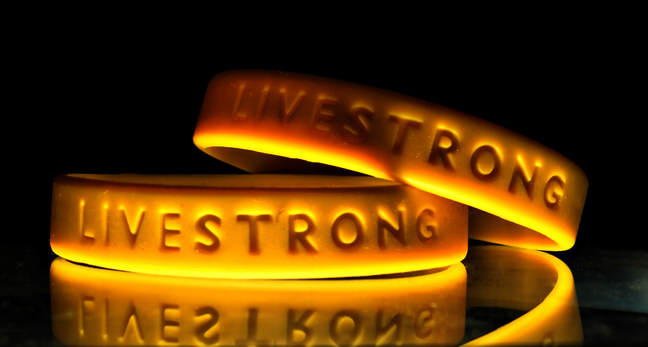 Another older but highly successful charity effort that spread mainly via the Internet was the Livestrong bracelet, which has been a message of hope since 2004. The idea was created by Lance Armstrong in collaboration with Nike, shortly before the famous cyclist won the Tour de France for the sixth time. The yellow silicone bracelets were sold for one dollar each, and the proceeds supported the Livestrong cancer foundation that the Texan athlete had founded when he himself was diagnosed with the incurable disease.
It is estimated that more than 85 million yellow bracelets were sold worldwide, as the charitable initiative was promoted by basketball and football stars, famous actors such as Matt Damon, Olympic athletes, and even the then Democratic US presidential candidate, John Kerry, and George Papandreou.
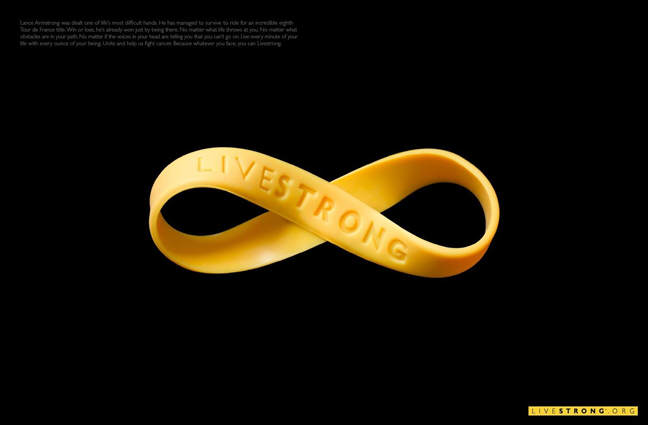 Considering the manufacturing and shipping costs for each bracelet, which amounted to 23 cents, it is easy to conclude that the initial goal of 5 million was far exceeded. In the nine years of Armstrong and Nike's joint activity, it is estimated that more than 100,000,000 dollars were collected. The thin yellow bracelet became "gold" and became, above all, a popular fashion accessory for some, since even when Armstrong lost some of his popularity, confessing on the Oprah Winfrey show that he was doping, the foundation's donations, contrary to what one might expect, increased by 20%.
Since then, pink bracelets for breast cancer have appeared and been launched online, red for cardiovascular problems, against smoking and to support AIDS research, purple bracelets to combat domestic violence, gray for diabetes and brain cancer, and black and white against racism.
"Help Haiti"
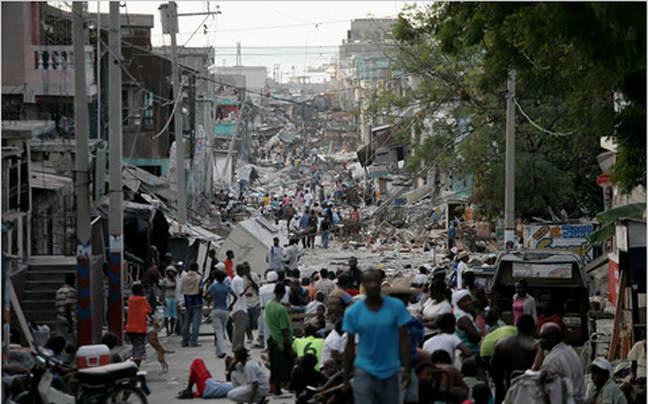
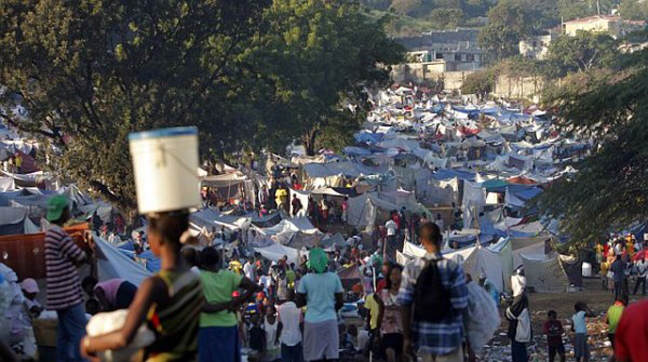 The public was shocked when, in January 2010, the news of the 7.0 magnitude earthquake, which was accompanied by the tragic toll of 230,000 dead and 250,000 injured, at a time when the total number of those affected was approaching the dizzying figure of 3 million. The hashtag Haiti became the second most trending topic on Twitter that week, and the earthquake was the topic of 15% of the social network's posts. In fact, many of these posts encouraged donations while spreading the unpleasant news. Social networks may have initially offered Haiti a solution, raising the amount of 8 million, but like other online charities, it quickly lost this "shine". Although the funds raised contributed to the construction of some buildings, four years later many Haitians are still living in shelters, some of them without water and electricity.
 "Stop Kony"
In 2012, public awareness of the Invisible Children and Kony, who was active in Uganda long before his name became known around the world, became widespread. Although he had been convicted by the International Court of Justice since 2005, the year that became a landmark year for his capture was 2012 after Jason Russell's video, which recorded testimonies about his actions and the organization's way of operating.
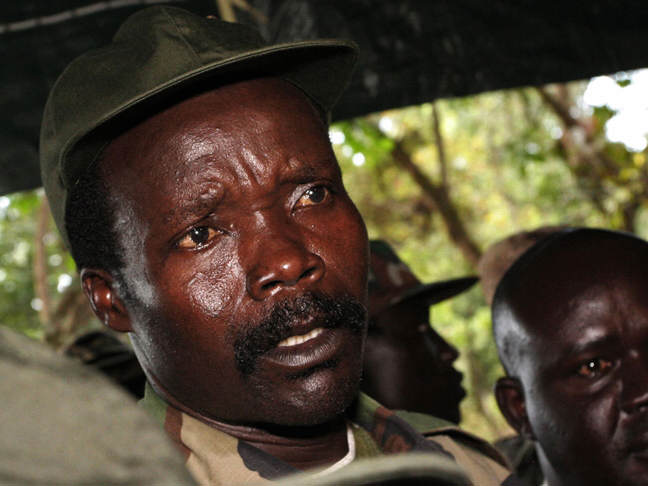 The long-time bloodthirsty African warlord, Joseph Kony, and the Lord's Resistance Army (LRA) that he had created since 2001, slaughtered, murdered, raped women and burned entire villages without mercy in Northern Uganda, while in 2006 he transferred their actions to Congo, the Central African Republic and South Sudan. It is estimated that in total he had kidnapped more than 45,000 children, killed tens of thousands of innocent civilians, while his terror of the population of Northern Uganda was such that it forced two million people to abandon their homes to move away from the field of action of his army, causing a huge humanitarian crisis. In practice, his men terrorized, mutilated, robbed, and kidnapped thousands of children, forcing the boys to become "soldiers" and the girls to become sex slaves.
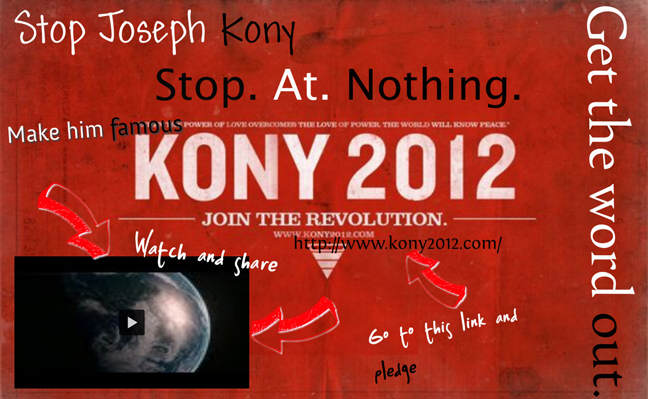 Russell's short documentary, which informed the public about the atrocities of the Ugandan Army, was shared over 11 million times and viewed by more than 100 million people in the year it was published. Celebrities and politicians became aware. The slogan "Stop Kony" became global and many were those who bought "action boxes" for $ 30, wore the bracelets that came with them and put up posters with the criminal's photo.
The financial results were measured in the millions and, according to the video, were used to build schools and other basic facilities for the children of Uganda. Nevertheless, Kony's army exists to this day and despite attempts to capture it, it continues its activities, with the only difference being that it is now famous.
Pink equals on a red background
 Countless internet users noticed in 2013 that their social media friends' profile pictures would change to a pink equal sign on a red background. The campaign to support gay, bisexual and transgender rights that began in the US immediately after the conclusion of the hearing on the right of same-sex couples to marry became more than topical for a few days. Even President Obama enthusiastically supported the establishment of equal treatment, although he did not change his profile picture.
The response was considered beyond expectations, with nearly 3 million users of the social network changing their profile pictures. Among them were, of course, Hollywood stars and at least 13 members of the US Congress.
"Send our girls back"
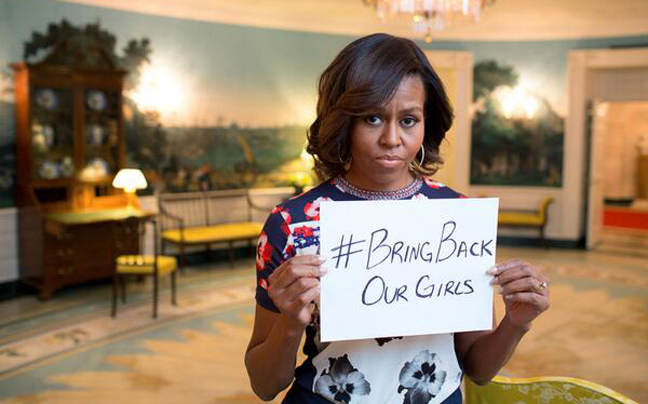 It was May 2013 when the Nigerian president declared the country in a state of emergency while the entire political and artistic world publicly supported the international "Bring Back our Girls" campaign.
The operation involved the search for 276 Nigerian girls, who were kidnapped by the Islamist organization Boko Haram on April 14 from their school in Sibok, with the aim of being sold as brides.
 British Prime Minister David Cameron had publicly declared his support for sending a team of counter-terrorism experts to work with the American team. Pope Francis also offered his support for the campaign via Twitter, writing at the time: “Let us all join our prayers for the immediate release of the schoolgirls kidnapped in Nigeria.” French President Francois Hollande, Christine Lagarde, Angelina Jolie, Mary J. Blige and Chris Brown also expressed their support. While at the end of the debate in Brussels for the presidency of the European Commission, the five candidates, Jean-Claude Juncker, Martin Schulz, Guy Verhofstadt, Ska Keller and Alexis Tsipras, sent the same message, holding papers that wrote in large letters: "#Bring back our girls".
Within a few days, the message of the “Bring Back Our Girls” campaign was shared on Twitter more than a million times after the announcement of the participation in the campaign of the US First Lady, Michelle Obama – “We pray for the missing girls from Nigeria and their families. It is time to “Bring Back Our Girls”,” the first lady wrote on Twitter – as well as of the Pakistani schoolgirl who survived a murderous attack by the Taliban, Malala Yousafzai.
 Until the mass kidnapping of the girls, few people knew about the terrorist organization. Amnesty International and UNICEF pledged to support the charity marathon, but a few months later the campaign ended with 200 girls still missing.
Online philanthropy, according to statistics for 2013, is growing more and more. Last year, online donations increased by 14% compared to 2012, raising more than 5.5 million, while at the same time the average donation increased from 60 dollars to 68.
Although our society has often been accused of suffering from the syndrome of distraction, the rhetoric of annihilating such actions is redundant since information and awareness remain the first step that most often leads to action. It is equally certain, however, that the majority of problems and charitable actions that are communicated via the Internet continue even when their communication stops…
Source: newsbeast.gr
