

Sign language is now recognized as a valid entry point into smartphones: over 70 million people who use it as their primary means of communication are gaining a natural way to “speak” to their mobile for the first time. At the Made by Google event on the evening of August 12, 2026, Google CEO Sundar Pichai introduced the Sign-to-Text feature in Gboard and Live Transcribe on the Pixel 11, calling it “one of the most important announcements of the evening.” Behind the feature is a brand new artificial intelligence model from Google DeepMind, called SL2T.
The uniqueness of Sign-to-Text is not just technical. Google developed the model in close collaboration with the deaf community, guided by the AI Sign Language Advisory Committee and deaf employees at the company. The result is not just another accessibility tool — it is the first time that sign language has been treated by technology as a full language, equal to spoken and written language.
See also: Google Pixel Watch 5: All the new features, health tracking and price Greece
How SL2T works
The SL2T (Sign Language to Text) was trained by Google DeepMind on more than 100,000 hours of data covering over 50 sign languages, with about a quarter of it being American Sign Language (ASL). Its architecture bypasses the traditional approach of “glosses” — the intermediate verbal notations used by previous models — and directly translates the sequence of gestures into text. This allows the system to capture the spatial grammar and non-gestural expressions that are central to sign language.
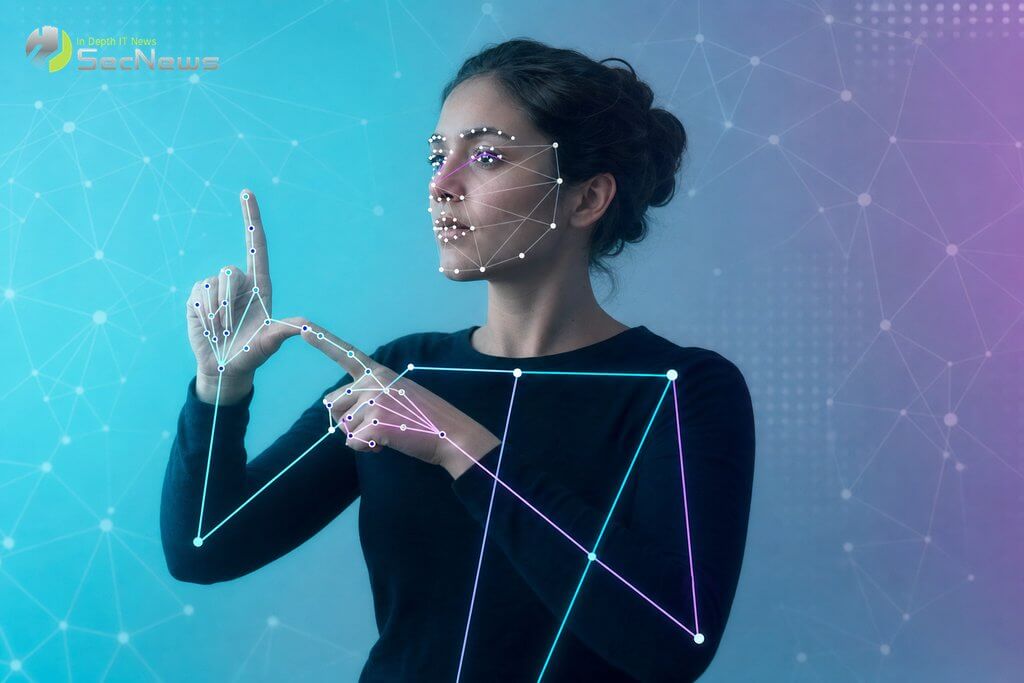
The data flow is designed with privacy in mind. A MediaPipe Holistic runs locally on the device and detects key points on the user’s body, hands, and face. Only these geometric coordinates are sent to Google’s servers for final translation, while the video is immediately rejected on the phone. This means the user doesn’t have to worry about any original footage of their conversation ending up on remote servers.
Where does the mobile feature come in?
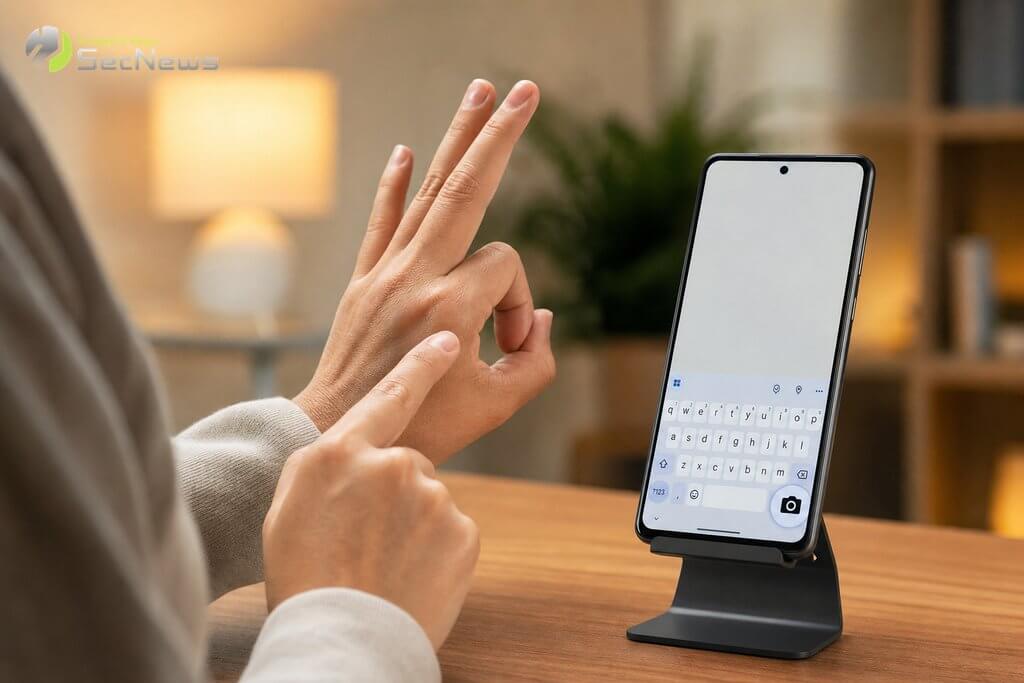
The Pixel 11 user encounters Sign-to-Text in two places. First, in the Gboard: where they would normally speak into the microphone for dictation, they can now activate the camera and sign. The text appears in real time in any app that accepts typing — searching the web, composing an email, writing a document, or querying in Gemini. Second, in the accessibility app Live Transcribe: during a face-to-face conversation with a non-deaf person, the deaf user can respond by signing instead of typing.
The approach replaces an extremely tedious experience. Until now, an ASL user had to either interrupt the flow of sign language to type or rely on an interpreter. SL2T makes sign language as natural as the voice dictation used by millions of users worldwide. Early adopters of the feature reported that sign language was faster and more comfortable than typing, as CNET documented in its first hands-on test of the device.
Related: Apple studies explore spatial understanding by LLMs
Why sign language makes it harder for AI systems
Sign language recognition presents technical challenges not encountered in voice recognition. First, the signal is both visual and three-dimensional — the hands, face, and body move together, with a spatial grammar that determines meaning. Second, there is no “standard” sign language: ASL is different from British Sign Language (BSL), French Sign Language (LSF), or Greek Sign Language, and within each language there are strong dialectal variations. Third, the user himself must often sign with one hand while holding the mobile phone with the other.
Google DeepMind addressed these challenges with optimizations such as support for one-handed sign language, anti-hallucination mechanisms for non-sign language, and reduced response latency. On the academic FLEURS-ASL benchmark, SL2T achieved a score of 70 BLEURT, significantly higher than any previous sign language translation model, according to an analysis by SiliconANGLE.
Where is the deaf community today?
Gboard currently supports over 900 spoken languages, but none of the world’s more than 200 sign languages had been integrated into a keyboard. For a native ASL speaker, using a smartphone required either forced learning of English syntax — which does not match sign grammar — or the intervention of an interpreter. Sam Sepah, a deaf Google researcher who led the project for seven years, said in a LinkedIn post that it was “a historic milestone for the tech industry.”
Broadway actor Daniel Durant , who won an Oscar for his role in “CODA,” was featured in a demo of the feature during the launch. The choice of a popular deaf artist as an ambassador suggests that Google sees the feature more as a cultural statement than a technical feature. The company has already announced plans to expand the model to more sign languages and devices, as well as develop sign language production models — that is, converting text into sign language images.
Read also: Google Pixel 6 Pro: End of support is approaching
What remains to be solved?
Google's effort isn't a complete solution for the entire deaf community. The feature currently only supports ASL to English, a single sign language out of hundreds used worldwide. Greek Sign Language, Greek as a target language, and support for other Android devices beyond the Pixel 11 series have no timeline. User comments on forums like r/deaf on Reddit urge that the demo not be considered fully representative of the real-world experience, as the accuracy of recognition depends on lighting, sign speed, and the user's dialect.
Still, the move highlights a significant trend in artificial intelligence in directions that have been neglected for decades. Google DeepMind's official announcement emphasizes that this is the beginning of a long-term effort that will show whether the scale of language models can truly cover humanity's linguistic diversity — and not just the languages we hear.
