

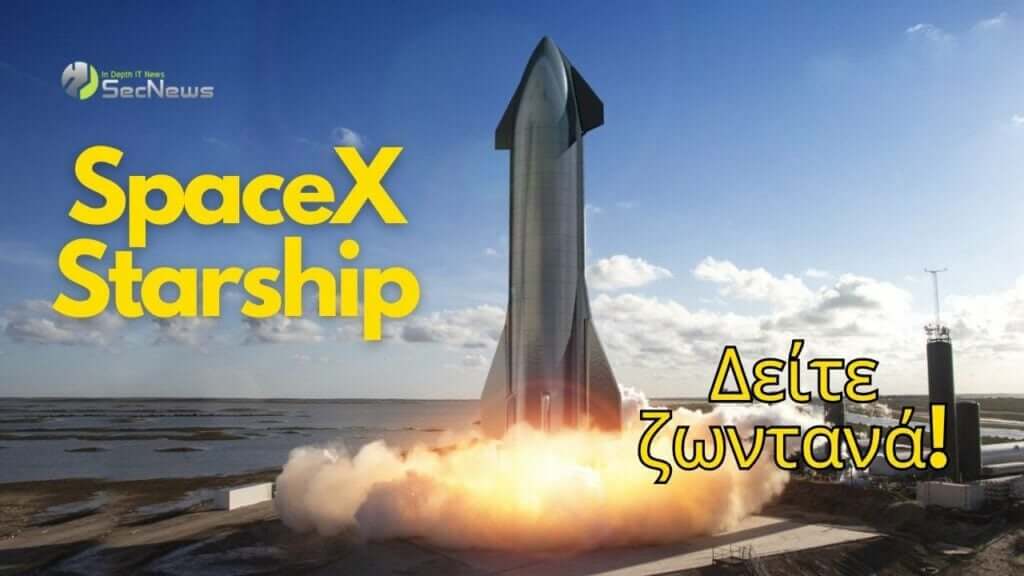
SpaceX wants to catch a skyscraper falling from the sky. The company plans to launch its next Starship as soon as this month and, for the first time, attempt to catch the returning upper stage with giant robotic arms on its launch tower.

Elon Musk outlined the plan on SpaceX’s first earnings call since its public offering, three months after a Starship V3 shortly before that offering. Flight 14 could take place before the end of August, pending regulatory approval. Grabbing the upper stage would be a real milestone, as SpaceX has already caught the Super Heavy booster three times with the tower’s “chopstick” arms, but the Ship, the part that reaches orbit and returns, has never been caught before.
This flight is also meant to do some real work. It will carry Starlink V3 satellites into operational orbit, the first time Starship has delivered viable payloads rather than test items. Confidence is on a good track. The previous flight, in late July, was successful, and its heat shield survived reentry intact after years of chips being Starship’s most persistent weakness.
Musk went so far as to call the problem solved. “I don’t want to be a dick,” he said, “but I think I would consider the heat shield problem solved at this point,” a rare triumphant declaration. Grabbing the craft instead of landing it on legs saves weight and recycling time, both of which are central to the economy Musk is seeking. A vehicle returning to the tower could, in theory, be refueled and relaunched within hours.
Most of that money still comes from the sky it already owns. Starlink generated $4.3 billion in the quarter, the cash machine that funds the much more expensive Starship and Mars dream.
See also: SpaceX: Starship exploded shortly before 10th test flight

Musk’s ambitions for pace remain characteristically grand. He said the rate of flights will increase rapidly and that “a year from now, we’ll be doing at least one flight a day, probably more.” Those timelines are worth the usual discount. Musk’s programs have a long history of delays, and going from occasional test flights to daily launches is a leap no rocket program has ever made.
Starship’s road has been bumpy in the way that hard engineering always is. Flights have been delayed and boosters have exploded, though each failure is now played out in the public markets. The listing changes the stakes of failure. A spectacular blowout was a Tuesday for SpaceX; now each is a data point for shareholders who have priced the company above the world’s largest publicly traded companies.
The long-term goal hasn’t changed, either. Starship is the vehicle Musk plans to send to Mars and that NASA is counting on to return astronauts to the Moon, so its progress is being watched far beyond the space industry. There’s more at stake than satellites. SpaceX plans to start launching a mega-cluster of AI called Starmind by 2027, one of several bets that assume Starship works at scale, and soon.
The stakes of reusability are the whole point. A rocket that catches and relaunches itself, including the upper stage, is the difference between space travel as a gimmick and space travel as a business. European efforts to build a rival to Starlink are lagging far behind, and a Starship that catches itself would push SpaceX's advantage even further.
See also: SpaceX: Will send five uncrewed Starships to Mars (by 2026)
For now, the plan is a concept, a payload, and a promise of pace. If hands are tied around Ship this month, SpaceX will have done something no one else has even attempted, on live television, as a publicly traded company.
