

Meta has been embroiled in a backlash over its new “ Capability Models Initiative ,” a data collection system that tracks how employees use corporate applications . The situation escalated when flyers suddenly appeared at the company’s offices in the United States, denouncing the program as an “ Employee Data Extraction Factory ” and calling on staff to join an organized protest.
The leaflets were reportedly placed in meeting rooms, common areas, cafeterias, and even restrooms at Meta's facilities. They were also promoting an online petition, citing rights protected by the U.S. National Labor Relations Act to organize workers and demand better working conditions.
What is the Capability Models Initiative?
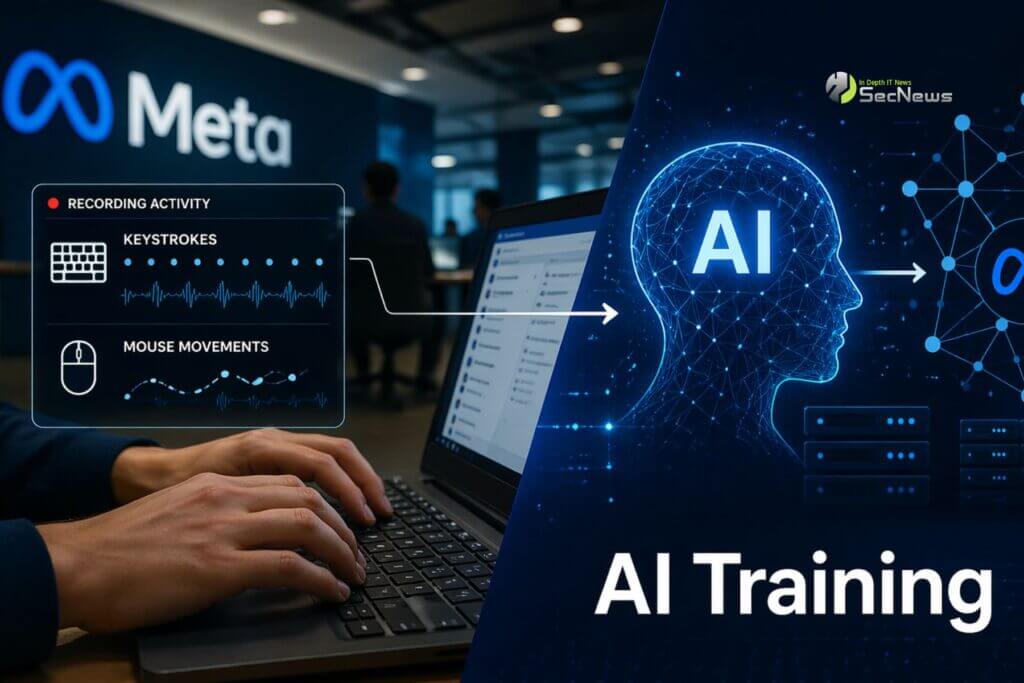
The program in question tracks mouse movements, keystrokes, clicks and screenshots in specific work applications used within the company. According to Meta, this data is used exclusively to train artificial intelligence systems and AI agentsto learn how people interact with software and digital environments.
See also: California: Lawsuit against Meta for advertising fraud
The company claims that the logging is limited to selected applications and does not extend to all employee computer activity, while emphasizing that special security measures have been implemented to protect sensitive data.
However, much of the workforce appears to be suspicious. Many employees believe the program essentially functions as a workplace surveillance tool disguised as a data collection system for AI training.
The fear of automation and layoffs
The timing is further straining the climate within Meta. The company is just days away from a new wave of layoffs that is expected to affect approximately 10% of its total workforce, or nearly 8,000 employees.
The cuts, scheduled for May 20, are seen as part of a broader restructuring strategy that will continue into the second half of 2026. In this environment, several employees believe that the data collected today will be used tomorrow to develop AI tools that may replace human jobs.
Concerns were further heightened after statements by Meta CEO Mark Zuckerberg, who said in January that 2026 would be "the year when artificial intelligence begins to dramatically change the way we work."
For many employees, this statement is now interpreted as a clear indication that the company is preparing to gradually automate daily tasks through AI agents.
See also: Meta vs. Ofcom: New legal dispute
Trade union movements and organized reaction
The response does not appear to be spontaneous or piecemeal. Leaflets direct workers to an online application , while in the UK an organized union campaign has already begun with the support of the United Tech and Allied Workers.
While the strike remains relatively small compared to Meta's overall size, it is considered one of the most visible forms of internal contestation the company has faced in recent years. Meta has historically avoided organized internal conflicts, with the last major crisis occurring in 2018, when employees protested its sexual harassment.
The current situation, however, touches on a much more complex issue: the relationship between artificial intelligence, privacy, and job security.
Legal and ethical questions about employee monitoring
Meta's program raises serious questions about the limits of workplace surveillance, especially in countries with stricter data protection laws.
According to internal documents cited by Reuters, the system operates on company computers and is described by Meta as "voluntary in spirit" but essentially mandatory for employees using specific applications.
In the European Union, however, such practices could face strict legal scrutiny, as regulations on the protection of workers and personal data require clear consent, proportionality and transparency.
See also: Major publishing houses sue Meta for copyright infringement

Artificial intelligence is already changing the workplace
Meta's case reflects a broader shift in the tech industry, as large companies are no longer using AI just for consumer products and services, but also to optimize internal productivity, employee evaluation, and process automation.
As AI agents become increasingly capable of performing complex tasks, fears are growing that the technology will fundamentally transform the job market. The backlash within Meta may be just the beginning of a much larger conversation that will occupy the entire tech industry for years to come.
