

China appears poised to make a major strategic shift, restricting access to US capital for domestic tech companies — particularly in the field of artificial intelligence . Beijing is reportedly planning to impose mandatory government approval before any funding from the United States, marking a new phase in the technological rivalry between the two superpowers.
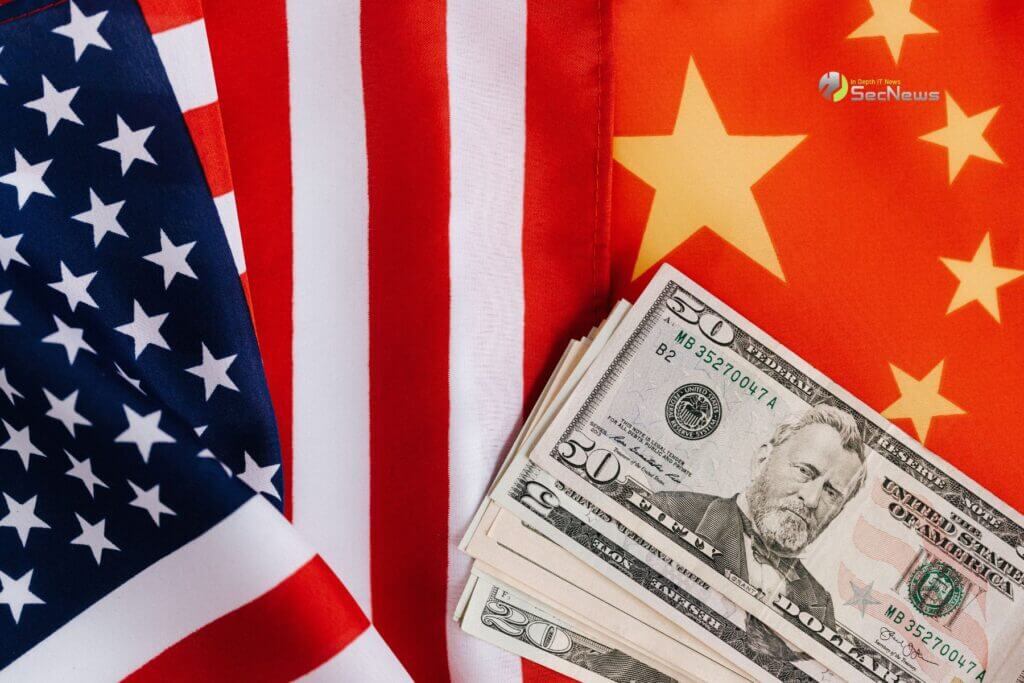
Although the information has not been officially confirmed, the potential implementation of the measure would fundamentally change the way Chinese AI startups raise international capital. In effect, investments from American venture capital would be treated with the same strictness that already applies to technology exports, data flows and strategic acquisitions.
See also: White House accuses China of industrial-scale AI theft
The timing and the US reaction
China's move does not come in a vacuum of political tension. The US government has announced new measures to curb so-called "model distillation" — a practice where foreign companies use American AI models as the basis for training their own systems.
Official Michael Kratsios called the intervention the first meaningful response to Silicon Valley concerns. U.S. artificial intelligence companies say Chinese developers are leveraging open or commercially available models, speeding up the development of competing technologies without the cost of initial research.
A cycle of escalation without clear boundaries
These two developments, within a 24-hour period, reflect a rapid escalation in technological competition. The US is attempting to limit the transfer of know-how through AI models, while China is focusing on disrupting the flow of capital that comes with strategic benefits, such as know-how and access to international networks.
This framework is reinforced by existing restrictions, such as 2025 rules that prohibit American investors from investing in Chinese companies involved in advanced semiconductors or AI without a government license. China’s potential new measure acts as a “mirror” of this policy.

Technology in Focus: The Issue of Model Distillation
The concept of model distillation is at the heart of the conflict. Chinese labs have leveraged technologies like Meta's Llama and other available models to accelerate the development of their own systems.
See also: Threats to TSMC: Technology theft and interference from China
Although this practice is considered legal in many cases due to licensing, American companies argue that it creates an uneven competitive environment. The question that remains open is how to enforce control over a process that relies on data and algorithmic techniques that are difficult to detect.
The implications for Chinese AI startups
For companies like Moonshot AI and Zhipu AI, the new framework could create additional barriers to raising capital. The potential requirement for government approval could slow down investment or direct it toward domestic sources of funding.
Beijing is already increasing support for domestic AI infrastructure, promoting a development model that relies less on international capital. This strategy favors the emergence of “national champions” in the field of artificial intelligence.
The example of DeepSeek and the changing balance
The recent release of models like the DeepSeek V4 proves that China continues to close the technological gap with the US. By utilizing hardware from companies like Huawei instead of Nvidia, Chinese models show that they can achieve high performance even under constraints.
This partially overturns the logic of American export controls, which were based on the assumption that technological lead would remain stable.
See also: US: Three men tried to transfer AI Tech to China

A new model of global competition in AI
The crucial question now is not whether the existing balance of power will be maintained, but how the new competitive framework will be shaped. Developments show that both the US and China are moving to a model of tighter control, where capital, data and technology are treated as strategic resources.
In this environment, AI is not just a field of innovation, but a key element of geopolitical power. And as both sides continue to take countermeasures, the global technology market is entering a period of increased uncertainty but also of faster evolution.
