

The Kash Patel email breach has quickly become more than just another cybersecurity story. It’s a reminder of how vulnerable even top officials remain when personal digital hygiene is neglected. This week, hackers linked to Iran claimed responsibility for breaching the personal email account of FBI Director Kash Patel, posting private photos and emails in an operation that appears to be calculated to leak information.
See also: Iran: Hackers breached FBI Director's personal email

The group behind the breach, known as the Handala Hack Team, didn't stop at just gaining access. They publicly named Patel as one of their "successfully hacked targets," releasing images and a sample of over 300 emails dating from 2010 to 2019.
The content included a mix of personal and professional communication, exactly the kind of overlap that cybersecurity professionals warn against but often see ignored.
Following the breach of Kash Patel's email, the FBI confirmed that it was aware of the incident and attempted to downplay its impact.
"The FBI is aware of malicious actors targeting Director Patel's personal email information and we have taken all necessary steps to mitigate the potential risks associated with this activity. The information involved is historical in nature and does not include government information," an FBI spokesperson said.
While the statement assures that no classified data was exposed, it doesn’t fully address the broader concern about why this access was possible in the first place. If anything, the emphasis on “historical” data suggests that the account may not have been adequately secured for years.
The breach of Kash Patel’s email wasn’t an isolated incident. It comes shortly after the U.S. Department of Justice seized multiple domains linked to Iranian-backed cyber operations. These domains were allegedly used to publish stolen data, claim responsibility for attacks, and issue threats.
See also: Cyber hygiene for everyday use: Social media, email, smartphone

At the same time, the US State Department has offered a $10 million reward for information on individuals involved in such cyber activities. This response signals that authorities view these incidents not simply as isolated breaches but as part of a coordinated cyber espionage campaign.
Interestingly, the breach of Kash Patel’s email also sparked a wave of misinformation. A video that went viral on social media falsely claimed to show Patel dancing to a Bollywood song. The clip, which has nothing to do with the FBI director, gained traction simply because it fit the narrative of the leaked personal content.
This highlights another level of modern cyber incidents: once a breach occurs, controlling the narrative becomes nearly impossible. Fake content often spreads faster than verified facts.
The breach of a personal Gmail account, rather than an official government system, highlights a recurring weakness. High-ranking officials often maintain multiple channels of communication, and attackers know that personal accounts are typically less secure.
If official statements tried to calm things down, public reactions—especially on Reddit—did the opposite. The breach of Kash Patel’s email provoked strong and, at times, crude reactions from users. Some questioned the effectiveness of economic incentives against state-backed actors. Others pointed to what they saw as misplaced priorities. There were also deeper concerns about national preparedness. And perhaps the sharpest criticism focused on basic security.
The Kash Patel email breach isn't shocking because it's complex. It's shocking because it's familiar. Personal accounts continue to be the weak link, even for people operating at the highest levels of national security. And attackers know this. They don't compromise the hardest systems, they target the easiest ones.
🔒 Protect your privacy with Proton VPN
Swiss VPN from the creators of Proton Mail — strict no-logs policy, strong encryption, and built-in NetShield that blocks ads, trackers, & malware.
- ✔ No-logs, based in Switzerland (except 14-Eyes)
- ✔ NetShield: blocks ads, trackers & malicious domains
- ✔ Covers all devices — free version available
The link is an affiliate link — SecNews may receive a commission at no additional cost to you. It does not affect the independence of our article writing.
See also: Apple competes with Google Workspace and Microsoft 365 with new email service
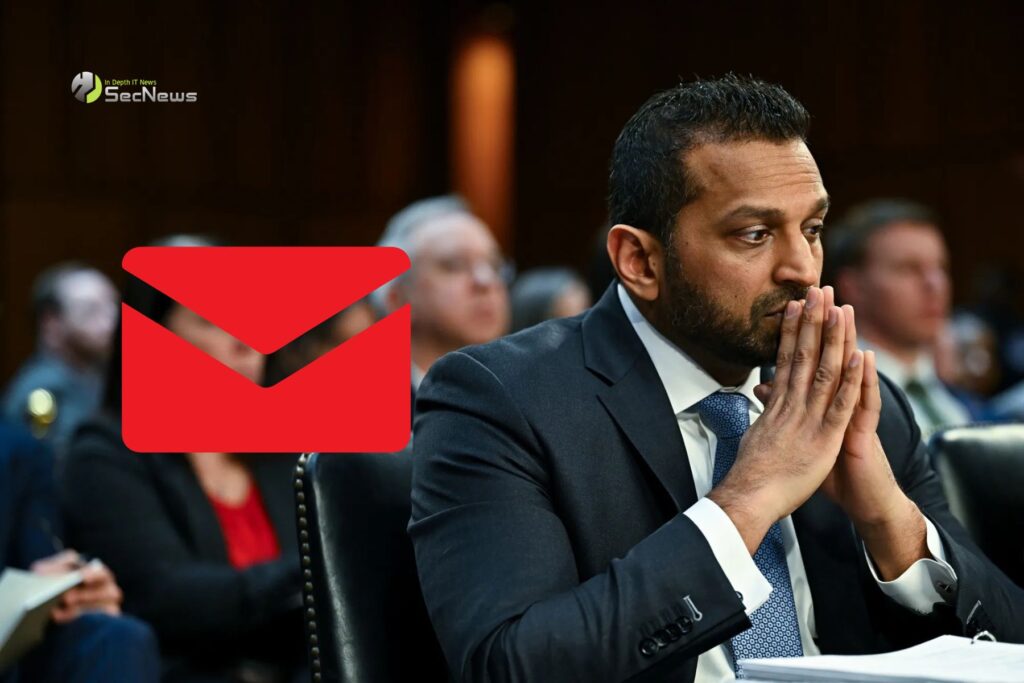
What stands out here isn't just that the FBI Director's email account was hacked. It's that the playbook used against him is the same one used against everyday users, phishing, poor account security, or reused credentials. That's what makes this incident so disturbing. Not because it's rare, but because it's not.
