

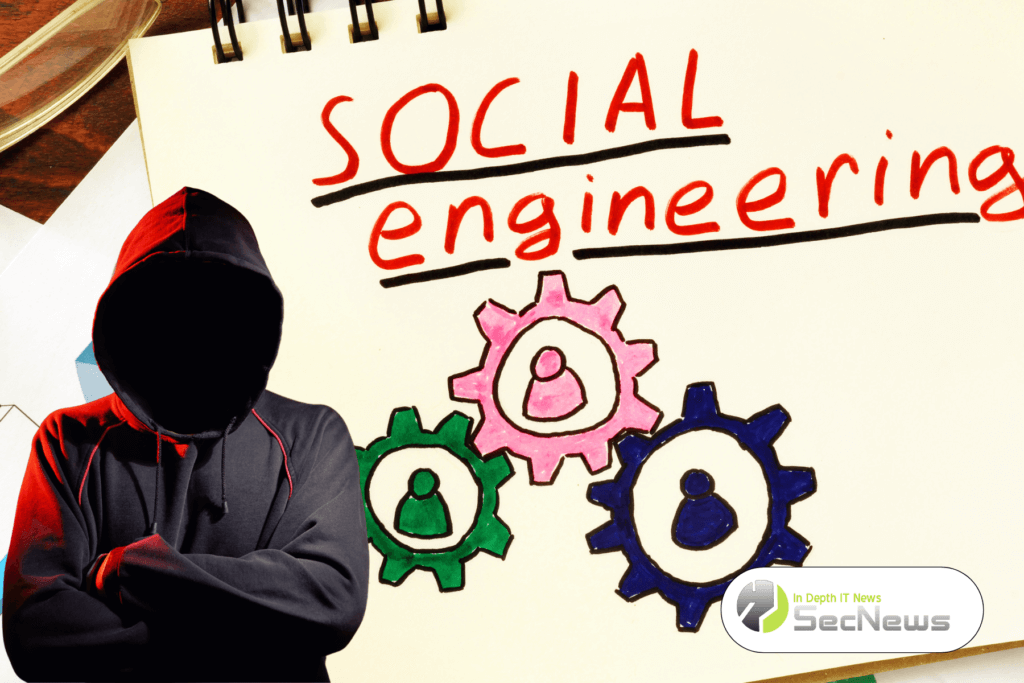
Social engineering is one of the most insidious and effective forms of cyberattacks, as it is not based on exploiting technical weaknesses in a system, but on human psychology itself. In a world where security systems are becoming increasingly sophisticated, humans remain the most vulnerable. Attackers exploit a person's trust, fear, curiosity or even kindness to gain access to sensitive information or systems.
See also: UAE repels AI terrorist cyberattacks on critical infrastructure
One of the most well-known forms of social engineering is phishing, in which an attacker pretends to be a trusted organization, such as a bank or a well-known company, and sends emails or SMS messages with the aim of tricking the victim into revealing personal data, such as passwords or credit card details. These messages often appear completely authentic, making them difficult to identify, especially by unfamiliar users.
Another technique is pretexting, where the attacker creates a fake scenario to convince the victim to provide information. For example, they may pretend to be a technical support employee and request login details ostensibly to resolve a problem. In this case, the victim does not realize that they are being tricked, as the story presented to them seems logical and convincing.
See also: Microsoft: ClickFix Attack Using DNS and Nslookup

Baiting is also a common form of attack, where the attacker exploits human curiosity or greed. A typical example is the placement of infected USB drives in public places. When someone plugs them into their computer out of curiosity, malicious software is installed without them realizing it. Similar practices are also used on the Internet, in the form of “free” software or offers that ultimately hide traps.
The effectiveness of social engineering is due to the fact that it exploits basic human characteristics. People tend to trust people who appear authentic or authoritative, react quickly in stressful situations, and ignore signs of danger when offered something attractive. These behaviors make attacks particularly difficult to predict and prevent using technical means alone.
Tackling the phenomenon primarily requires education and awareness among users. Understanding basic social engineering techniques can help individuals recognize suspicious behaviors and avoid traps. At the same time, organizations must invest in staff training programs and implement security policies that limit access to sensitive information.
See also: Windows shortcuts used in Phorpiex ransomware campaign

Overall, social engineering proves that cybersecurity is not just a matter of technology but also of human behavior. As digital media evolves, it becomes more important to understand that protecting our data starts with our own choices and our ability to recognize deception.
🔒 Protect your privacy with Proton VPN
Swiss VPN from the creators of Proton Mail — strict no-logs policy, strong encryption, and built-in NetShield that blocks ads, trackers, & malware.
- ✔ No-logs, based in Switzerland (except 14-Eyes)
- ✔ NetShield: blocks ads, trackers & malicious domains
- ✔ Covers all devices — free version available
The link is an affiliate link — SecNews may receive a commission at no additional cost to you. It does not affect the independence of our article writing.
