

The latest images from Mars offer a stunning and highly detailed look at one of the oldest and most heavily scarred regions of the Red Planet's surface. The landscape, captured in the new images, bears the marks of billions of years of geological history, including repeated asteroid impacts, extensive volcanic activity and long-term erosion processes.
The images, released by the European Space Agency , show the Arabia Terra region , a vast geological zone in the planet's northern hemisphere. Scientists estimate that the region was formed more than 3.7 billion years ago , making it one of the oldest parts of the Martian surface.
Mars Express continues to reveal secrets of the planet
The images were taken on October 12, 2024, by the Mars Express spacecraft during its 26,233rd orbit around Mars. Although the images were recorded several months ago, they have only recently undergone advanced processing to create a detailed color and topographic depiction of the region.
See also: Curiosity explores “spider webs” on Mars
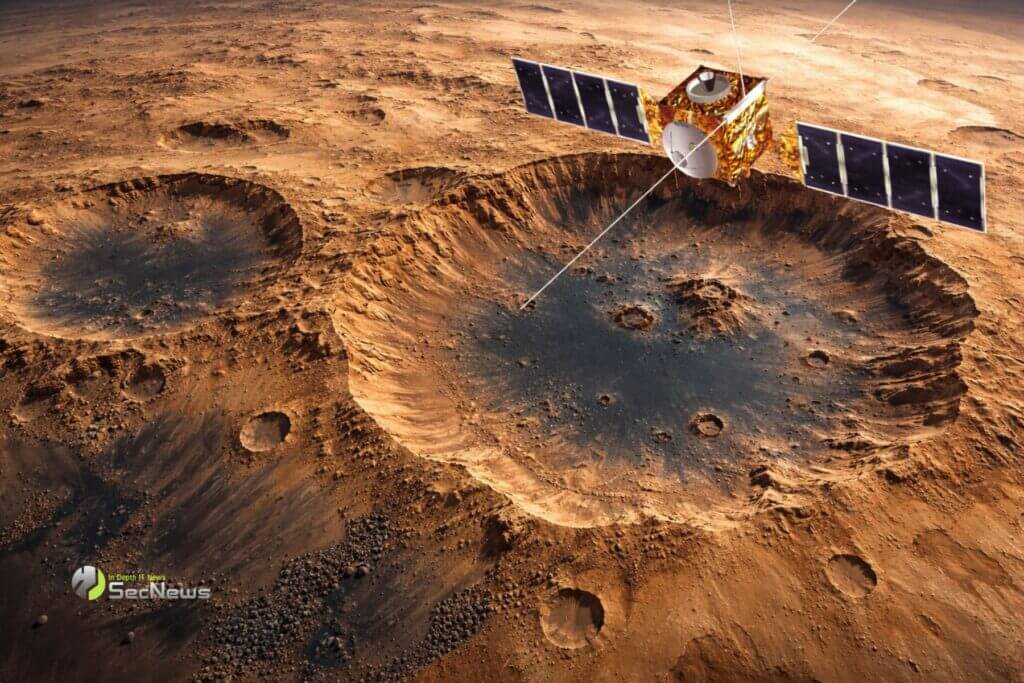
The publication of the data highlights the importance of reprocessing older observations. With the help of modern image analysis methods and improved processing algorithms, scientists can identify details that were not visible when the data was originally studied.
The impressive Trouvelot crater
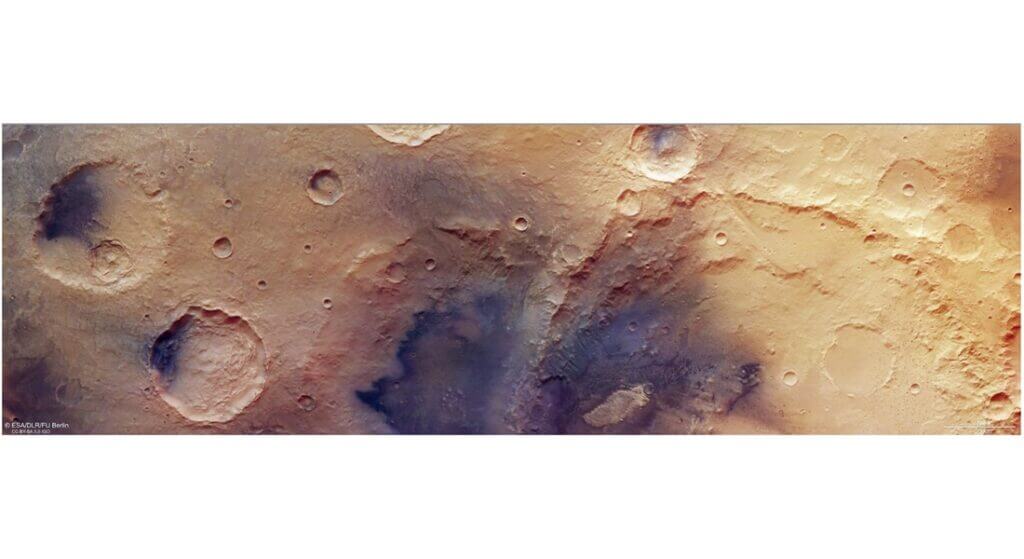
At the center of the image stands the enormous Trouvelot, an impact area about 130 kilometers in diameter. The crater's morphology reveals its great age. Its rim appears highly worn, while its interior is partially filled with materials that have accumulated over time.
The presence of smaller craters within Trouvelot suggests that the area continued to be bombarded by smaller celestial bodies even after its initial formation. This is a typical example of the intense space activity that shaped the surface of Mars during the early history of the solar system.
Even older geological traces
Right next to Trouvelot is a second large impact basin, which appears even older and more heavily eroded. Its rim has almost disappeared due to long-term erosion, while the fact that Trouvelot crater overlaps part of it suggests that this area formed first.
See also: NASA's ESCAPADE opens a new chapter in the study of Mars
Its floor is largely covered by dark volcanic material, known as mafic material, which is rich in iron and magnesium. The minerals it contains — such as pyroxene and olivine — are evidence of volcanic activity in the planet's distant past.
Scientists estimate that these materials likely emerged on the surface due to powerful asteroid collisions and were then moved by winds or gravity, a process that has been observed in other areas of Arabia Terra.

Traces of winds and possible water processes
Dark streaks and spots are visible throughout the image, likely representing volcanic material scattered by powerful Martian dust storms. At the same time, scientists have identified crescent-shaped sand dunes, known as barchan dunes, which reveal the direction of winds that continue to shape the planet's surface to this day.
Of particular interest is a light-colored hill, approximately 20 kilometers long, visible in the image. Its surface is characterized by ridges and grooves, while its brighter color indicates the presence of minerals that were likely formed or altered in the presence of water.
The possibility of the existence of such minerals is an important element for understanding the hydrological history of Mars, as it reinforces the view that in the past the planet had a wetter environment.
See also: Perseverance – Mars: Followed a path designed by AI
The scientific value of old data
More than twenty years after its arrival at Mars in 2003, Mars Express continues to be one of the most important tools for studying the planet. The mission has made a decisive contribution to mapping the surface and understanding the geological evolution of Mars.
The new images demonstrate that even regions that have been extensively studied can reveal new information when reanalyzed with modern techniques. For scientists, this is a reminder that data from space missions remains valuable for decades, continuing to provide new insights into the history and evolution of our solar system.
