

The Moon will finally escape an explosive collision with a "killer" asteroid in 2032, according to new observations from the James Webb Space Telescope (JWST).
See also: James Webb: Mysterious red dots may be the first stars in the universe
The observations were made on February 18 and 26 with the highly sensitive infrared instruments of the JWST. The new data on the near-Earth asteroid 2024 YR4 allowed NASA astronomers to improve previous calculations of its orbit, reducing the probability of an impact with the Moon from 4.3% to zero.
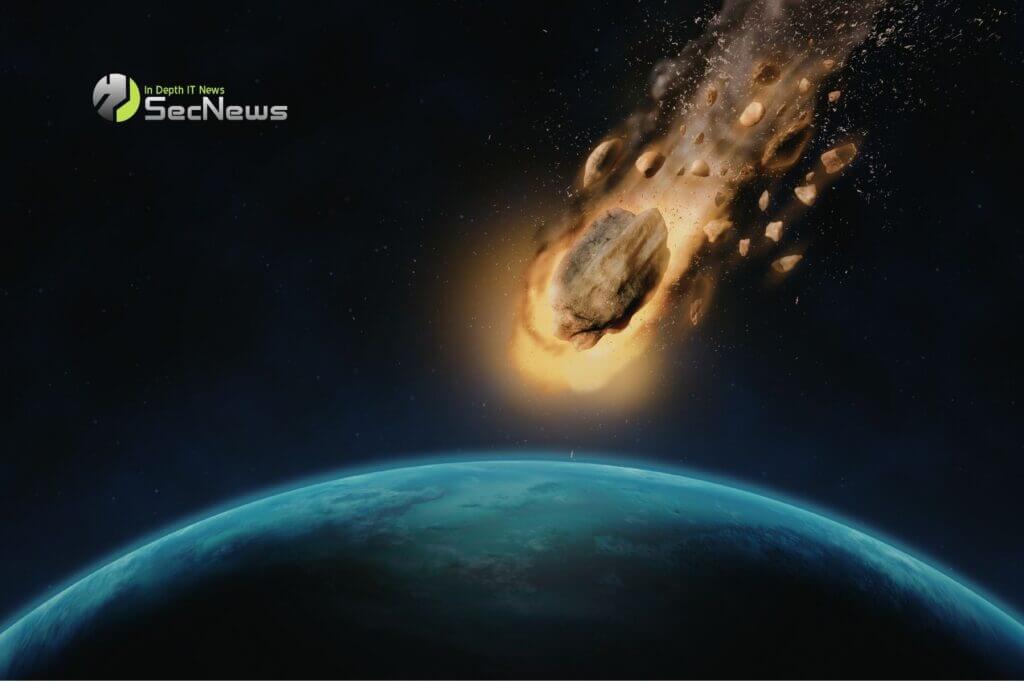
Instead of a collision, the threatening asteroid will pass within about 21,200 kilometers of the Moon's surface — closer than some artificial satellites orbiting Earth, announced on March 5. Meanwhile, when 2024 YR4 returns to the inner solar system for its closest approach in six years, it will pass within hundreds of thousands of miles of Earth.
See also: New findings from James Webb in the "Eye of God"
According to NASA, this new round of observations was only possible thanks to the JWST's exceptional sensitivity, although the process pushed the telescope almost to its limits. Asteroid 2024 YR4 was discovered in late 2024 by the Asteroid Terrestrial-impact Last Alert System (ATLAS).

Subsequent observations with telescopes soon showed that this space body is particularly large, with a diameter estimated to be between 53 and 67 meters — about the height of the Leaning Tower of Pisa. At the same time, it was found that its orbit would bring it very close to Earth.
If an asteroid of this size were to hit our planet, it could destroy an entire city, releasing energy equivalent to about 500 atomic bombs, according to previous reports. That's why it's been nicknamed the "city killer.".
See also: "Enigmatic" object discovered by the James Webb telescope

Because initial telescopic data on the asteroid were still limited, astronomers estimated that there was a small chance that it would collide with Earth. The estimated probability reached a high of 3.1% — the highest ever recorded for a possible asteroid impact. However, within a few months, new data from the James Webb Space Telescope and other telescopes reduced the probability of a collision with Earth to zero, while the probability of an impact with the Moon remained at 4.3%.
