

Qualcomm announced the new Snapdragon Wear Elite chip , which is aimed at the next generation of AI wearables . The new chip is designed to support innovative devices such as AI pendants, pins and screenless smart glasses , extending capabilities beyond traditional smartwatches. This strategic move reflects the growing demand for more discreet and specialized wearable devices that can be seamlessly integrated into users’ daily lives.
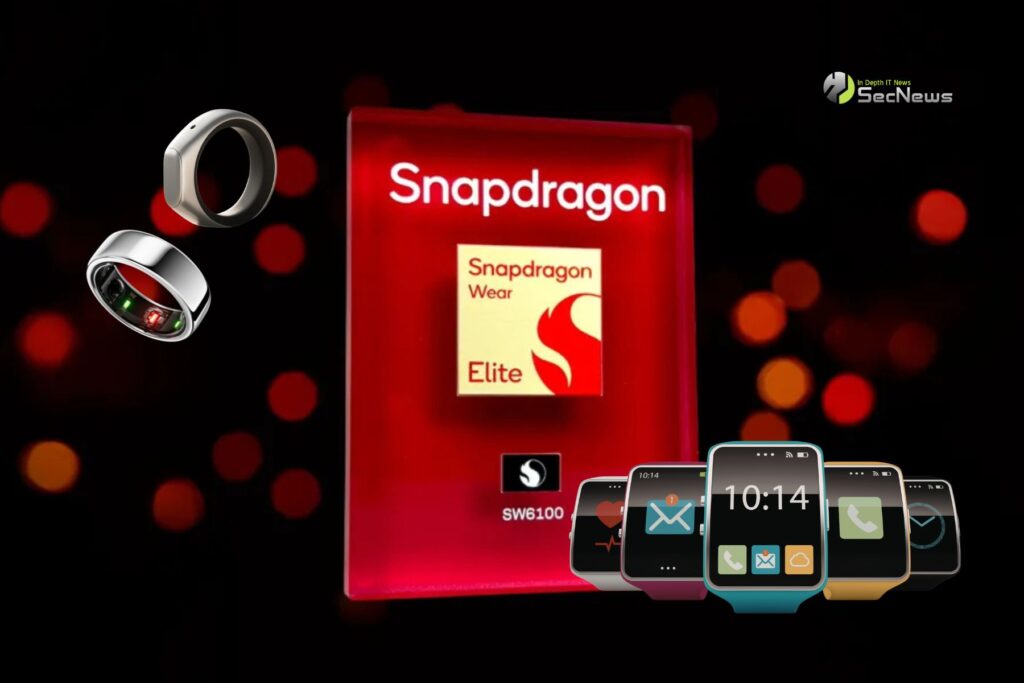
Qualcomm calls the Elite a “wrist plus” chip, implying that it won’t replace the previous W5 Plus , but will coexist with it to address different market needs. The company expects the Snapdragon Wear Elite to appeal to manufacturers looking to create AI wearables with advanced processing capabilities , particularly in areas where the traditional smartwatch form factor isn’t practical or desirable. For more powerful smart glasses with augmented reality capabilities, Qualcomm will continue to offer its dedicated AR chip , creating a complete ecosystem of solutions.
See also: New Meta and Nvidia deal for millions of AI chips
Snapdragon Wear Elite: All the upgrades in the new chip
The new chip has been upgraded to the 3nm, incorporating an eNPU and a Hexagon NPU for AI processing. The eNPU handles low-power tasks like keyword recognition and activity detection, while the Hexagon NPU handles more computationally demanding tasks like natural language processing and complex data analysis. According to Qualcomm, the Hexagon NPU can handle two billion parameters on the device and up to 10 tokens per second, performance that enables real-time translation and other advanced AI applications without the need for cloud processing.
While the Snapdragon Wear Elite retains a similar co-processor architecture to the W5 Plus, Qualcomm has significantly improved power efficiency , allowing the main processor to handle more functions without straining the battery. For example, GPS tracking requires 40% less power , while overall battery life has increased by 30% compared to the previous generation. As for the battery, the Elite supports 9V fast charging , meaning it can reach 50% capacity in about 10 minutes , a critical improvement for devices used every day.
See also: Samsung announces the world's first 2nm Mobile Chip

Advanced connectivity features of Snapdragon Wear Elite
The new chip adds support for satellite connectivity, 5G, ultra-wide band and Bluetooth 6.0, features that open up new horizons for applications such as precise indoor positioning and communication in remote areas. The CPU has increased by about five times compared to the previous generation, while the GPU now supports 1080p resolution at 60fps for high-quality animations and graphics.
In addition to Android and Wear OS, Elite will also support Linux to better serve startups and developers who want to create AI pins or pendants on proprietary software.
All of this suggests that device makers aren’t done with AI wearables, although there hasn’t been much success in the pins or pendants categories so far. The fact that a major component maker like Qualcomm is actively creating chips that serve this category of devices is a sign that there is significant demand from manufacturers and investors. Google has been open about how it is building an AI hardware, including wearables, while Apple is rumored to be seriously considering developing an AI wearable to complement its ecosystem. Jony Ive and Sam Altman have also publicly hinted that something like this could be in the future for OpenAI, which shows the tech giants’ interest in this area.
See also: New M5 Chips Spotted in iOS 26.3 Beta

The Snapdragon Wear Elite could debut in 2026 , marking Qualcomm ’s push for 3nm processes and advanced coprocessors. This development extends artificial intelligence beyond traditional smartwatches, opening up new possibilities for ambient computing and discreet AI assistance. The success of the Snapdragon Wear Elite will ultimately depend on manufacturers’ ability to create compelling use cases that convince consumers of the value of these new forms of wearable technology.
