

On Wednesday, the New York Times filed a lawsuit against Microsoft and OpenAI, the company behind the popular AI chatbot ChatGPT, accusing them of copyright infringement and misappropriation of the newspaper's intellectual property to train large language processing models
See also: OpenAI's tumultuous weekend
Microsoft is investing in and supporting OpenAI, giving it access to computing technology in the Azure cloud .
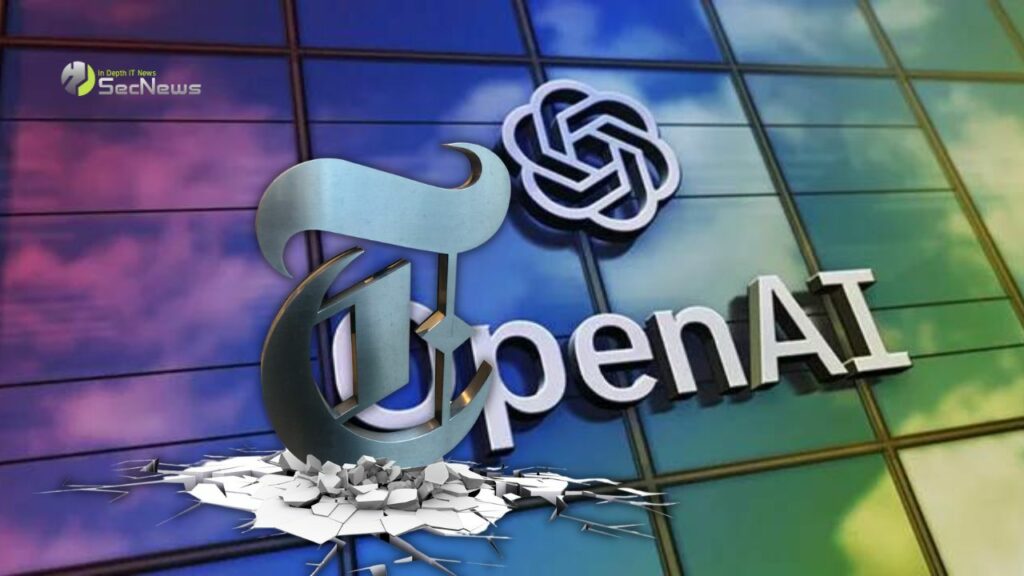
The publisher says in a filing with the Federal Court for the Southern District of New York that it seeks to hold Microsoft and OpenAI liable for the “billions of dollars in legal and actual damages” it believes it owes for “illegally copying and using The Times’ uniquely valuable works.”
The New York Times said in a statement that it recognizes the power and potential of GenAI for the public and for journalism, but added that journalistic material should be used for commercial benefit only with permission from the original source.
In the proceedings, the Times is represented by the firm Susman Godfrey, which represented Dominion Voting Systems in the lawsuit against Fox News that resulted in a $787.5 million settlement.
See also: OpenAI: Hundreds of employees threaten to resign after Sam Altman steps down as CEO
The firm Susman Godfrey is also representing author Julian Sancton and other authors in a separate lawsuit against OpenAI and Microsoft, which accuses the companies of using intellectual property without permission to train multiple versions of ChatGPT.
The Times is one of several media organizations demanding compensation from companies behind some of the most advanced artificial intelligence models, for allegedly using their content to train AI programs.
In Wednesday's lawsuit, the Times accused Microsoft and OpenAI of creating a business model based on "massive copyright infringement," alleging that the systems were used to create multiple copies of the Times' intellectual property in order to create the GPT models that exploit and, in many cases, retain large portions of the intellectual creation contained in those works.
See also: Microsoft and OpenAI expand their partnership
OpenAI has made significant contributions to advancing artificial intelligence, developing innovative models and technologies. One of the most well-known examples is GPT-3, an algorithm that can generate human-level text, opening up new possibilities for automation and communication.
Additionally, OpenAI is committed to achieving safe and democratic artificial intelligence. It aims to ensure that AI technologies benefit all people, not just a select few. This is achieved through transparency and collaboration with other research organizations.
Finally, OpenAI seeks to develop artificial intelligence in a way that respects human dignity and autonomy. This means that the technologies OpenAI develops must be designed in such a way that they do not interfere with people's ability to make free and informed choices.
Source: cnbc
