

Swedish-based electric boat manufacturer Candela has just announced the completion of test flights for the Candela P - 12 , an electric flying ferry that flies over water, and is now headed to production for a public launch.
Candela's electric hydrofoil pleasure boats are already well-known in both Europe and the U.S. The Candela C-8 electric speedboat, the company to date, has set world endurance records, thanks to its incredibly efficient design.
By using computer-controlled hydrofoils to lift its boats out of the water, Candela can reduce the energy consumed by over 80%, meaning the boats can travel the same distance with just 1/5 of the battery.
See also: Frauscher x Porsche 850 Fantom Air: Porsche's electric boat
The hydrofoil operation also has another advantage, as it leaves no trace behind the boat. In areas like Venice where boats have to move slowly to avoid causing problems with the canals and surrounding buildings, boats are allowed to travel at higher speeds.
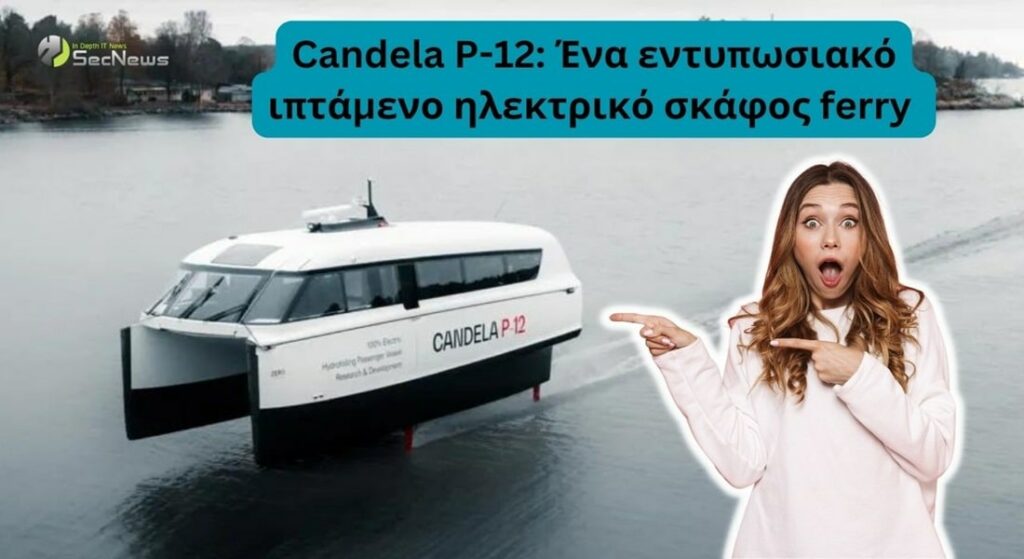
The new Candela P-12 uses the same hydrofoil technology, but is larger than its other boats and can accommodate up to 30 passengers. This makes the P-12 ideal for commercial use, while also solving the main problem that has hindered the spread of commercial electric boats: reduced range.
The P-12 has a range of up to 100 km, thanks to its 252 kWh battery . So, it can cover quite long distances. And most importantly? It can be recharged quickly to continue its journeys on the water. Candela's boats only require a standard DC charging station, similar to those you would find in a car park . This means they can use existing infrastructure and lower-cost chargers, unlike most commercial electric vessels.
See also: Bo M e-scooter: The stylish electric scooter enters production
The P-12 is so efficient that it can have a turnaround time of under two minutes, while still utilizing the existing dock infrastructure with its own expandable boarding ramp.
The Candela P-12 is now entering serial production, after which it will be sold for 1.7 million euros. The company says this is in line with the current cost of internal combustion engine-powered ferries and significantly lower than competing electric ferries. In addition, lower operating costs mean that the vessel is expected to reduce operator costs per passenger kilometer by around 50%.
As Candela’s commercial vessel director Erik Eklund, “With the P-12, we’re not just offering a faster, more comfortable electric alternative to fossil-fueled vessels. We’re enabling operators to make the transition to sustainable vessels that are economical and profitable, a critical step toward clean oceans and lakes.”
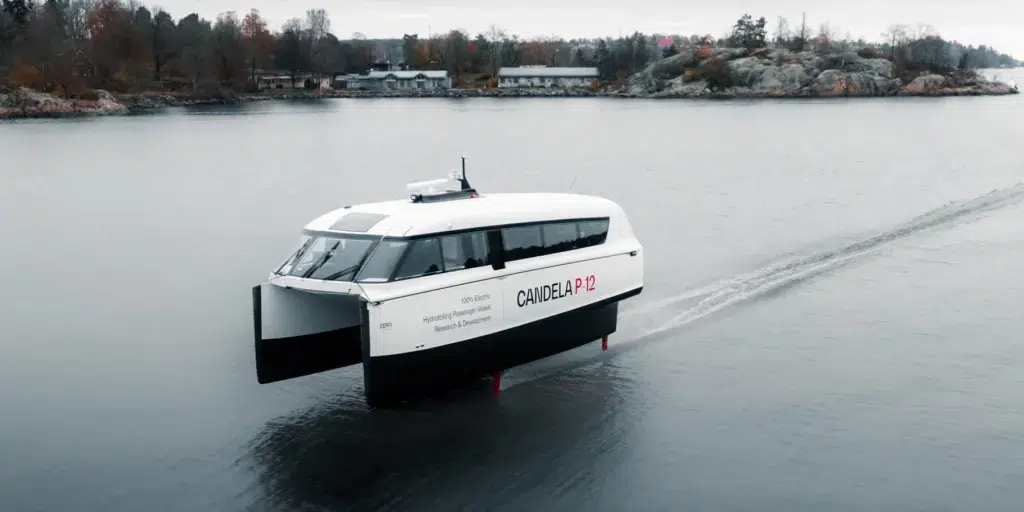
The new vessel will be available in three variants: the P-12 Shuttle, the P-12 Business and the P-12 Voyager.
- The Shuttle can accommodate 30 passengers. It also has space for bicycles, strollers and wheelchairs.
- The Business version of the P-12 features a premium interior with seating for 12 to 20 passengers along with additional space for their luggage.
- Finally, the Voyager offers customers flexibility in interior design, catering to both leisure and commercial travelers.
See also: Cyrusher Thunder: A new powerful electric surfboard
The benefits of this flying electric ferry for transportation and the environment are multiple. One of the main ones is the reduction of emissions gas. Electric ferries are more environmentally friendly. This can have a positive impact on air quality and combating climate change.
Another potential benefit is the reduction of traffic congestion. Ferries can offer an alternative for transporting passengers in areas with high traffic pressure, reducing the number of vehicles on the roads.
Finally, the introduction of the Candela P-12 flying electric vehicle can contribute to promoting technological innovation. The development and construction of these vessels requires advanced technologies and engineering, making the market competitive and promoting research and development in this area. This can lead to new innovative solutions for transportation and energy, with positive impacts on other sectors of the economy.
Source: electrek.co
