

Over the years, plans for sustainable habitats on both the Moon and Mars have abounded. And while all of these potential plans may be decades away, Japan has given us the best proposal yet.
See also: NASA lost contact with the Capstone spacecraft heading to the Moon

This massive, 1,300-foot-tall rotating structure is called “ The Glass .” It was unveiled at a press conference on July 5, held by researchers at Kyoto University and Kajima Corporation , a Tokyo- based construction company . Designed to rotate every 20 seconds using centrifugal force to achieve “normal gravity,” the plan is to create “artificial gravity living facilities,” essentially recreating Earth ’s living conditions .
Yosuke Yamashiki, director of Kyoto University's SIC Human Space Science Center, told the press on July 15, "There is no similar plan in other countries' space development plans," according to the Asahi Shimbun.
However, we probably won't see the project fully realized anytime soon, as the Asahi Shimbun reports that plans to build the massive structure will take nearly 100 years, although a simplified version of "The Glass" could be on the moon by 2050.
See also: NASA satellite leaves Earth's orbit and heads to the Moon
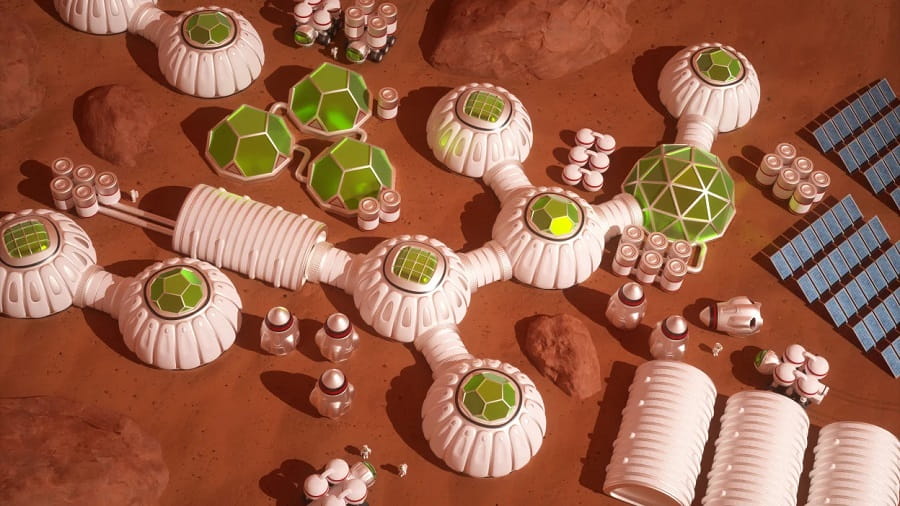
The team aims to build two separate facilities called “Lunar Glass” for the moon and “Mars Glass” for Mars. The idea, according to the researchers, is that as space tourism begins to become more common, there should be ways to “reduce the health impact on people living on the moon or Mars that could be caused by low gravity,” the Asahi Shimbun reports.
Studies by NASA and other researchers have found that constant weightlessness and transitioning between different gravity fields can cause bone loss, back pain and kidney stones. However, the Kyoto-Kajima joint team noted in their statement that “research on low gravity is limited to the maintenance of the adult body and its impact on the birth and development of children.”
See also: NASA: We don't know when the megarocket will fly around the Moon
Further plans for “The Glass” facilities include forests and waterfronts to mimic Earth’s biodiversity along with a transportation system called the “Hexagon Space Track System,” the Asahi Shimbun reports. According to the researchers, this interplanetary space train would create its own gravity while traveling between Earth, the Moon and Mars.
"Developing a residential artificial gravity facility with Kyoto University will be a landmark moment in space research," said Takuya Ohno, an architect and researcher at Kajima, in the press statement. "We will work to make this joint research essential for humanity."
