

Facebook has pledged to take stronger action against people who repeatedly share and spread misinformation on its platform, imposing "penalties"such as account restrictions.
Specifically, the social media said in a blog post the following: “Whether it’s false/misleading content about COVID-19 and vaccines, climate change and elections, or other topics, we’re making sure fewer people see misinformation on our apps. Starting today, we’ll reduce the distribution of posts in a user’s News Feed from a Facebook user’s account if they repeatedly share content that has been reviewed by one of our fact-checking partners.”
Read also: Facebook: Read the article before sharing it, not just the title
Facebook says it has already reduced the amount of such posts in its news feed, while also rolling out a new notification tool that lets users know if they are interacting with content that has been reviewed by a fact checker.
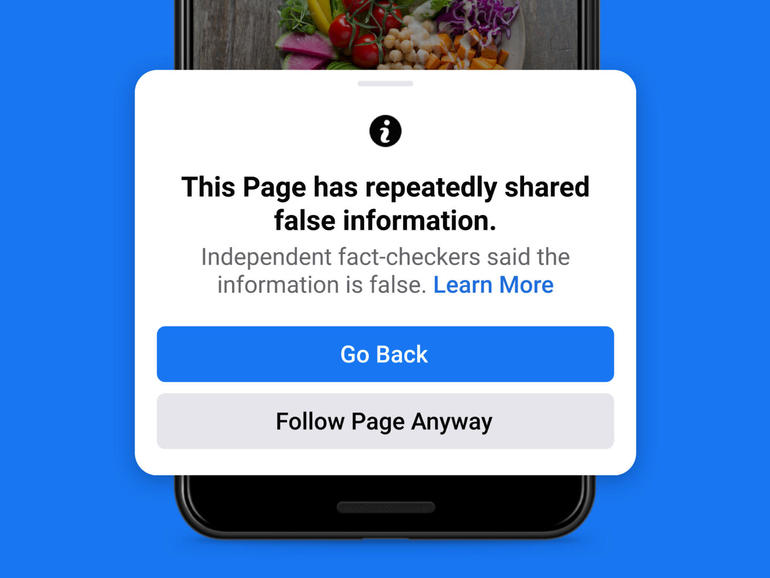
Specifically, the company said: “We currently notify people when they share content that is then reviewed by a moderator, and we’ve redesigned these notifications to make it easier to understand when this happens. We want to give users more information before they like a Page that has repeatedly shared content that has been reviewed by moderators, so a pop-up will appear if you go to like one of these Pages.”
See also: Attorneys General urge Facebook not to create Instagram for children
People who repeatedly share false information may see their posts “moved lower” in the news feed, making them less likely to be seen by others.
Users can see more information, such as that fact checkers have flagged some posts shared by the page that include false information, as well as a link to more information about the platform's fact checking program.
Suggestion: Facebook: It has removed 18 million posts of misinformation about COVID-19
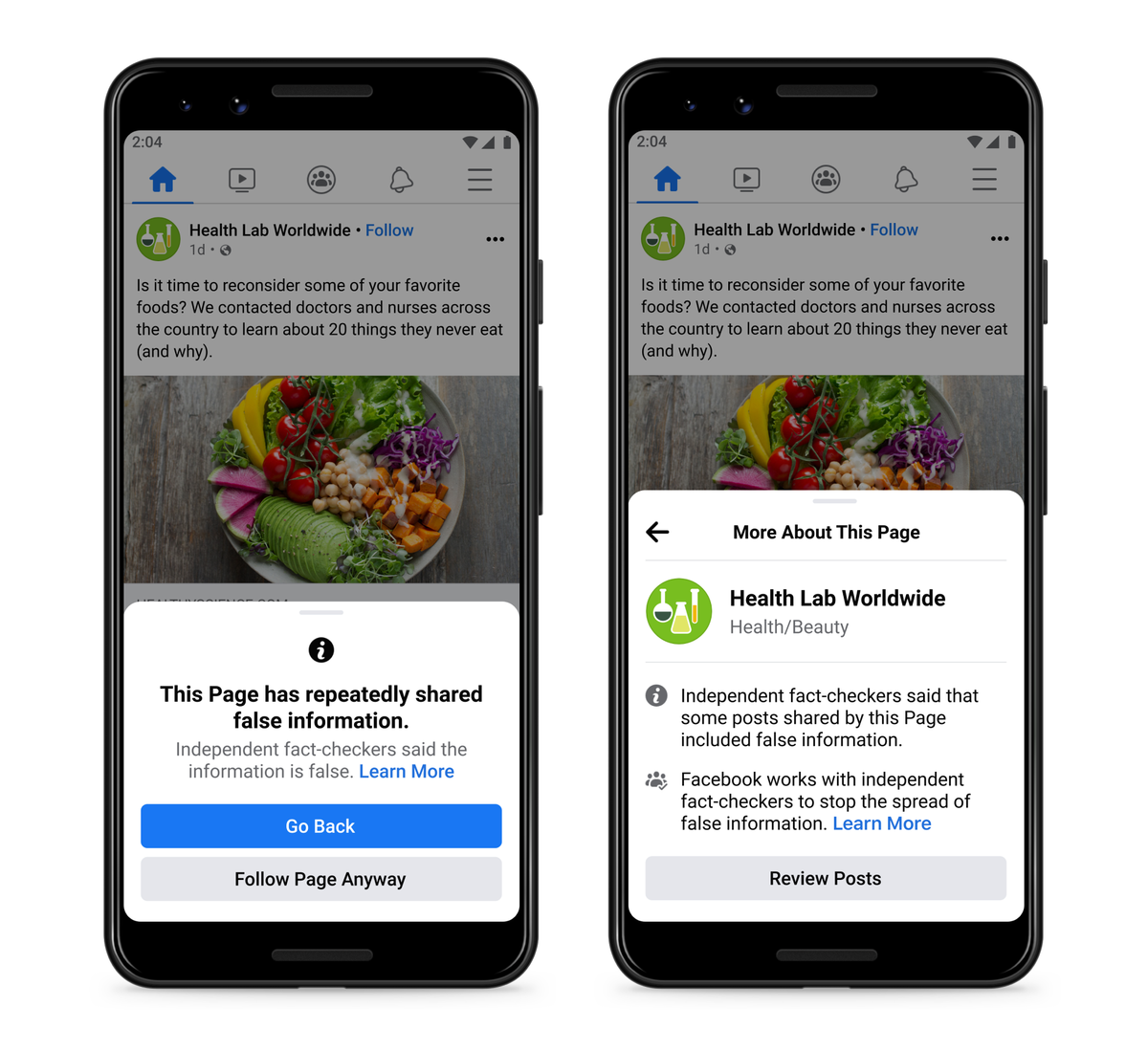
"This will help people make an informed decision about whether they want to follow a page," Facebook noted.
Fake news and conspiracy theories have proliferated on social media platforms – such as Facebook and Twitter – during the COVID-19 pandemic. Earlier this year, Facebook said it removed 1.3 billion fake accounts between October and December 2020, ahead of an inspection by the U.S. Energy and Commerce Commission into how the tech platforms tackle misinformation.
