

Turkey’s Central Bank has painted an upbeat picture on the threat of the coronavirus, saying the Middle East’s largest economy is resilient to such disruptions. The death toll in Turkey reached 131 on Sunday. Central Bank Deputy Governor Oguzhan Ozbas told state-run Anadolu that the monetary authority expects “high growth” in the first quarter, given the Turkish economy’s performance in January and February. However, the effects of the pandemic have begun to noticeably affect key sectors of the Turkish economy such as foreign trade, tourism and transportation, Ozbas said.

Ozbas then pointed out that as the pace of the pandemic slows, Turkey’s economy is expected to recover quickly. Specifically, he said that with its dynamic structure, the Turkish economy will be among those that will pass the test of the pandemic with minimal damage and in a short time. In an emergency meeting held on March 17, the Central Bank of Turkey lowered its benchmark interest rate to 9.75%, even though inflation accelerated to 12.4% in February. The bank also announced a series of measures aimed at facilitating lenders’ access to liquidity
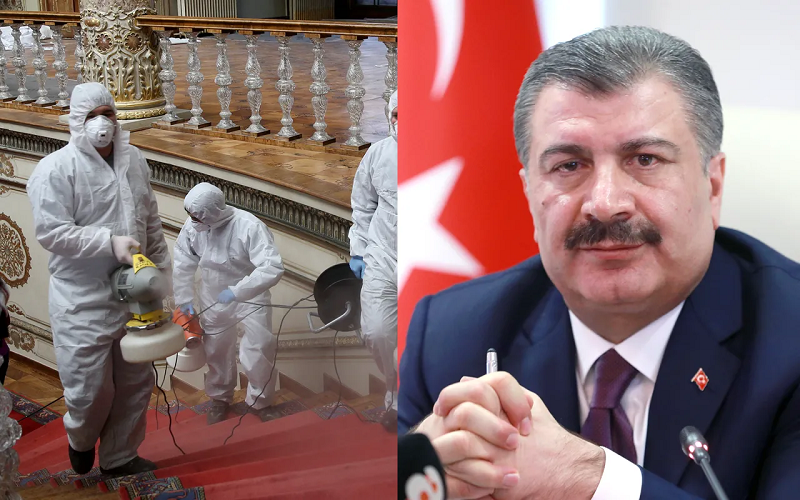
Health Minister Fahrettin Koca said on Sunday that Turkey had tested 9,982 people in a single day, including 1,815 new cases of the coronavirus. The total number of cases rose to 9,217, the minister said in a post on Twitter . Turkey has taken a number of measures in response to the developments. Istanbul Governor Ali Yerlikaya urged residents to stay home and avoid unnecessary travel for 48 hours. Security forces have also set up checkpoints outside several major cities, stopping buses and barring passengers without official permits. Finally, a prosecutor has launched an investigation against Remziye Tosun, a lawmaker from the pro-Kurdish People's Democratic Party, who caused a storm of reactions in a speech on measures against the threat of the Coronavirus.
