

Monitoring seismic activity around the world is a big deal, but it requires the right equipment, especially in the ocean. New research from Berkeley could turn existing undersea fiber-optic cables into a network of seismographs, creating an unprecedented global view of Earth's tectonic movements.

Seismologists obtain almost all their data from tools that are on land, which means that most of our knowledge regarding seismic activity is limited to one third of the planet's surface. We do not even know where all the errors originate, since there has been no exhaustive study or long-term monitoring of the ocean.
These cables carry data over long distances, sometimes as part of the internet's backbones, and sometimes as part of private networks. But one thing they all have in common is that they use light to do so, since it scatters and distorts if the cable is moved or changes orientation.
By closely monitoring this “backscatter” phenomenon, one can see exactly where the cable bends and to what extent. This means that researchers can observe a cable to discover the source of seismic activity with an exceptional level of accuracy.
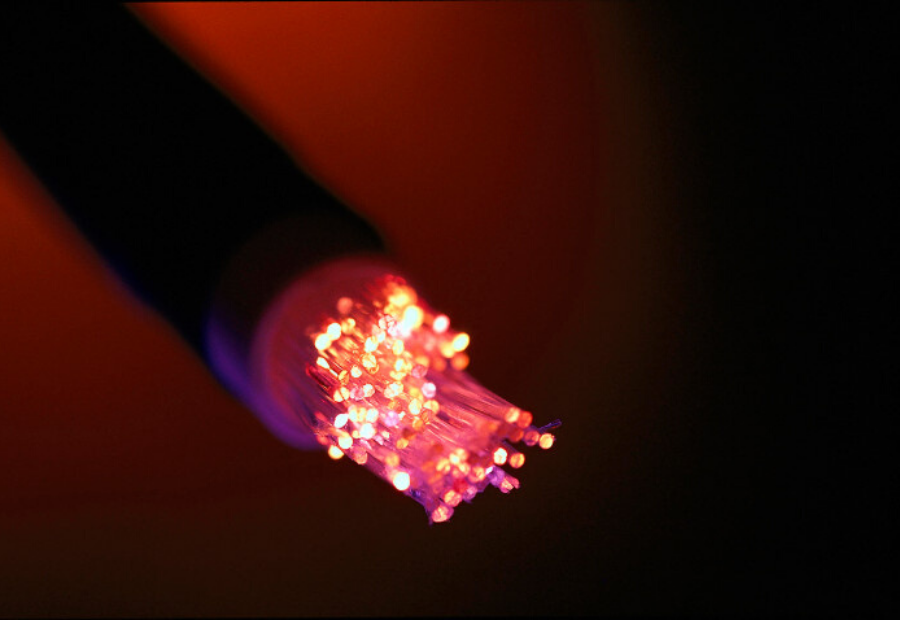
The technique is called Distributed Acoustic Sensing, and it essentially treats the cable as if it were an array of thousands of individual motion sensors. The cable the team tested is the Research Institute , which is divided into about ten thousand segments that detect the slightest movement of the surface to which they are connected.
After connecting the MBARI cable to the DAS system, the team gathered a ton of verifiable information: movement from a magnitude 3.4 earthquake inland, maps of known but unrecorded faults in the bay and water movement patterns that also indicate seismic activity.
If successful, the larger active cables could be used as research tools and could help illuminate blind spots that seismologists have regarding ocean floor activity and characteristics. The team's work was published today in the journal Science.
