

In the third quarter of 2019, the number of DDoS attacks increased by a third compared to the previous period and the third quarter of 2018, according to statistics compiled by Kaspersky DDoS Protection. This increase came as a result of increased malicious activity in the fall. In fact, 53% of all DDoS attacks in the third quarter took place in September.

The increase was driven by a large number of simple attacks. However, in the previous periods of the year, the overall growth came from an increase in the number of “smart” attacks, focusing on the application layer – usually carried out by specialized cybercriminals.
In the third quarter of 2019, the share of “smart” attacks decreased to 28% of all DDoS attacks, from 50% in the second quarter, and increased by only seven percentage points compared to the results of the third quarter of 2018.
This change can be explained by the surge in DDoS activity at the beginning of the academic year. While the first summer months were relatively quiet, the majority of DDoS attacks (53%) were detected in September. Kaspersky statistics reveal that 60% of the attacks blocked during this month were against schools and websites with electronic aids. Based on this, Kaspersky experts say that these attacks were carried out by young digital “hooligans” who do not have deep knowledge of how to conduct DDoS campaigns.
The average duration of “smart” attacks has not changed significantly compared to the second quarter of 2019, but they almost doubled compared to the statistics collected in the third quarter of 2018. In addition, the average duration of all attacks decreased slightly and this can be attributed to the large number of small attacks in this quarter.
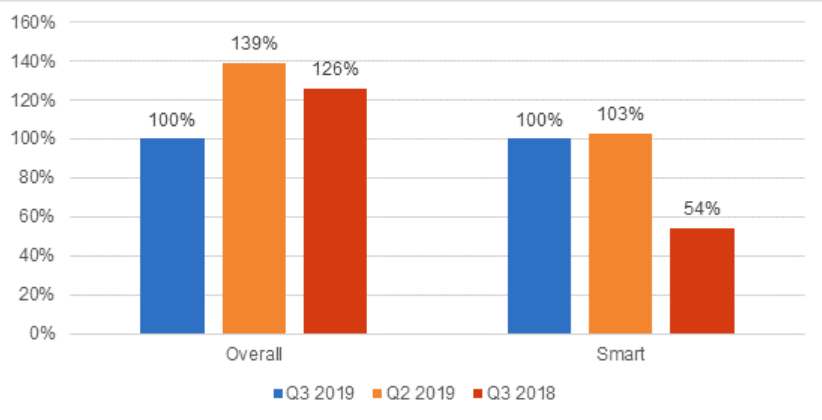 Figure 1. The average duration of DDoS
“Despite seasonal activity by young hooligans, who seem to be celebrating the start of the school year with a spike in DDoS attacks, the more professional DDoS attack market is likely to remain stable. We haven’t seen an explosive increase in the number of “smart” attacks compared to the previous quarter, and the average duration of an attack remains the same. However, this still causes significant damage to businesses. Our survey of IT decision-makers revealed that DDoS attacks are the second most expensive type of digital incident leading to breaches for SMEs, with the average cost of a breach estimated at $138,000,” comments Alexey Kiselev, Development Manager, Kaspersky DDoS Protection team.
To help organizations protect themselves from attacks , Kaspersky recommends the following steps:
- Ensure that web and IT resources can withstand high traffic.
- Learn in advance how to contact your Internet service provider in case you fall victim to a DDoS attack.
- Implement professional solutions to protect the organization from attacks.
The full report can be found on the dedicated website Securelist.com.
