


VPN services are increasingly used these days. However, using them as a remote access solution also has some drawbacks.
One of the most important issues is related to security. Users, connecting via VPN, gain access to the entire internal corporate network. This gives them the ability to do anything, even install some malicious software.
Why are VPNs causing problems now, but not in the past?
The answer is simple. In the past, they were not used for remote access to servers or applications. Furthermore, the remote access functionality of traditional VPNs has failed to keep up with the advancement of technology.
Changing VPNs
VPNs are very important because they give the user access to data and applications and generally to everything located in the private data center or IT infrastructure. In addition, VPNs facilitate site-to-site connection of remote data centers to the corporate network.
Traditional VPNs have weaknesses that make them unfit for today's cloud-centric environment. Today's hybrid-cloud environment requires the introduction of next-generation VPN solutions.
Whether we are talking about Software-as-a-Service solutions or Infrastructure-as-a-Service and Platform-as-a-Service (PaaS) providers (Azure and AWS), cloud-optimized VPNs are needed for secure connectivity and site-to-site connection, between the data center and the clouds.
Technology is constantly evolving and thus a new solution, called Software Defined Perimeter (SDP), which is designed to respond to the new era, characterized by mobile and cloud applications.
SDP solutions can be very useful. However, some SDP systems are more comprehensive than others. Some address more and some address fewer business requirements.
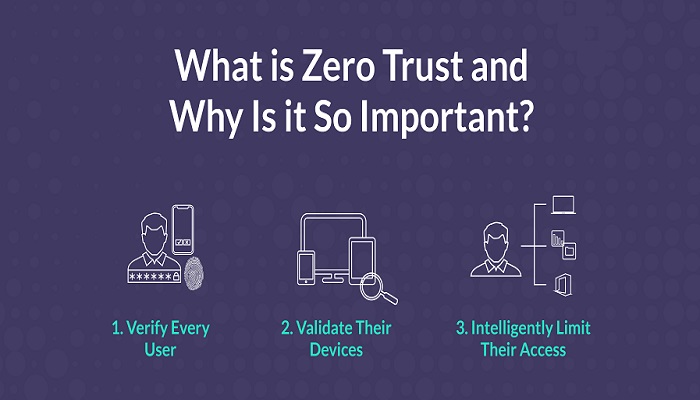
A key feature of SDP systems is the so-called “zero-trust” network access. This means that users should have permission to access applications and only those that are necessary to carry out their various tasks. This is a significant difference compared to traditional VPNs. Everything, except for the connections defined by the administrator, remains invisible. Thus, network resources are secure.
For better or worse, more effort is needed to protect data these days. According to research, today a large percentage of employees (70%) work remotely. If not always, at least sometimes they are forced to do their work outside the office, in hotels or airports, in other words, in places that do not offer the greatest security.
The downside of traditional VPNs is that they provide access to multiple people, whether they are partners, customers, or employees of the company. However, if we want to have secure data, all these groups of people should not have access to all areas of the network, but only to those that they need for their work. The “zero-trust” approach ensures that network resources are not unnecessarily exposed to many people and therefore are not vulnerable.
Of course, VPNs aren't going to be replaced anytime soon, and they shouldn't. VPNs are still very useful and essential for businesses. They may be facing more problems now than they have in the past, but they can't just disappear.
SDP servers will function as next-generation VPNs. SDP is a cloud-native platform and leverages its benefits across multiple applications. It can reduce complexity and management overhead.
Thanks to the "zero-trust" approach, businesses will have more security, which is essential nowadays.
