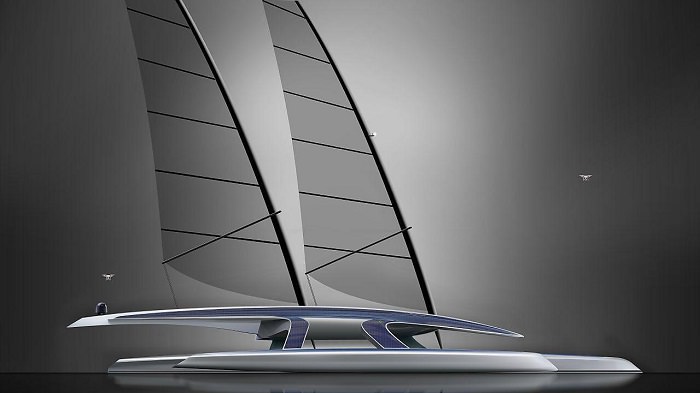
If you're sailing the Atlantic and you come across a ship without a crew, it won't be the Flying Dutchman. It'll be called the Mayflower, and it'll be an autonomous research ship (Mayflower Autonomous Research Ship, or MARS). 
The Mayflower is currently being planned by the University of Plymouth (it will use wind and solar energy) and is likely to set sail from Plymouth, England in 2020. It should be noted that the researchers are still seeking funding.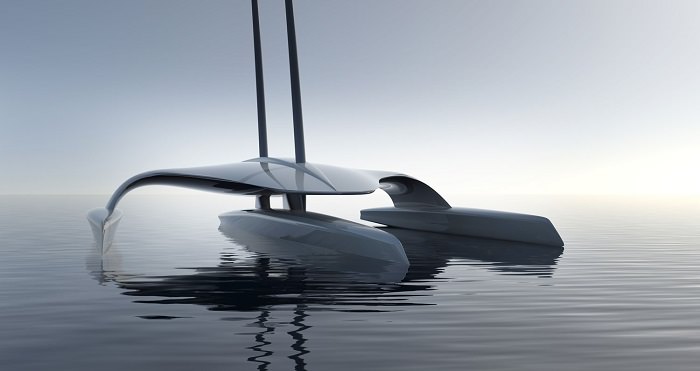
Using one or both of its sails, the Mayflower will be able to move autonomously at speeds of up to 20 knots (37 km/h). It will be 32.5 meters long.
On days when there is no wind, it will be powered by its electric motor and will reach 12.5 knots (23 km/h).
The solar cells will be able to generate enough current to power it. Some of these cells will be located on a folding wing, which will only open under conditions of absolute calm.
Navigation will be done through a system that combines GPS technology along with collision avoidance technology.
According to design company MSubs:
“The goal is to build one or more payload bays, like a space shuttle, in which a wide range of equipment will be placed to support various research tasks.”
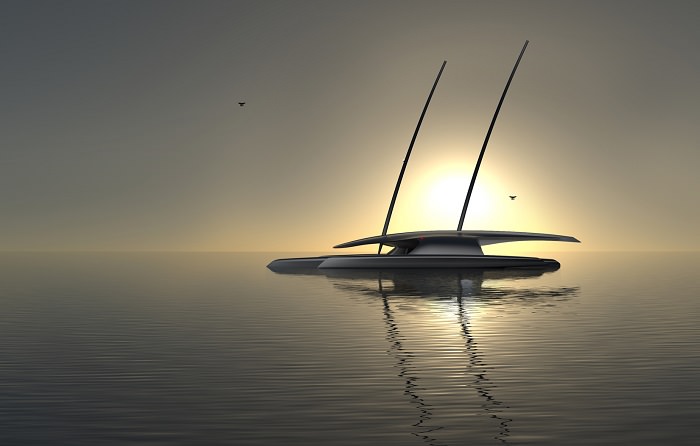
“Equally important, we are conducting research on renewable energy sources and propulsion systems for marine vessels, research on software with automated and autonomous functions, advanced satellite communications, and cooperative behavior between nested automated and autonomous systems that will operate under and above the water simultaneously.”